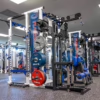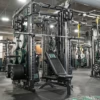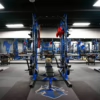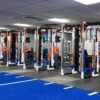
Designing a weight room in 2026 is not just about fitting more equipment into the room. The best facilities are built around how athletes actually train, how coaches actually coach, and how the space needs to function on its busiest day. Whether you are planning a new build, renovating an existing room, or phasing in upgrades over time, strong weight room design starts with flow, visibility, safety, and long-term flexibility.
At Samson Equipment, our planning process starts with your measurements, training goals, budget, and staffing realities. From there, we build a 2D layout, refine equipment zones, and create realistic 3D renderings that help coaches, administrators, and contractors see the room before installation starts. That means fewer surprises, faster decisions, and a more confident path from concept to completed facility.
What matters most in weight room design in 2026
Modern weight room design has to solve more than a square-footage problem. Most schools, colleges, and private facilities are balancing large group training, multiple sports, overlapping schedules, different athlete training ages, and constant daily traffic. A good layout supports all of that without creating bottlenecks, blind spots, or wasted space.
- Training flow should match how many athletes are in the room at one time.
- Coach sightlines should make supervision easy from multiple positions.
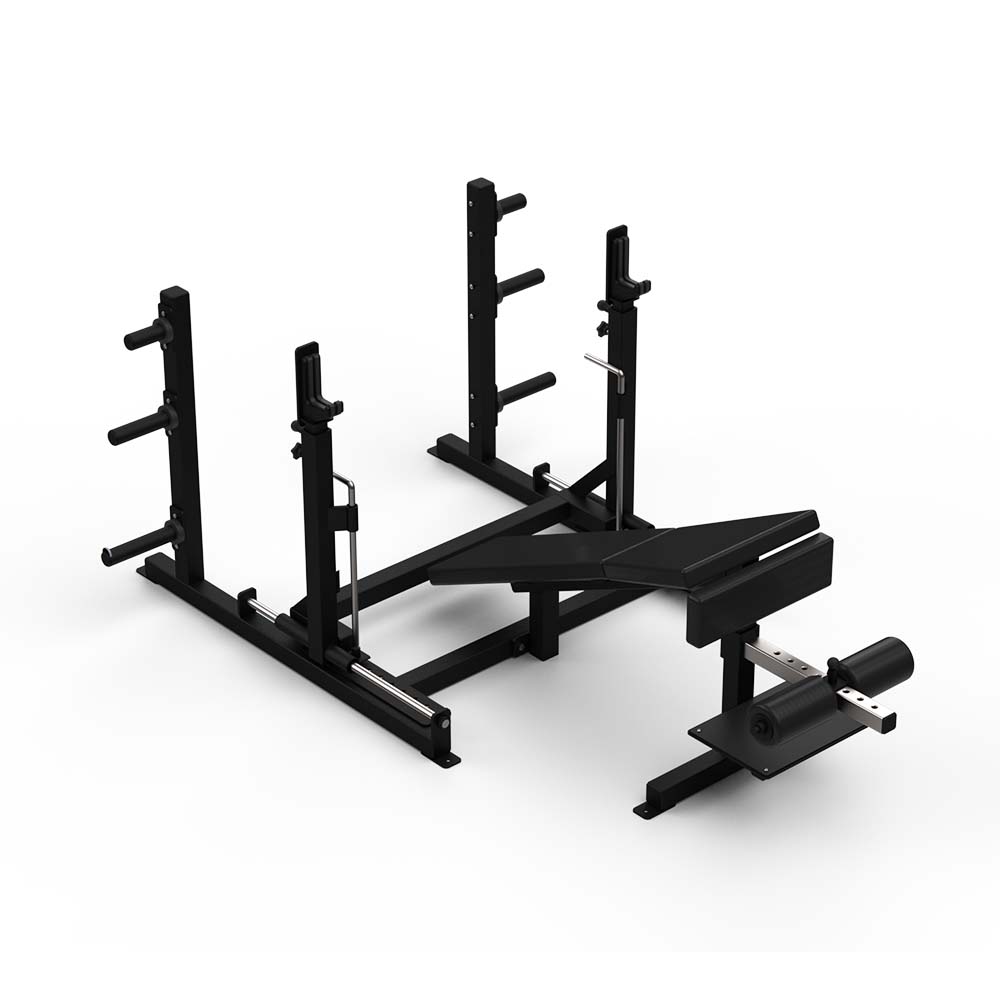
- Rack, bench, dumbbell, and accessory zones should support efficient movement between stations.
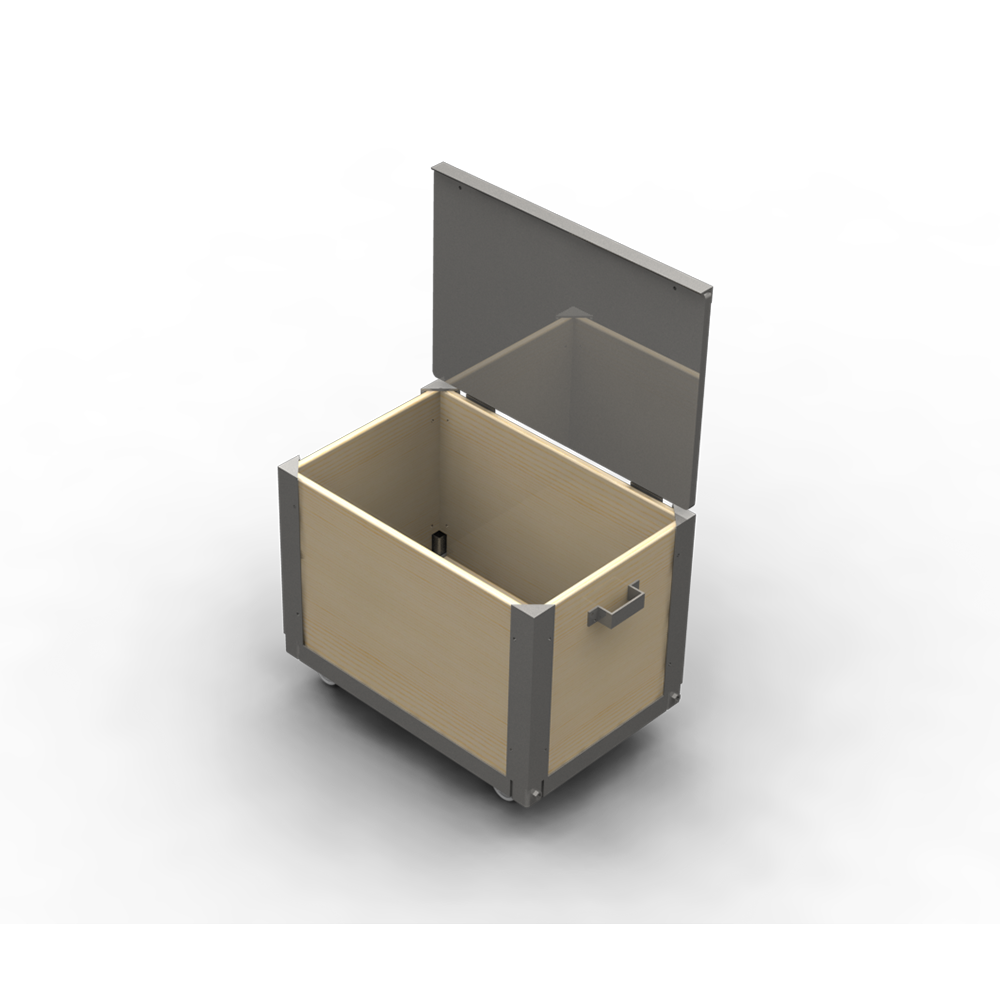
- Storage should live near the equipment it serves so cleanup is fast and consistent.
- Flooring and platform placement should support the work being performed while protecting the room.
- The layout should leave room for future growth instead of forcing a full redesign after the next budget cycle.
Start with how your teams actually train
Before equipment is selected, the room has to be planned around the training model. A football offseason group, a multi-sport high school rotation, and a collegiate performance program may all need very different layouts even if the room size is similar. The right question is not, “What can we fit?” It is, “How will this room run when the athletes arrive?”
That planning phase usually includes practical questions such as how many athletes will train at once, whether teams move in pods or full-room circuits, how much open space is needed for movement work, and whether the room also needs to support testing, recovery, or auxiliary stations. Structural constraints matter too. Ceiling height, columns, door openings, storage rooms, turf transitions, and HVAC obstacles all influence what the final design should be.
If you are early in the process, our article on weight room facility design covers the planning questions that are easiest to miss before a project gains momentum.
Create zones that improve traffic flow
One of the biggest differences between an average room and a high-functioning room is zoning. Athletes should be able to move from warm-up to primary lifts to accessory work without crossing into other groups or waiting on avoidable congestion. Coaches should be able to scan the room quickly and keep sessions moving without constant reset.
A strong 2026 layout usually includes a clear primary strength zone with power racks or multi-use stations, a dumbbell and bench area that does not choke walkways, accessory and storage positions near the point of use, and enough open floor or turf to handle movement prep, jumps, carries, or bodyweight work. This is where smart spacing matters. The right room is not the one with the most pieces. It is the one that keeps athletes training instead of waiting.
Choose equipment that matches your training philosophy
Equipment selection should support your program rather than define it. Some rooms need a heavier emphasis on rack-based team training. Others need more flexibility for mixed groups, sport-specific accessory work, or year-round traffic from PE classes, teams, and private members. In every case, the goal is the same: create stations that can handle repeated use, coach efficiently, and adapt over time.
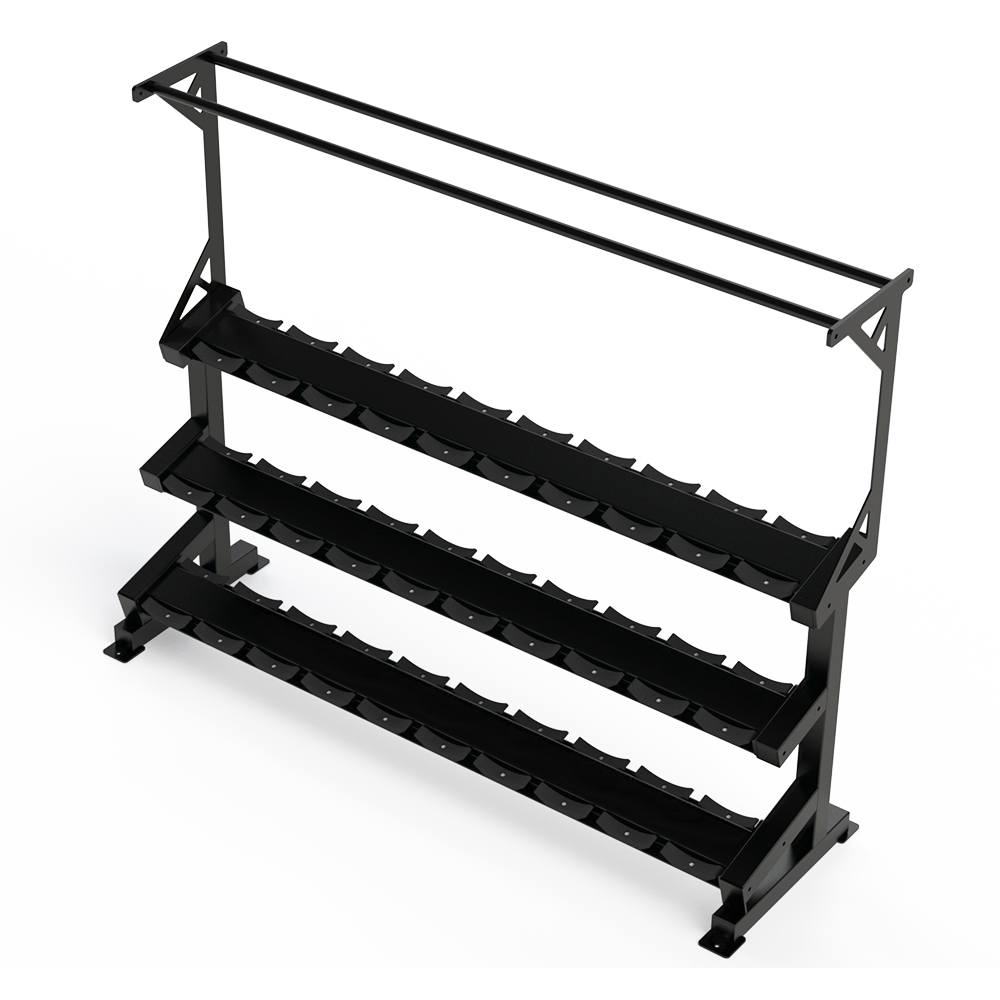
That usually means prioritizing durable core pieces first, then layering in specialty items where they actually improve the program. Benches, bars, plates, racks, platforms, storage, and flooring form the backbone of most rooms. After that, the best additions are the ones that solve a real coaching need, improve athlete throughput, or support a specific training method. If budget is a factor, phased procurement often produces a stronger room than trying to buy every possible piece in the first pass.
It also helps to think beyond equipment counts. Storage locations, plate tree placement, dumbbell access, and bench parking all affect how the room performs hour after hour. Small planning decisions here can create a major difference in how organized and coachable the room feels once it is full.
Use 2D layouts and 3D renderings to reduce risk
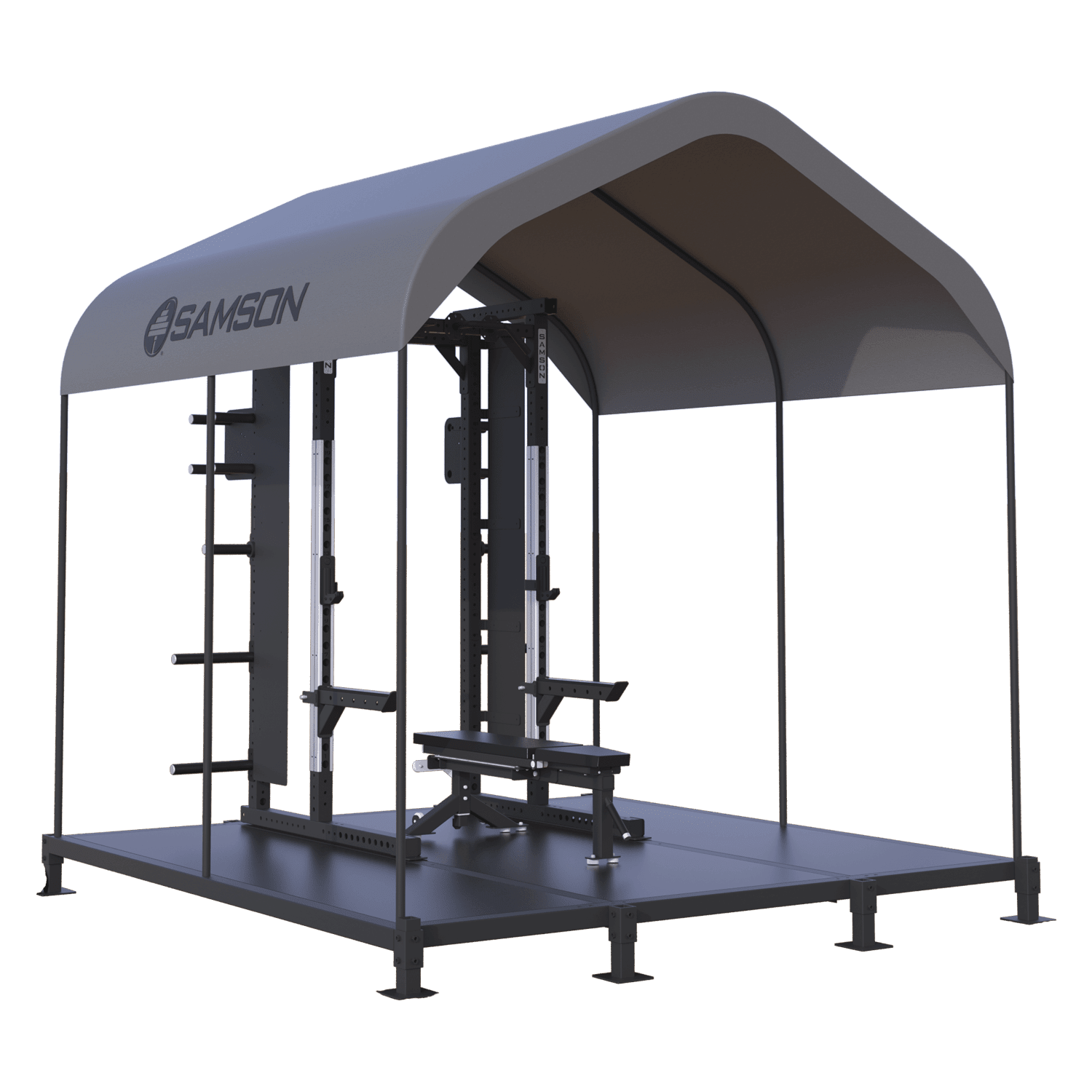
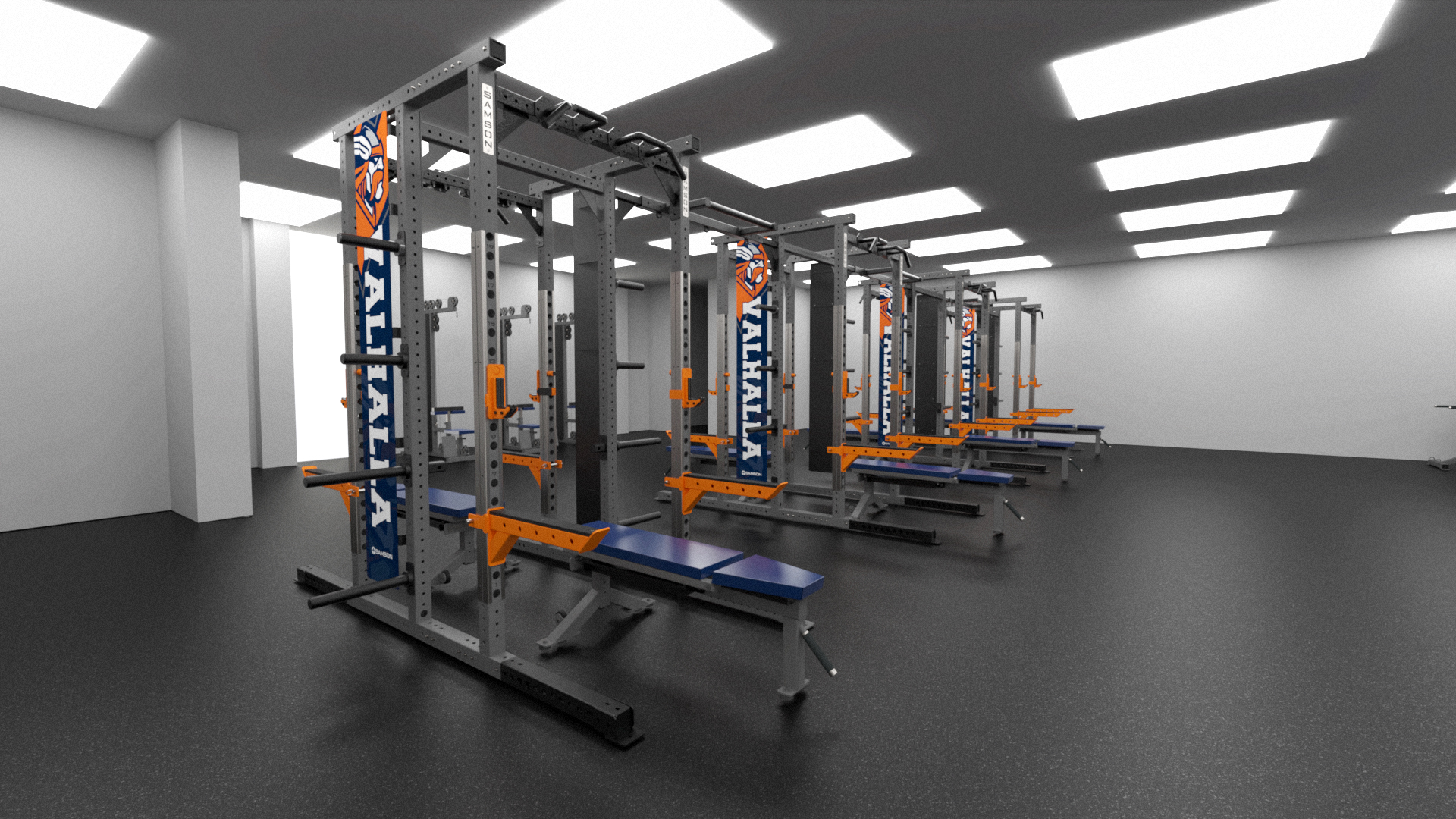
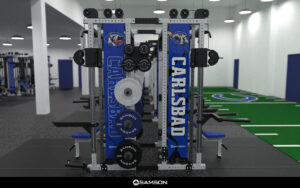
The fastest way to make a costly mistake is to approve a room based on assumptions instead of accurate visualization. Scaled 2D layouts help establish station counts, clearances, and zones. Realistic 3D renderings take that one step further by showing how equipment, flooring, branding, and traffic flow will work together in the actual space.
That level of visualization is valuable for more than aesthetics. It helps identify spacing issues before equipment is ordered. It makes it easier to spot circulation problems, awkward transitions, and clearance conflicts. It gives coaches confidence that the room will support the way they teach. It also helps athletic directors, principals, and other stakeholders understand what the investment will actually deliver.
“3D rendering also helps coaches plan out the physical aspects of the weight room.”
Daniel Magnani, Head Strength and Conditioning, Basha High School
Build a room that is easier to sell internally
Weight room projects are rarely approved by one person alone. Coaches, athletic directors, school leadership, facilities teams, architects, and contractors may all influence the final result. Clear plans and strong visuals make those conversations easier. When stakeholders can see the room, understand the training intent, and connect the budget to a practical outcome, approval tends to move faster.
This is one reason 3D design is so useful in 2026. It helps turn a vague idea into something concrete enough to evaluate. Instead of talking abstractly about racks, flooring, storage, and circulation, you can show exactly how the space is intended to function. That improves collaboration and reduces the risk of misalignment late in the process.
“Call my principal over. Check this out. Yeah, We’re getting it.”
Daniel Magnani, Head Strength and Conditioning, Basha High School
Common weight room design mistakes to avoid in 2026
- Planning around a wish list instead of the daily training schedule.
- Underestimating the value of nearby storage and equipment organization.
- Creating narrow walk paths that slow down large groups.
- Ignoring ceiling height, door access, columns, and utility constraints until late in the project.
- Overcommitting budget to specialty pieces before the core layout is solved.
- Forgetting that branding, flooring transitions, and room finish details affect the athlete experience too.
The strongest facilities are not always the most complicated. They are the rooms where the layout supports coaching, the equipment mix fits the program, and the entire space feels intentional.
See what a finished room can look like
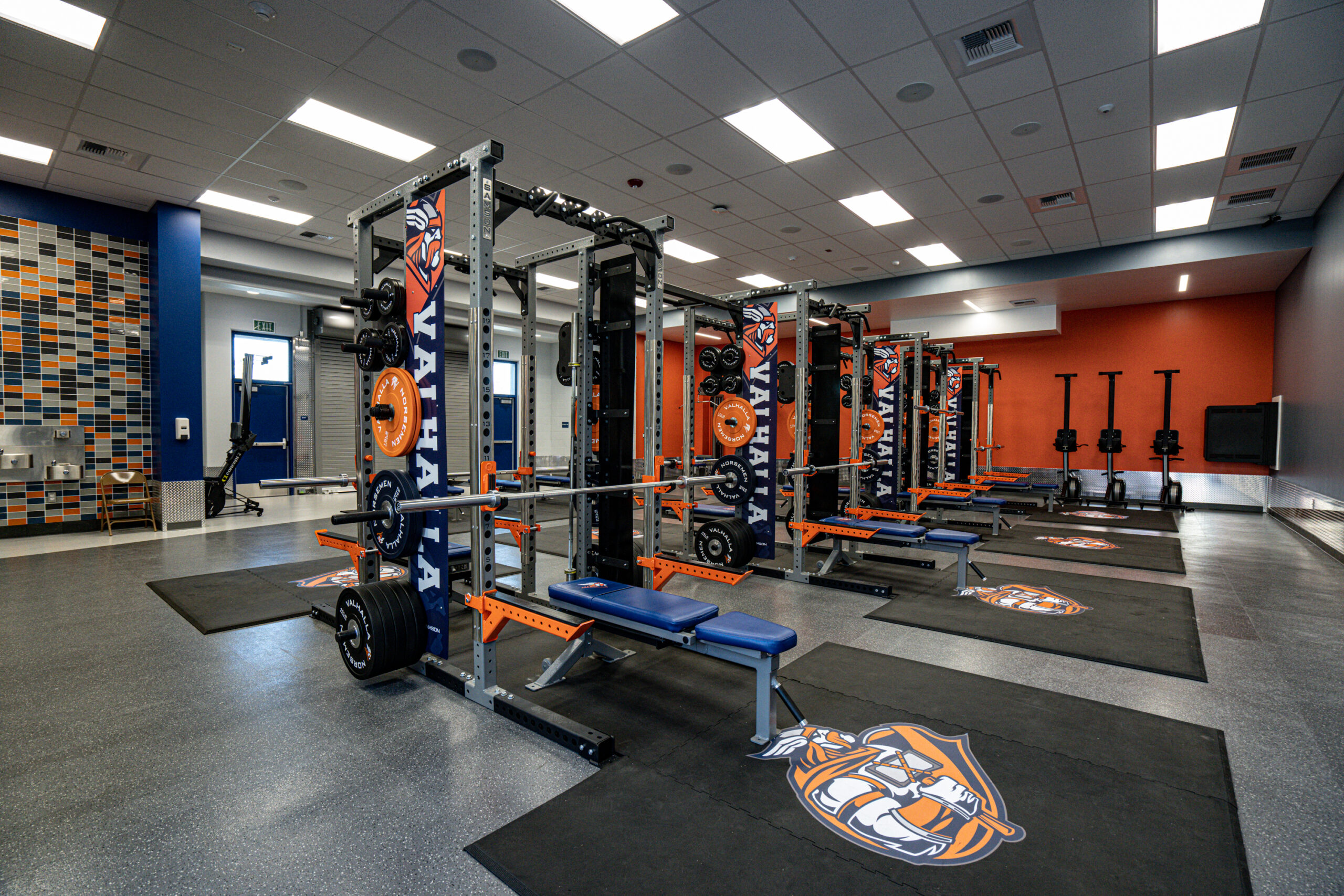
If you want examples of how these ideas come together in the real world, explore our featured facilities. Seeing completed Samson projects can help you evaluate station density, finish levels, branding integration, flooring transitions, and the way different programs organize training zones.
Start your 2026 weight room design with a real plan
If you are preparing for a renovation, a new building, or a phased upgrade, start with a layout process that accounts for training flow, budget, equipment priorities, and stakeholder communication from the beginning. Samson Equipment can help you turn room dimensions and coaching priorities into a practical plan you can evaluate before installation begins.
Start here: Start Your Layout Design. If you would rather speak with our team directly, use our contact form and we will help you move the project forward.