Product Specifications
| Dimensions | N/A |
|---|
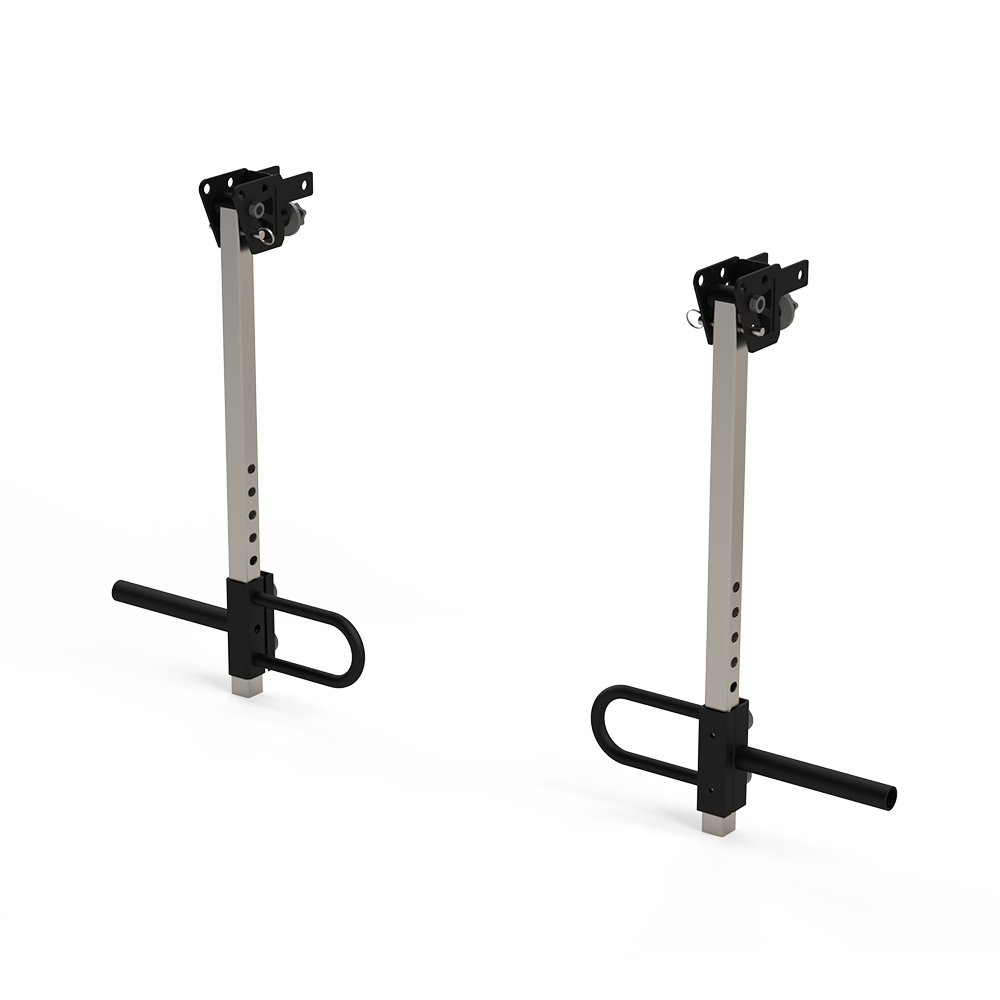
Jammer Arms: Expand Your Rack Training Options
When you’re building a serious weight room, the most valuable equipment is the equipment that supports multiple movement patterns without requiring multiple footprints. Jammer arms are a rack-based accessory that expands training options by enabling pressing, rowing, and athletic “drive” patterns from a rack station. For institutional facilities, that means more variety, better station flow, and more ways to train athletes effectively in limited space.
Jammer arms are often used to add machine-like pressing and pulling options without dedicating floor space to a large standalone unit. They help coaches program strength and power patterns while keeping athletes moving through stations efficiently.
Why facilities add jammer arms
Jammer arms are popular in team environments because they support multiple athletes and multiple training goals with one accessory. They’re often selected for:
- Training variety: add new pressing and pulling angles without new machines.
- Station-based throughput: keep athletes moving during rotations.
- Sport carryover: drive patterns and unilateral work can be programmed creatively.
- Space efficiency: maximize the value of your rack line.
How jammer arms fit into programming
In a team setting, jammer arms can be programmed as a primary supplemental station or as an accessory lane movement. They’re also useful for athletes who benefit from guided movement options while still training hard.
Common applications
- Pressing patterns: standing or angled presses as a complement to bench work.
- Rowing patterns: pull variations that fit well into upper-body accessory blocks.
- Unilateral work: single-arm patterns to address imbalances and develop control.
- Power emphasis: drive-oriented reps that reinforce intent and explosiveness.
- Circuit training: a station that creates variety without changing the room setup.
Programming examples (simple ways to use the station)
Every facility has different athletes and coaching priorities, but jammer arms are often easiest to implement when you assign them a consistent role in the weekly plan. Here are a few common approaches coaches use in institutional rooms:
- Upper accessory day: pair jammer presses with rows and trunk work as a rotation lane.
- Lower + push lane: after squats, athletes rotate through a push pattern (jammer press), a pull pattern, and a carry.
- Unilateral emphasis block: single-arm presses/rows to address control and symmetry.
- Conditioning finishers: short, controlled “drive” intervals when coached for quality reps.
- Beginner-friendly strength: coached patterns that build confidence and consistent setup.
Coaching and safety notes for busy rooms
In team environments, stations need to be easy to coach and hard to misuse. A few simple coaching rules keep the station productive and safe during high-traffic sessions.
- Control the start position: teach athletes where the movement begins and ends so reps are consistent.
- Prioritize clean reps: intent matters, but sloppy reps create wear and reduce training value.
- Keep walkways clear: athletes should be able to rotate in and out without crossing traffic.
- Standardize rotation timing: jammer arms work best with clear time blocks and station rules.
Facility planning: placement and flow
Racks are often the busiest part of a facility. That’s why accessories need to be planned around traffic and clearances. Jammer arms should be placed so they don’t create bottlenecks for barbell loading, plate storage access, or walkways between lanes.
Best-practice considerations:
- Clear movement space: ensure athletes have room to complete reps without crowding others.
- Safe transitions: place stations so athletes can rotate in and out quickly.
- Coaching visibility: keep the rack line visible for cueing and supervision.
- Storage proximity: plan where athletes will grab accessories or load weight, if applicable.
To plan a rack line that supports your training flow, start here: Start Your Free 3D Layout Design.
Build the right accessory mix
Most rooms don’t need every rack add-on available. The goal is a balanced accessory mix that supports your programming and your athlete flow. When evaluating jammer arms, think about how they complement your existing stations:
- If racks are overloaded: jammer arms can add a pressing/pulling option without taking another rack station.
- If dumbbells get congested: a dedicated rack-based station can reduce traffic in the free-weight lane.
- If you need more variety: jammer arms can add movement angles and unilateral options without new machines.
Samson can help you choose the right accessory mix and place it correctly in the layout so the room runs well. If you haven’t planned the full space yet, start with a layout request: Start Your Free 3D Layout Design.
Build a rack system, not just a rack
The best facilities plan racks, accessories, and storage as a unified system. That system approach keeps the room clean, reduces daily friction, and improves safety. Jammer arms work best when they’re part of an intentional rack plan that supports your programming and your athlete flow.
Explore Samson rack solutions and facility examples:
Ordering guidance and support
Because jammer arms are rack attachments, compatibility and configuration matter. The Samson team can help you confirm the correct setup for your rack line and your facility needs. If you’re planning a full room, it’s also a great time to review your rack spacing, storage plan, and accessory mix.
For pricing, options, and planning support, reach out here: Contact Samson Equipment.
FAQs: Jammer arms
Are jammer arms only for advanced athletes?
No. They can be coached as strict accessory movements or used for power intent depending on athlete ability. They’re often used across a wide range of training levels in team environments.
Do they replace machines?
Not necessarily. They can reduce the need for certain standalone stations, but many facilities still include a machine lane. The right mix depends on space, group size, and programming goals.
Can Samson help us build a full rack layout?
Yes. A layout-first plan helps ensure rack spacing, traffic flow, and accessory placement all work together in daily use.
Request Pricing and Layout Support
Want more training variety from the rack line you already rely on? Add jammer arms and build a rack system designed for team throughput. Contact Samson to plan the right setup.
Ordering, support, and facility planning
In a high-volume facility, the right equipment is only part of the solution. Planning station counts, storage, and traffic flow helps teams train efficiently and keeps equipment in better condition long-term. If you’re building a new room or upgrading an existing space, Samson can help you choose the right mix of stations and accessories so the room works under real training volume.
For help selecting options, confirming fit, and building a complete equipment list, reach out here: Contact Samson Equipment. If you’re planning a full room layout, you can also start a free design conversation here: Start Your Free 3D Layout Design.
Quick FAQ
- Does Samson offer accessories and attachments? Yes, Samson offers a wide range of accessories and attachments for training rooms.
- What should guide accessory selection? Training goals, group size, storage, and athlete rotation should guide the accessory plan.
- Can Samson help if an accessory need is not listed? Yes, contact Samson with the specific need so the team can review available options.