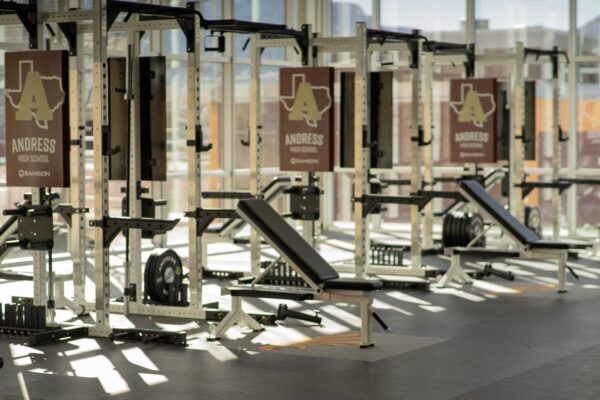
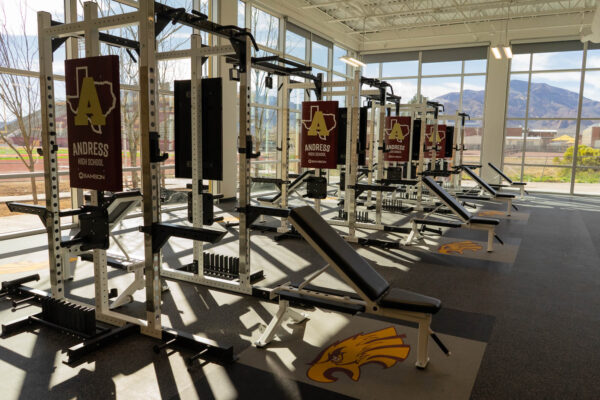
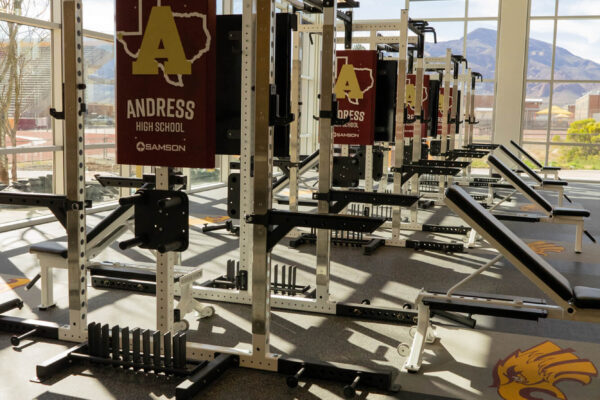
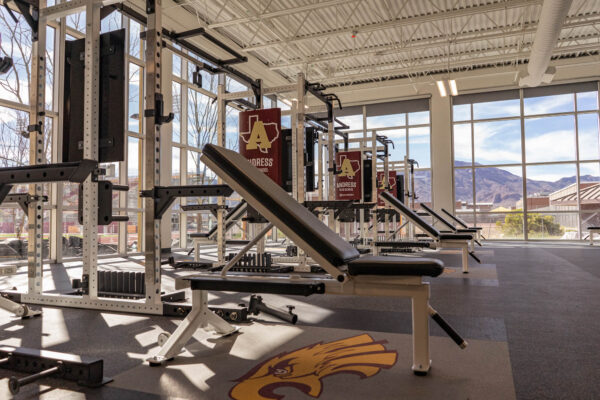
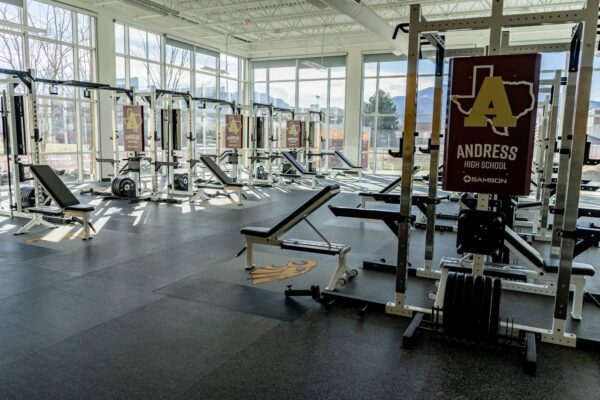
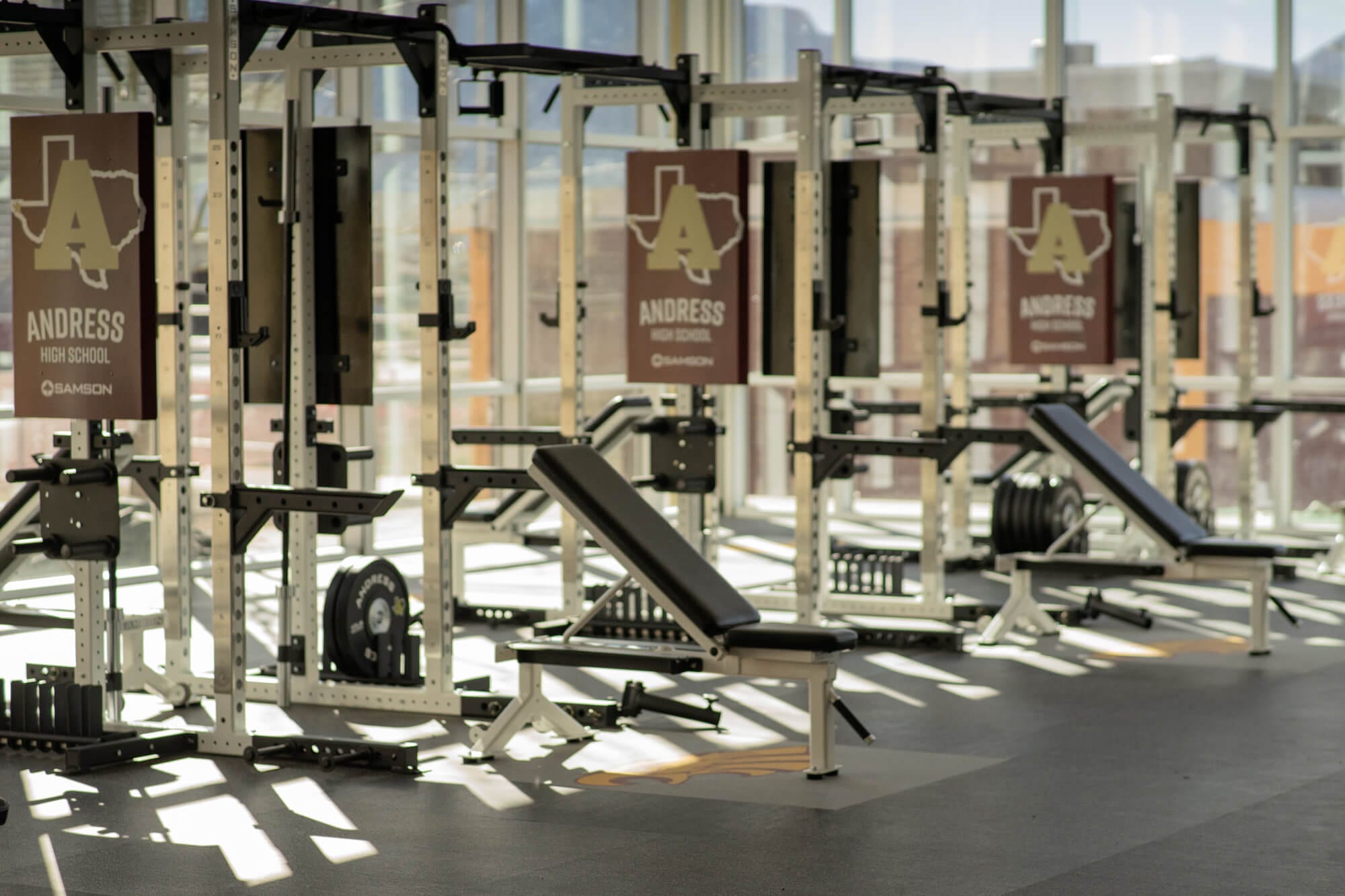
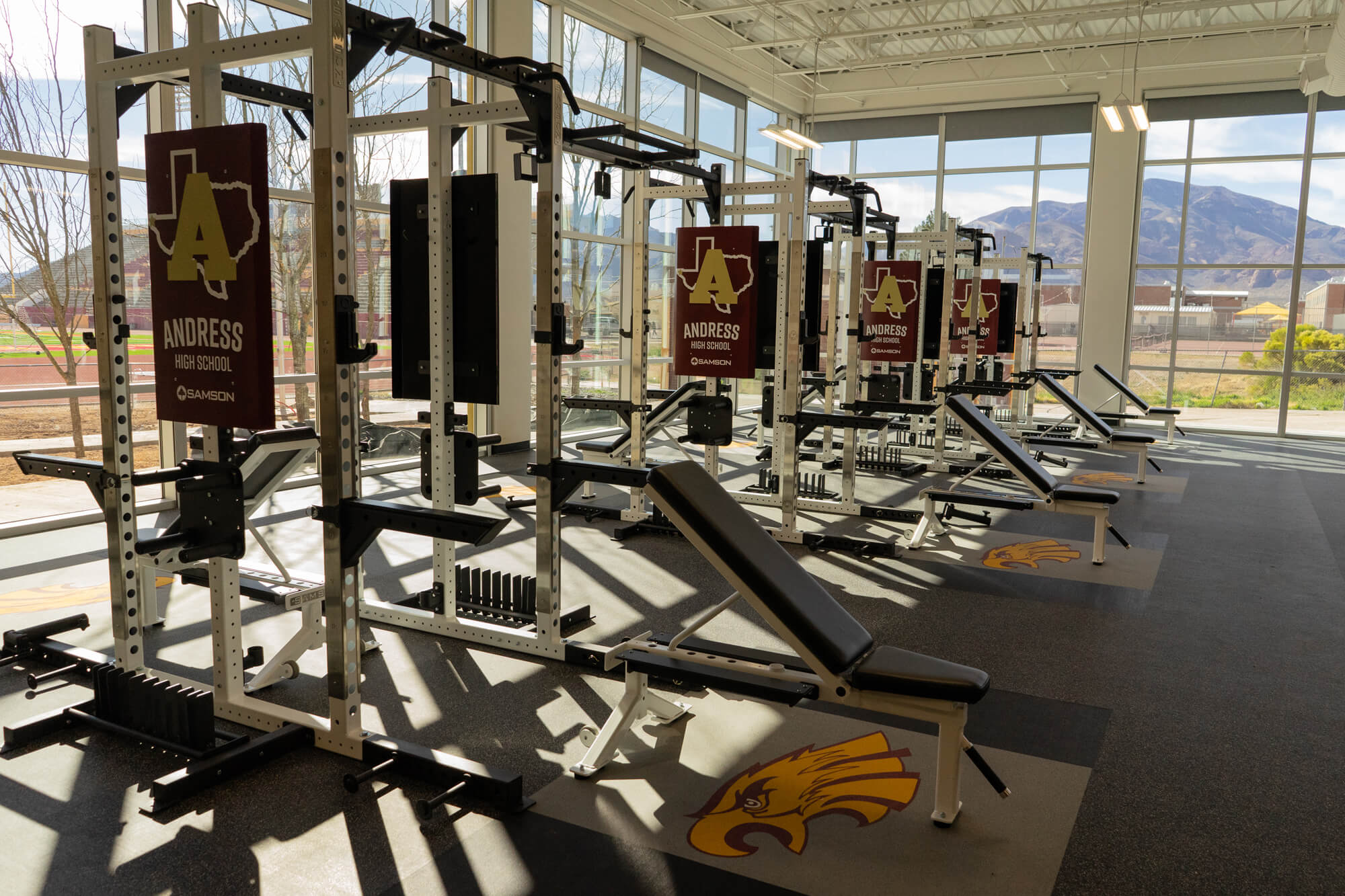
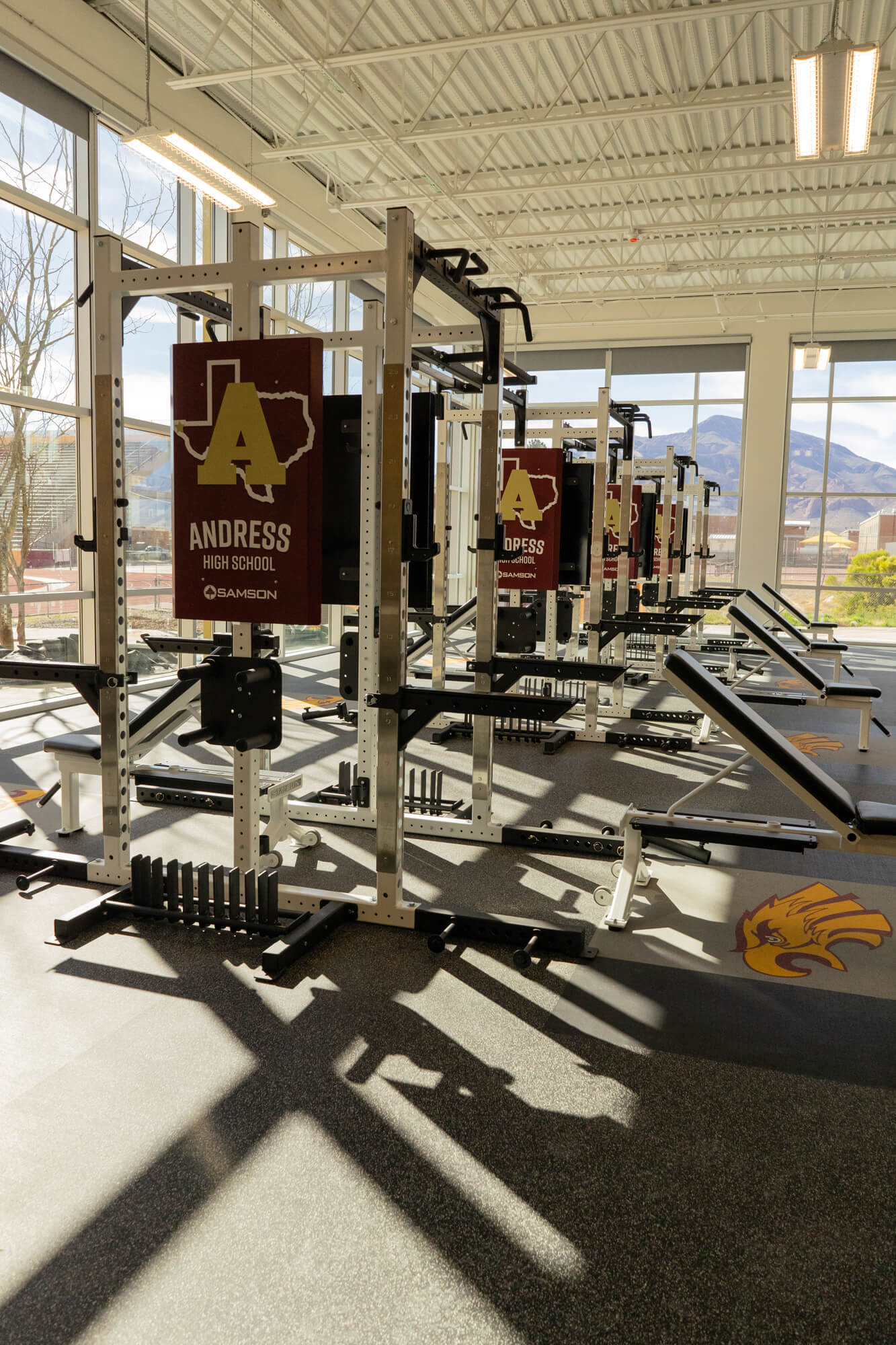
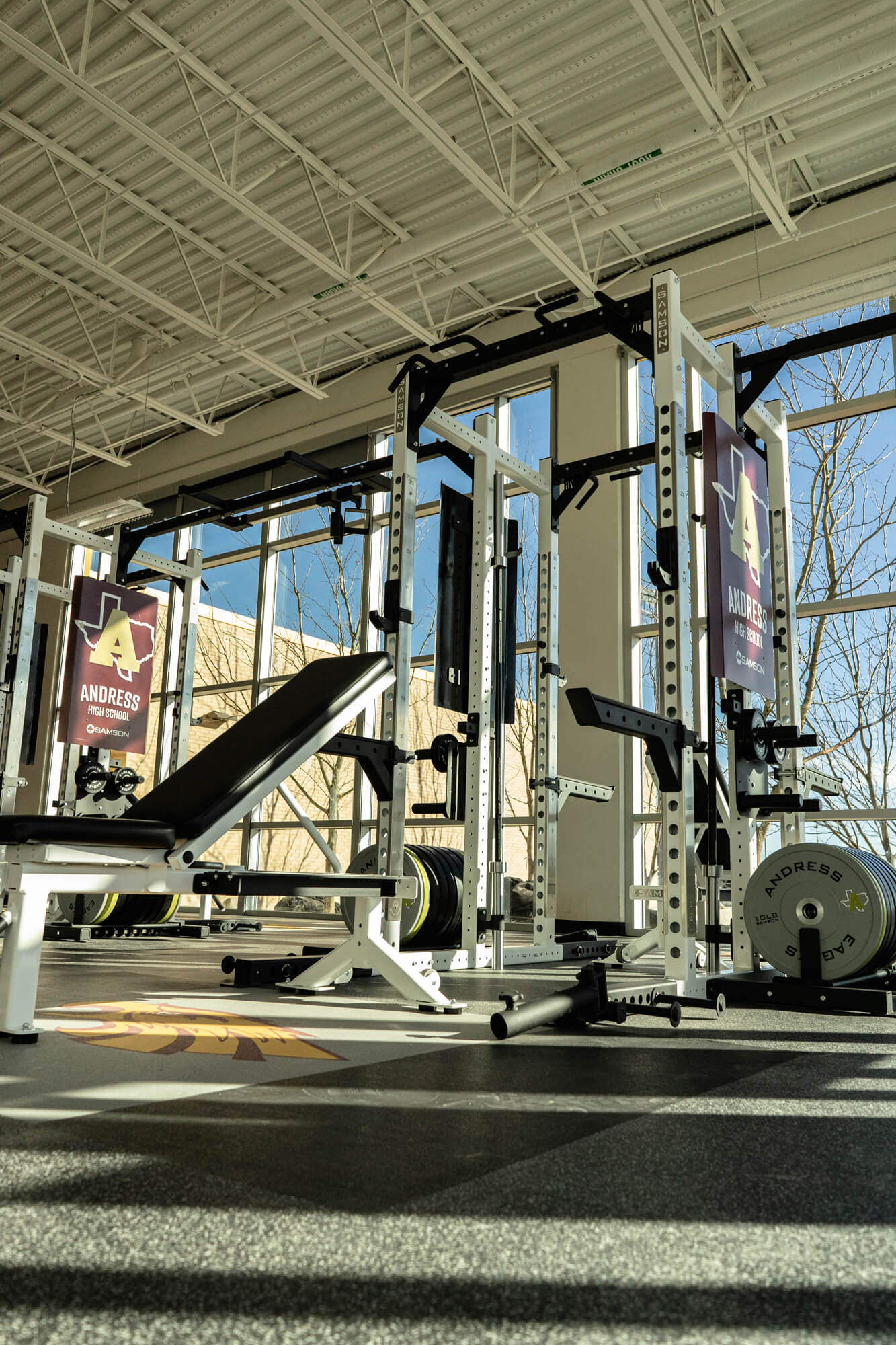
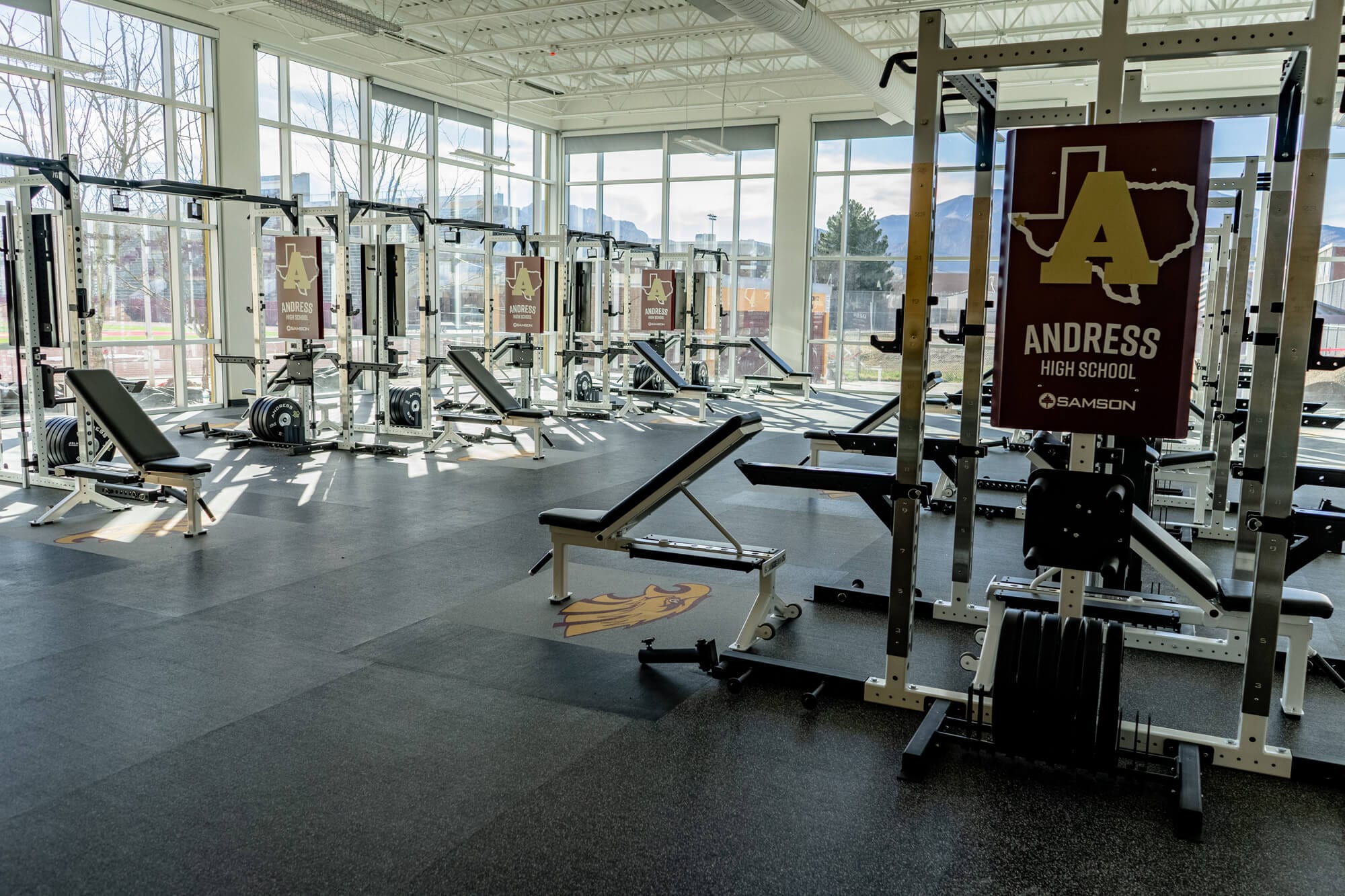
Andress High School Weight Room Case Study (El Paso, Texas)
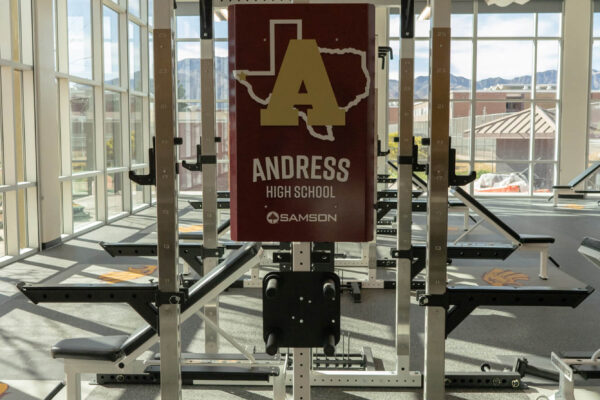
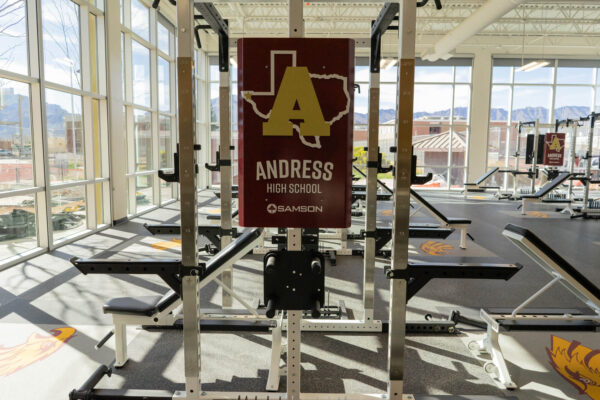
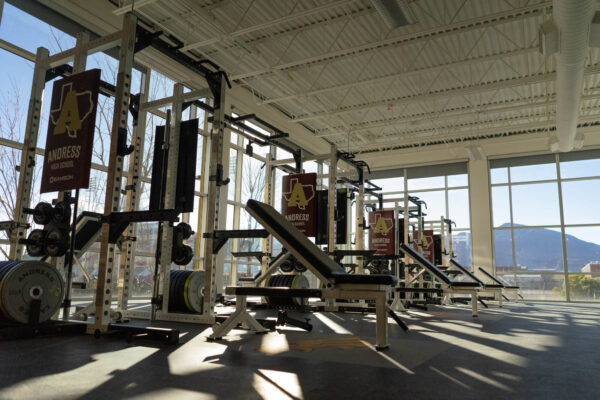
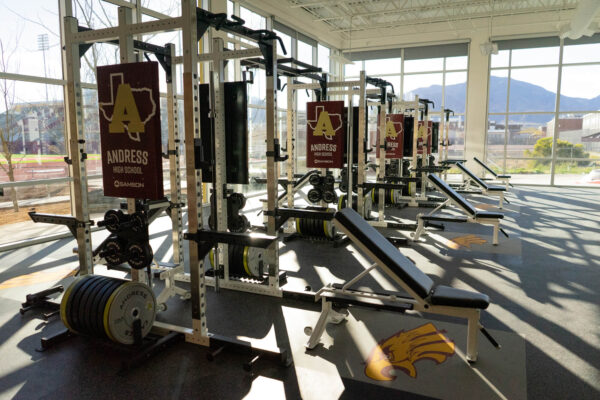
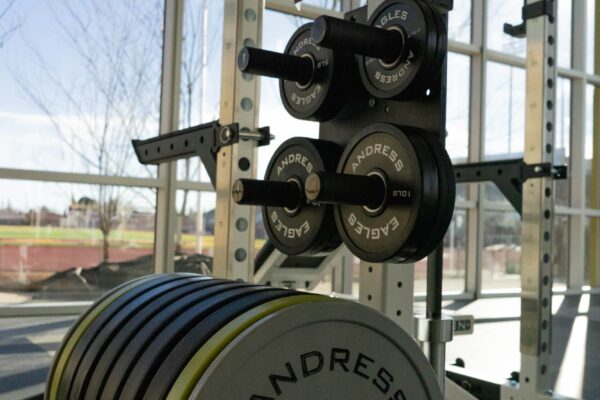
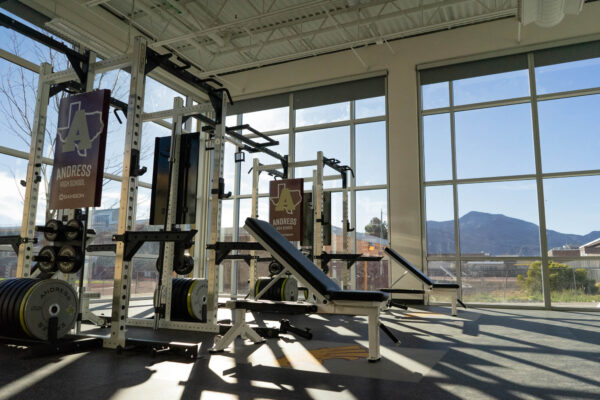
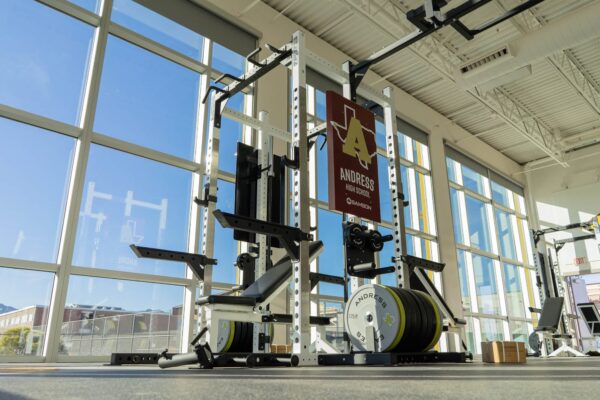
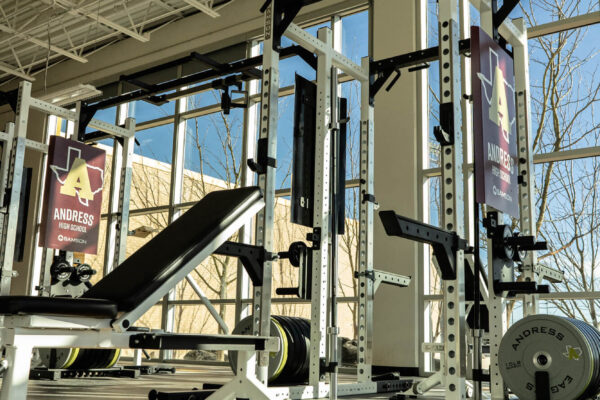
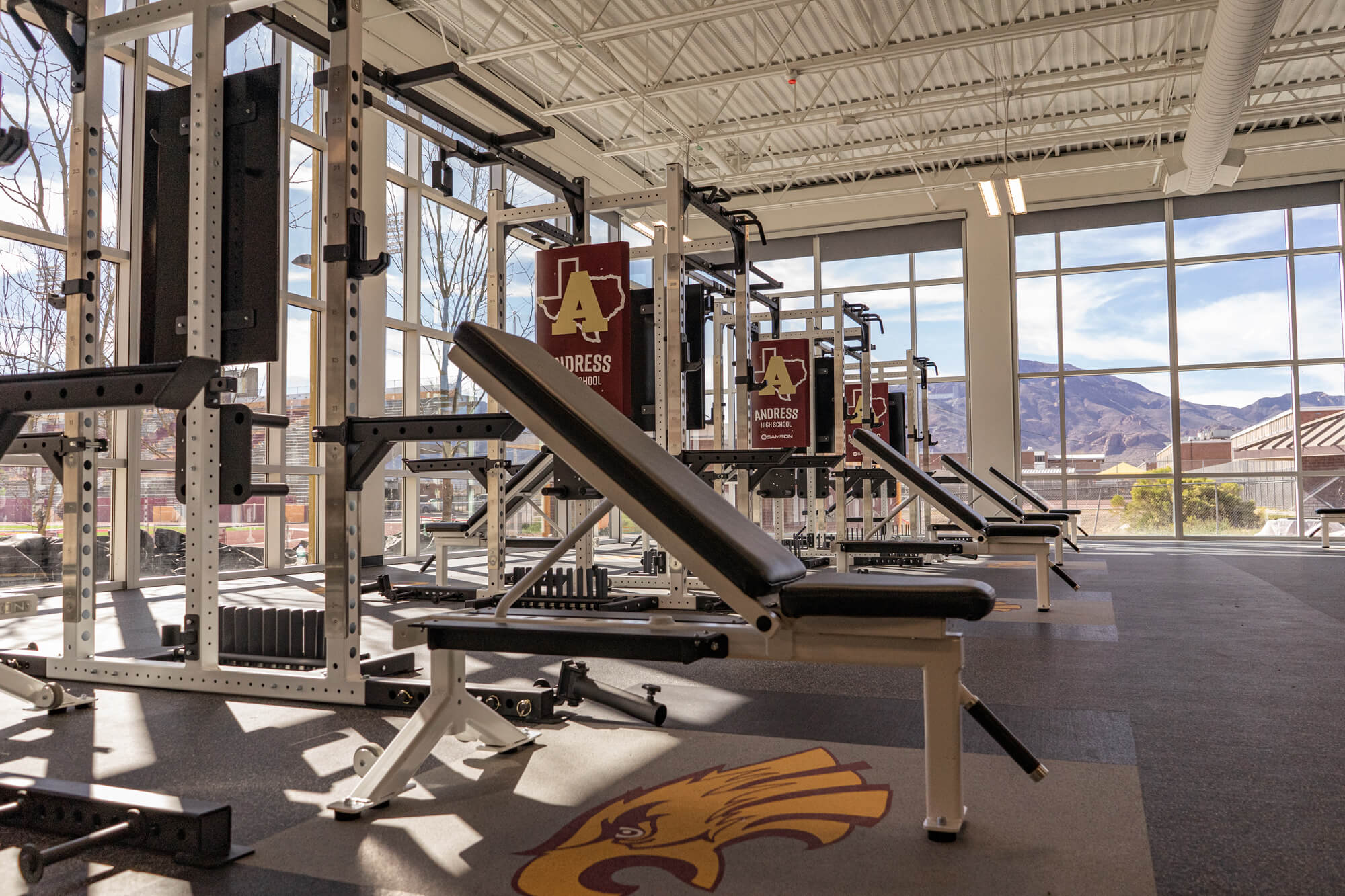
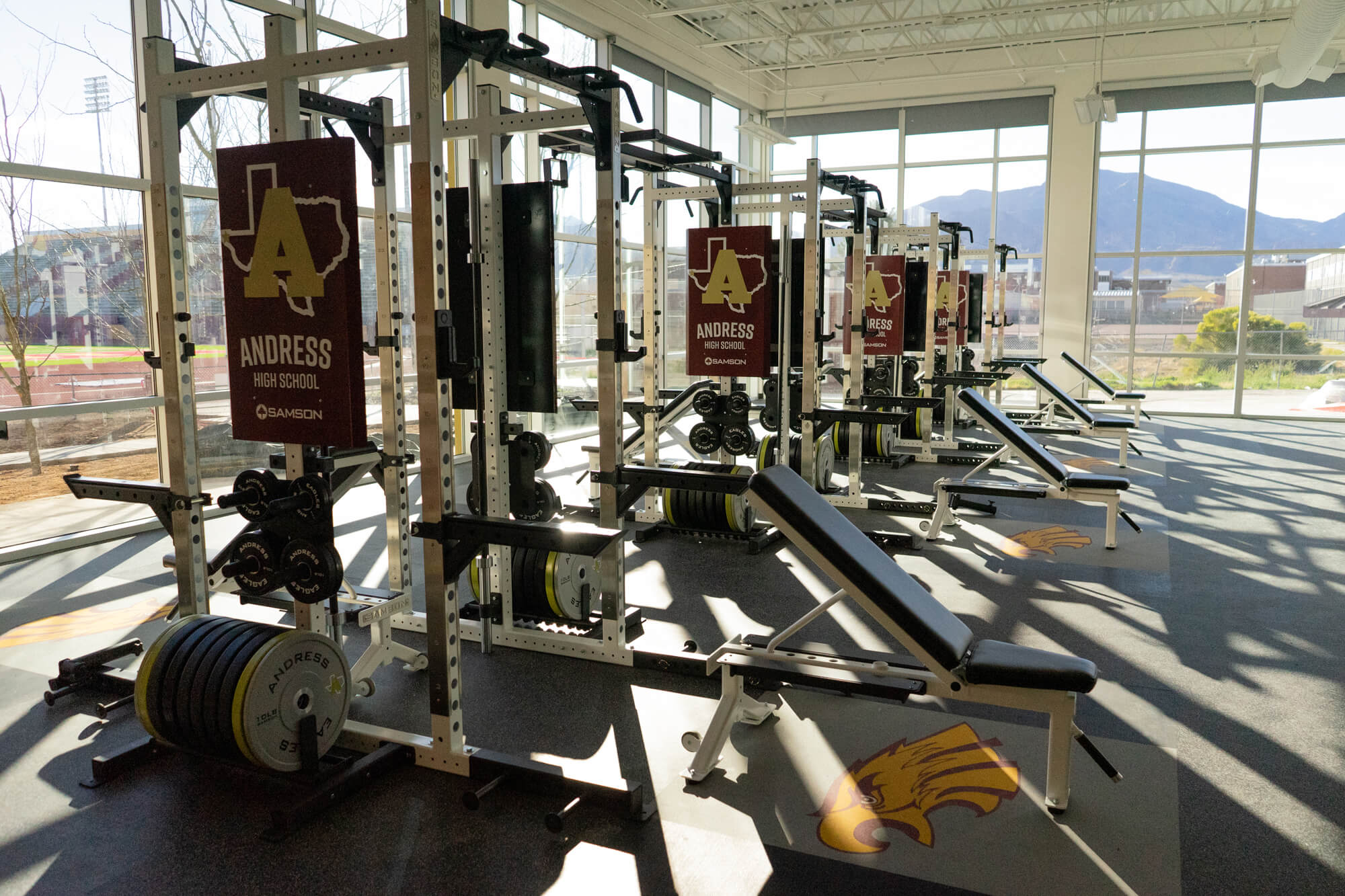
When a high school decides to upgrade its athletic facilities, it is rarely just an equipment purchase. It is a statement to students, families, and the entire community that the program is serious about development, culture, and the future. At Andress High School in El Paso, Texas, the goal was clear: build a showpiece that athletes would be proud to train in and that would elevate the daily experience for every sport that depends on strength and conditioning.
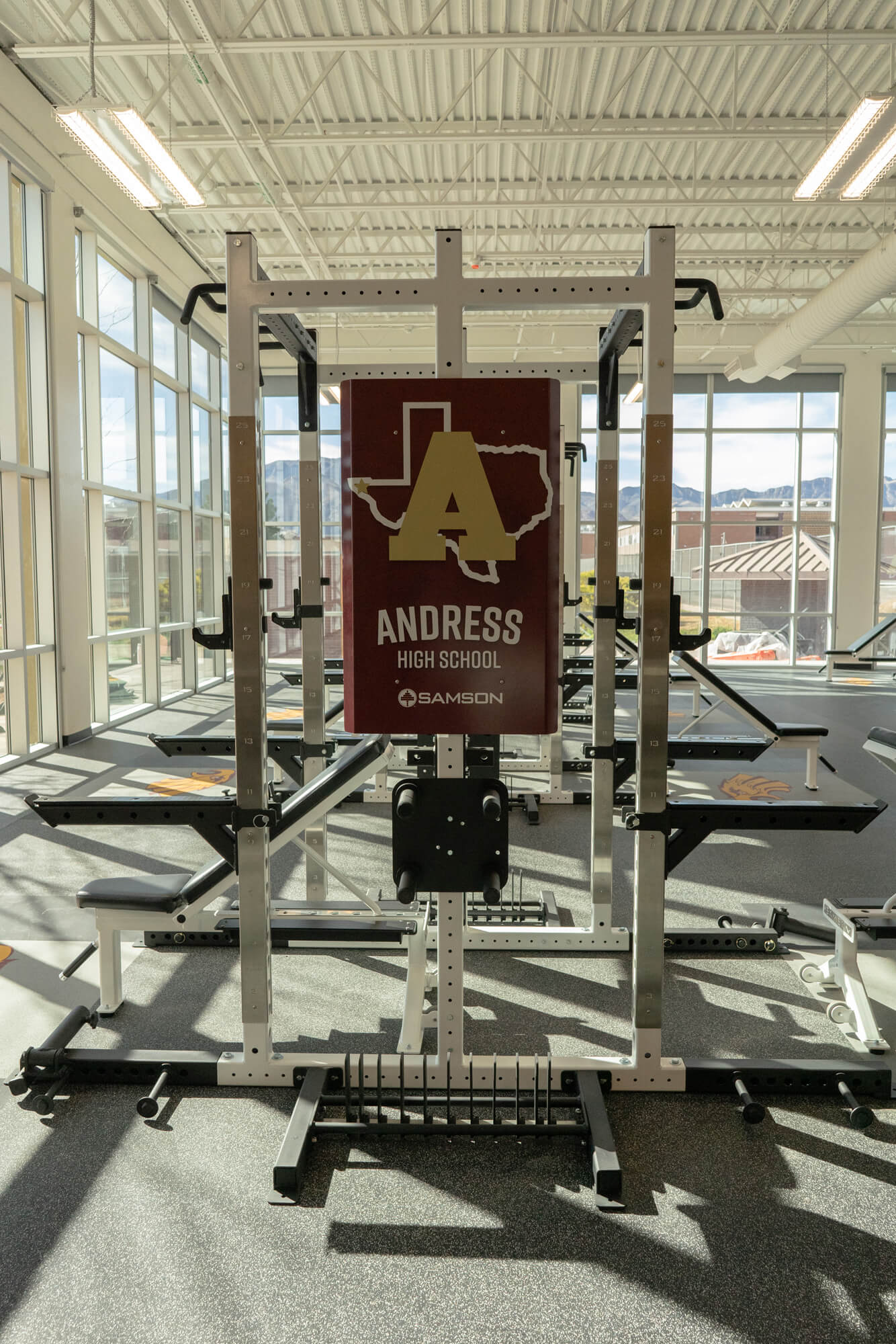
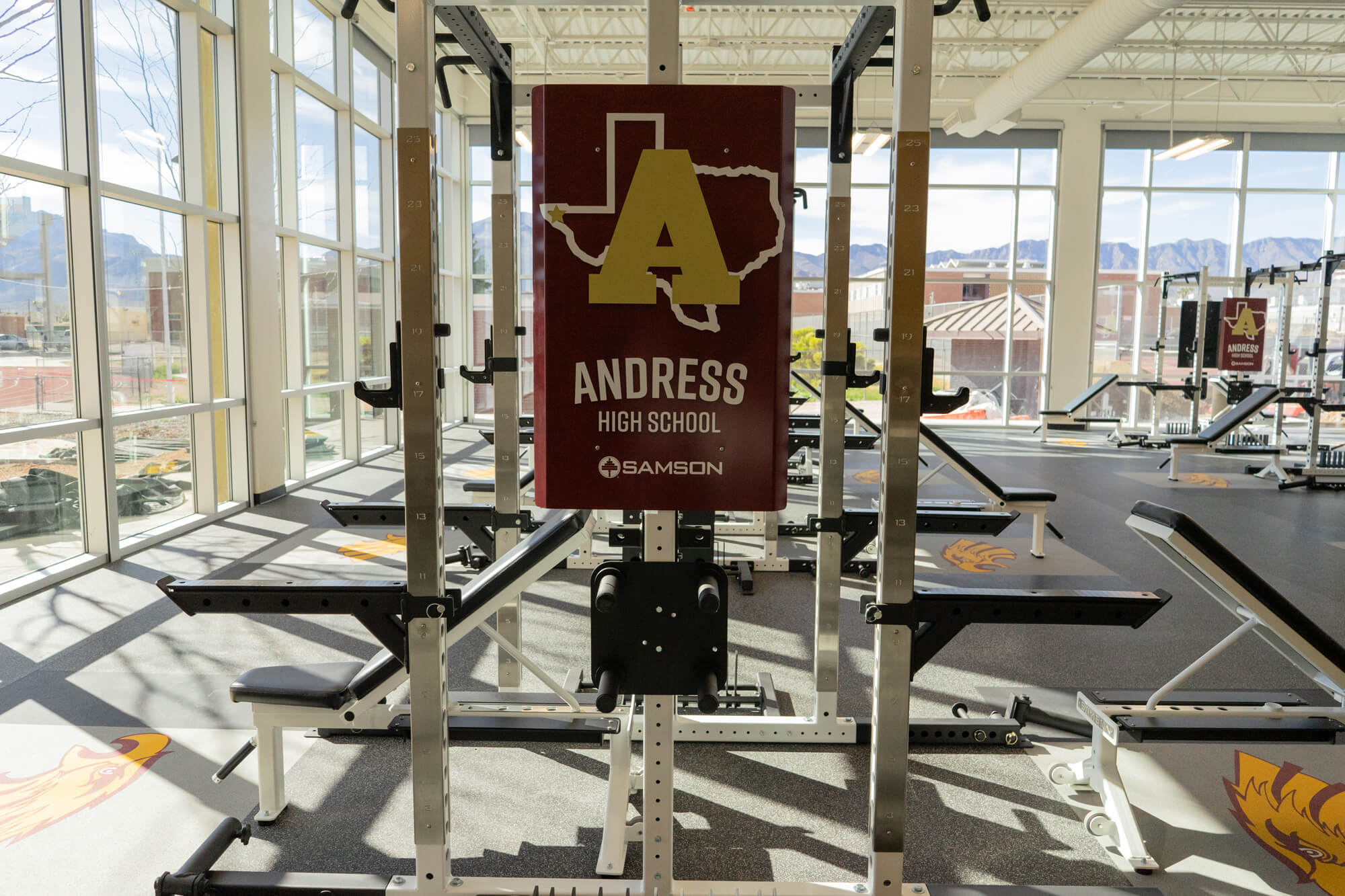
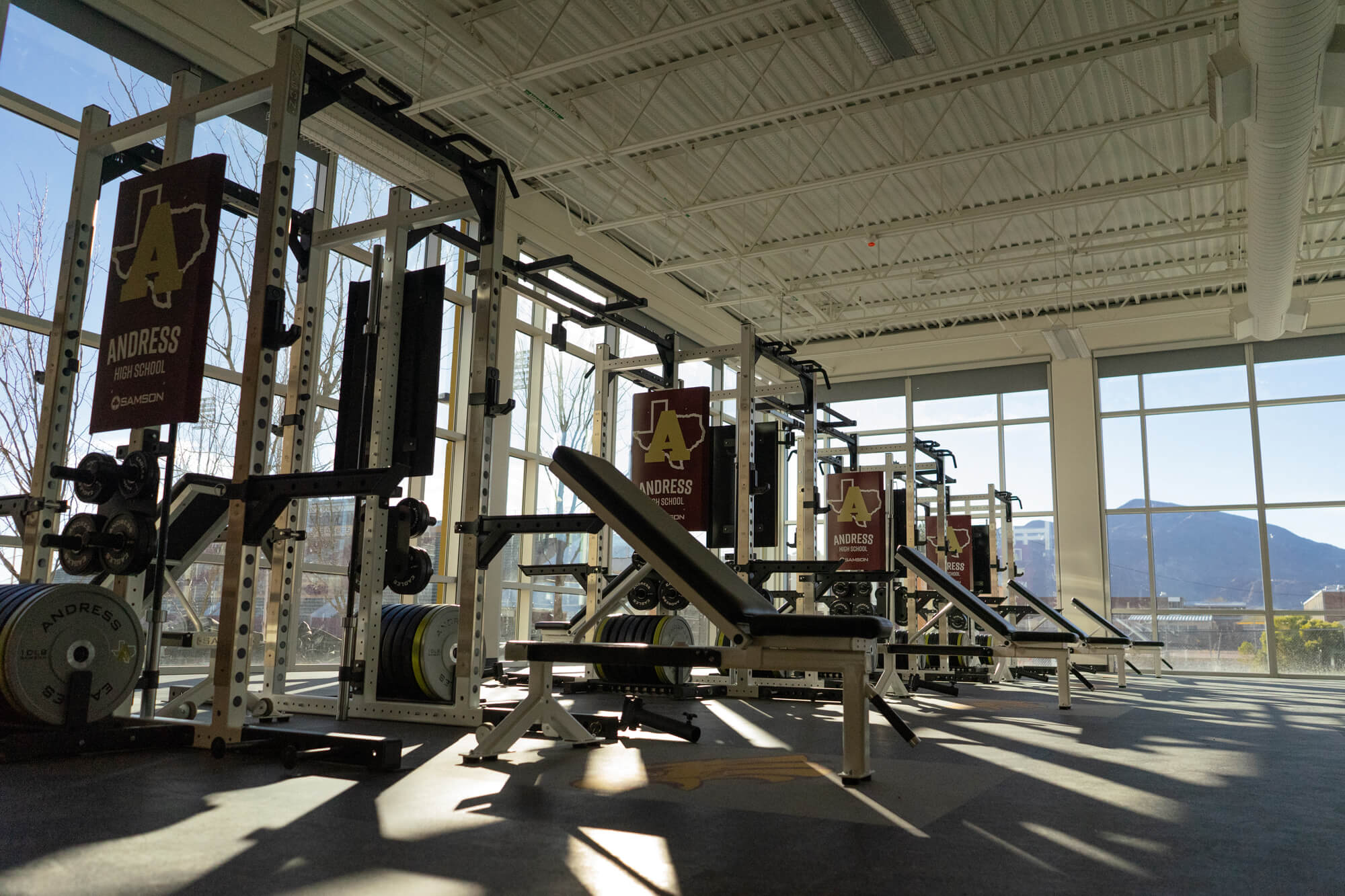
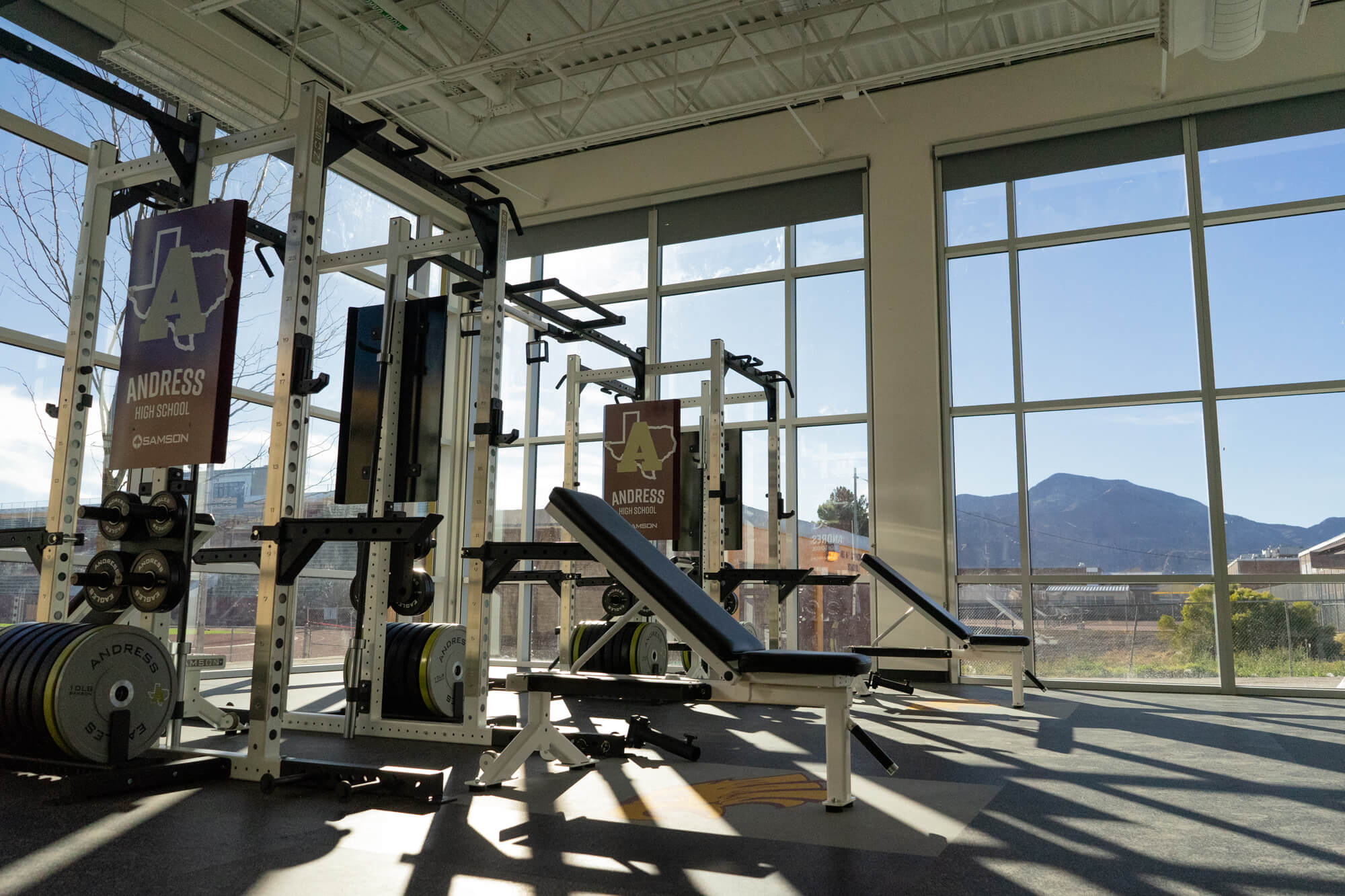
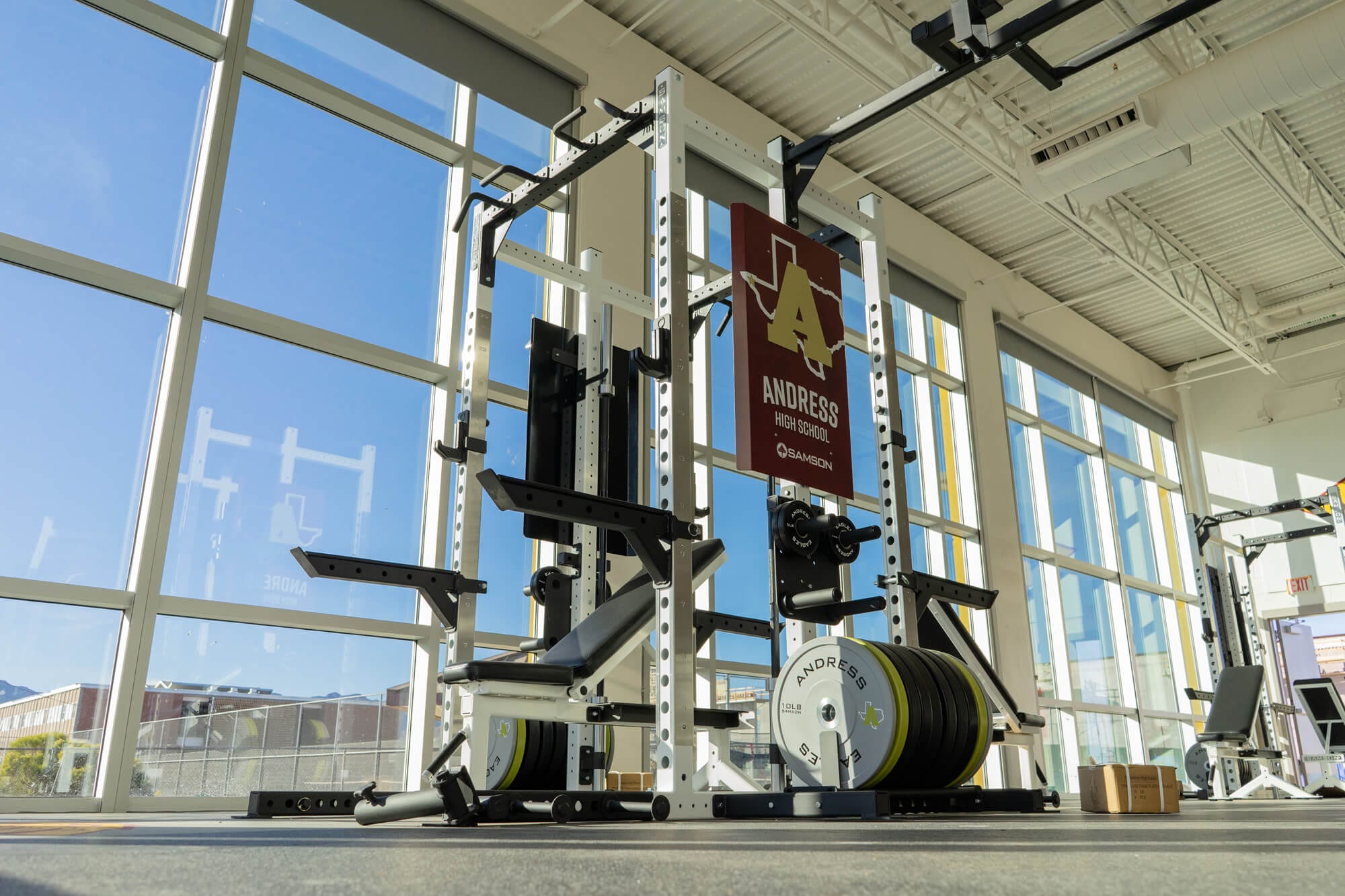
Jeff Woodruff, Athletic Director and Head Football Coach at Andress High School, said it best in one sentence: “We needed to upgrade, we needed a new facility, and when we did that we built a showpiece here.” That showpiece became more than a room filled with racks and machines. It became a destination that builds buy-in, increases consistency, and helps coaches create momentum that can be felt across every program.
This case study breaks down how Andress approached its new weight room, how Samson Equipment guided the process from layout to installation, and why the finished space is now a recruiting asset and a daily source of energy for the athletes who train there.
Facility links:
Andress High School
El Paso Independent School District (EPISD)
El Paso, TX
Project snapshot
- Location: El Paso, Texas
- Organization: Andress High School (EPISD)
- Stakeholder: Jeff Woodruff, Athletic Director and Head Football Coach
- Outcome focus: Athlete excitement, multi-sport impact, recruiting value, long-term durability
- Samson support: Space planning, room layout, equipment selection, delivery, setup, and ongoing relationship
The challenge: upgrading a facility without guessing
Most high school weight room upgrades run into the same problem early: the room is limited, the wish list is not, and the stakes are high. Coaches want enough rack stations for team flow, enough training options for real progression, and enough durability to withstand year after year of heavy use. Administrators want a smart investment that supports many sports, not just one. And everyone wants a process that does not turn into an endless back-and-forth of “will this fit” and “will this hold up.”
At Andress, the starting point was straightforward. The program needed a new facility and the equipment had to match the standard the school wanted to represent. Coach Woodruff described the intent clearly: “When we did that we built a showpiece here.” That word matters. A showpiece is not simply new paint and a few upgrades. A showpiece is designed. It is planned. It is built around the reality of how athletes move through training sessions, how coaches manage groups, and how the room will be used daily.
In high schools, that “daily reality” is often the hardest part. The room has to serve multiple teams. It has to support large groups and quick transitions. It has to be intuitive enough that student-athletes can learn the flow, yet robust enough that coaches can run efficient sessions when time is tight. And it has to last.
That is why Andress did not want to treat the project as “buy equipment, figure it out later.” They wanted a partner who would treat the upgrade like a complete facility build, where layout, equipment selection, and usability are all connected.
Why Andress chose Samson: confidence in the process
When Coach Woodruff talks about the experience, he keeps coming back to one theme: working through a process that was organized, collaborative, and smooth. “Samson was the right company to equip,” he explained, “working through the process, Samson came up with the design and how to lay out the room by the space, we all agreed on this type of equipment, the process was pretty smooth.”
That line captures something important for any coach or athletic director reading this. The best weight rooms are not accidental. They are the result of planning that connects four things:
- What the program needs to do (training goals and culture)
- What the room can actually support (space, traffic flow, safety)
- What the budget needs to accomplish (phasing, priorities, long-term value)
- What will hold up over time (construction, specs, service, warranty)
Samson’s role at Andress was not just to deliver equipment. It was to guide the room from idea to reality. When Samson helps a school plan a weight room, the work typically follows a proven project management approach that includes budget planning, equipment selection, room layout design, 2D layout approval, 3D render development, manufacturing, delivery/installation options, and ongoing support.
For a busy athletic director or head coach, that matters. You should not have to become a facility design expert just to avoid mistakes. You should be able to explain what you want your athletes to experience and then work with a team that knows how to convert that vision into a functional room.
Designing the showpiece: layout first, then equipment
One of the most common mistakes schools make is selecting equipment before the layout is solved. It is easy to get excited about individual pieces, but the real performance of a weight room comes from how the room operates as a system: where athletes line up, where traffic bottlenecks, how many stations can run at once, how coaches supervise safely, and how quickly groups can rotate.
At Andress, layout was central from the beginning. Coach Woodruff explained that Samson “came up with the design and how to lay out the room by the space.” In other words, the equipment selection was informed by the room, not forced into it.
That is exactly how a “showpiece” facility gets built in the real world. You begin with space planning and training flow, then you decide what equipment best supports that flow. A good layout makes the room feel bigger than it is. It makes sessions feel smoother. It reduces wasted time. It improves safety because athletes are not crossing paths in dangerous ways. It also helps coaches coach, because they can see what matters at the right moments.
Andress also needed the room to work for more than football. Coach Woodruff emphasized the broader impact: “It’s going to have our kids more excited, not just for football, but for all of our sports.” That is a crucial point for administrators and boosters who invest in facilities. The best weight rooms become a shared space that unifies programs, builds a standard of work ethic, and raises the floor for athlete development across the campus.
When a room is planned properly, the same square footage can support:
- Strength sessions for football, basketball, baseball, softball, soccer, volleyball, and track
- Offseason development blocks and in-season maintenance
- PE or athletic period lifting groups
- Small-group work for rehab and return-to-play progressions
That versatility is not an accident. It comes from selecting equipment that supports multiple training methods and designing a layout that makes transitions efficient.
Equipment selection: building a room athletes want to use
Once the layout direction is set, the next step is choosing equipment that matches the program’s training needs and the intensity of a high school environment. At Andress, the decision-making was collaborative. Coach Woodruff said, “We all agreed on this type of equipment.”
That shared agreement is another hidden win. A facility upgrade tends to stick when the stakeholders are aligned, which usually includes the athletic director, the head coaches, strength staff (if present), and the administrative side that manages purchasing and logistics. When the group can look at a plan and say, “Yes, this fits how we train,” it reduces risk and speeds up the project.
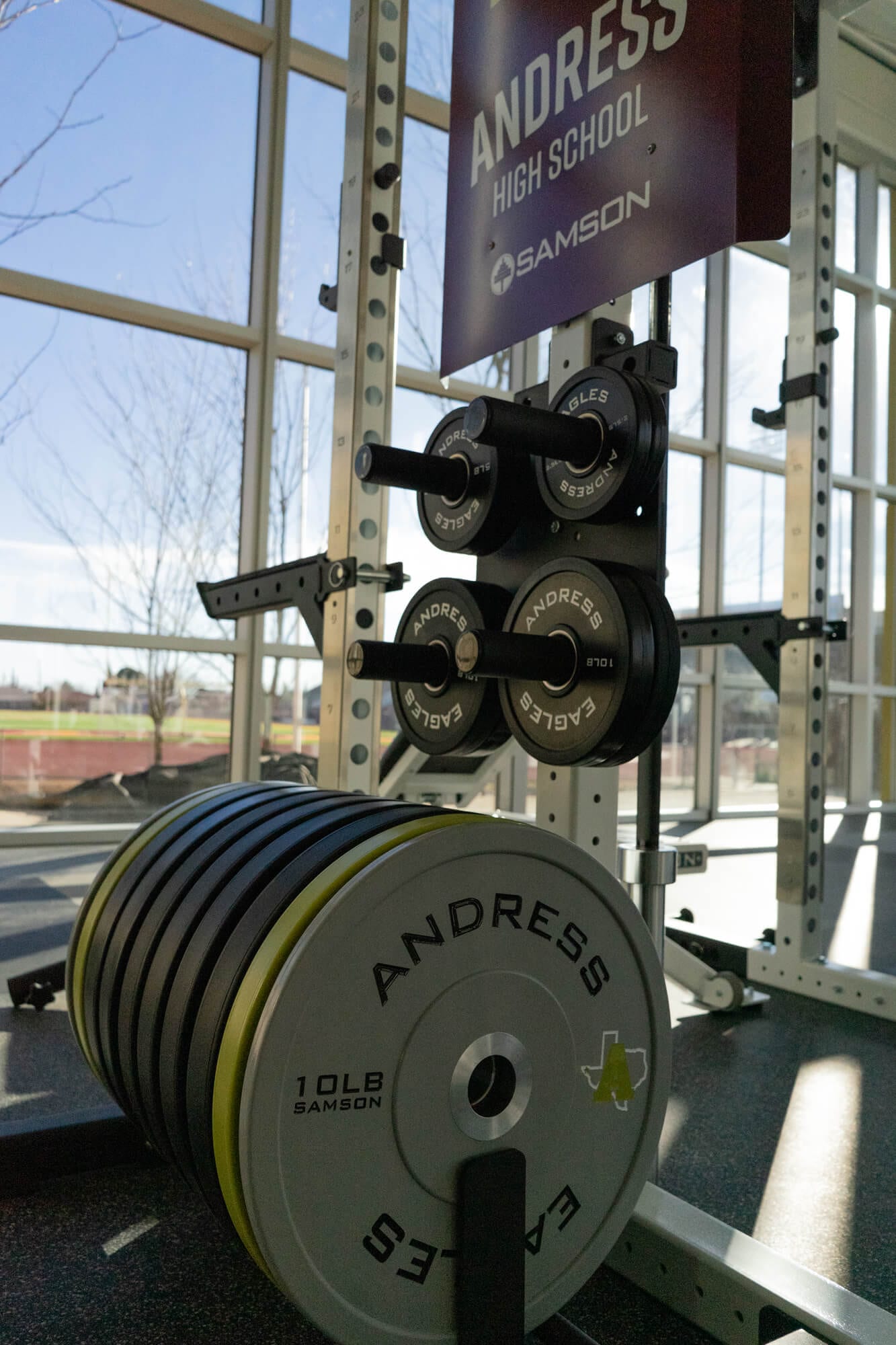
For Andress, part of the excitement was knowing the equipment would not just look impressive on day one. It would hold up in the daily grind, year after year. Coach Woodruff described what he heard when he talked to others: “The people I talk to around the country, colleges specifically, they all spoke highly of the product and the durability, it holds up, and their kids are getting stronger.”
That durability reputation is earned in environments where equipment gets used constantly. High school weight rooms are not gentle places. Bars hit safeties. Plates get dropped. Athletes learn. Programs grow. A room that looks great but fails under real use becomes a maintenance headache and a morale problem. A room that holds up becomes an asset that builds pride.
Samson’s manufacturing approach emphasizes heavy-duty materials and long-term construction standards intended for serious training environments. These build details, along with warranty coverage and clear specs, are designed to support the lifecycle of a room that gets used hard by many athletes over many years.
Delivery and setup: keeping the project smooth for the school
Even a great design can be undermined by a chaotic delivery and installation. Coaches and athletic directors do not have time for surprises when a facility is near completion, especially when schedules, teams, and school operations are still moving forward.
At Andress, the execution matched the planning. Coach Woodruff described it plainly: “Even though the delivery and setup and everything’s worked out real smooth.”
That smoothness is not just a convenience. It protects momentum. When a facility upgrade gets delayed or becomes unpredictable, the energy around the project can fade. But when the timeline is clear and the setup is handled professionally, the upgrade becomes a celebratory moment for the campus.
In a high school setting, that matters because students notice. They talk about it. They share it. They recruit other students into the weight room culture. They take pride in it.
Samson supports different delivery and installation approaches depending on the project scope and needs, which can include dock-to-dock shipping, supervised installation support, or full installation services. The goal is the same: deliver the room in a way that matches the reality of the school’s resources and timeline.
The outcome: excitement that changes daily behavior
Facilities do not win games. But they can change behavior, and behavior changes outcomes.
Coach Woodruff described the immediate impact in the most coach-like way possible: “I can’t tell you how excited we are, because that’s what this is all about. They’re going to be fired up.” That excitement is not fluff. It is the beginning of consistency. And consistency is where strength gains, confidence, and team identity are built.
When athletes are excited about the space, they show up differently. They bring energy into warmups. They compete in the right ways. They care about execution. They invite teammates. They start thinking of the weight room as part of who they are, not as a chore they have to complete.
Coach Woodruff also connected the facility to recruiting and retention: “There’s no one that has a space facility like this. It’s going to help us in recruiting. It’s going to help us keep the kids that we should have.”
That statement is a big deal for any high school program competing for athletes in a large city. A modern, functional, impressive weight room influences perception. It signals investment. It signals seriousness. It becomes part of the story a program tells students who are deciding where they want to be.
Recruiting is not only about the athletes you bring in from outside. In high schools, it is often about keeping students engaged and committed. A showpiece weight room gives students a reason to identify with the program and stay bought in. It also creates a space where multiple sports can connect under one standard of work.
More than football: a multi-sport facility that lifts the whole campus
Coach Woodruff emphasized that the benefits are broader than one team: “It’s going to have our kids more excited, not just for all of our sports.” That is what makes a weight room investment strategic. A multi-sport facility does more than build strength. It builds a shared culture.
In many schools, the weight room becomes one of the few places where athletes from different sports see each other working. That cross-pollination creates accountability and healthy competition. It also creates pride in the school, not just in one program.
From an administrative perspective, that multi-sport value makes it easier to justify investment because the room supports:
- Multiple varsity and sub-varsity teams
- Both boys and girls athletics
- Year-round development programs
- In-season maintenance and offseason progression
And because the room is designed for flow, coaches can run sessions that keep groups moving rather than waiting. That keeps training time efficient and keeps athletes engaged.
College-level feedback: why durability and reputation matter
One of the most powerful parts of Coach Woodruff’s feedback is that he did not only evaluate the room through the lens of his own school. He looked outward and asked what colleges were seeing.
“The people I talk to around the country, colleges specifically,” he said, “they all spoke highly of the product and the durability. It holds up.” In other words, he found confidence not just in marketing claims, but in the lived experience of programs that use high volumes and demand long lifecycles.
For high schools, this is especially important because replacement cycles can be long. Budgets can be unpredictable. A room that is built for the long haul becomes a stable foundation that coaches can rely on, even when other variables change.
Durability also supports safety. Equipment that is engineered and manufactured to handle real training loads reduces the likelihood of problems that disrupt training, require constant repairs, or create uncertainty about what athletes should use.
Samson’s published specs and warranty structure are designed to reflect that long-term intent, including clear material standards and warranty coverage that support serious training environments.
Service after install: the relationship is part of the value
A weight room is not a one-time transaction. It is a living environment. Programs evolve. Training needs change. Schools expand. Coaches move. New athletes come in. If the vendor relationship ends at the invoice, the school eventually gets left behind.
Coach Woodruff highlighted that distinction in a way that every athletic director understands: “It’s one thing to try to win a bid, but it’s another thing to service the product afterwards, maintain a relationship, because I’m going to be telling people down the road.”
That is how reputations spread in this world. Coaches talk. Athletic directors talk. Administrators talk. When a room upgrade goes well and the relationship stays strong, people refer others with confidence. When it does not, they warn others just as quickly.
Coach Woodruff made it even more direct when he talked about what the facility means in the region: “Everyone in El Paso is going to want to build something now, and if you’re not going with Samson you’re just building a building.”
That line is the heart of the Andress story. The difference is not only the equipment. It is what the equipment represents and what the process creates: a showpiece that fuels culture, supports performance, and makes athletes proud to work.
What coaches can learn from the Andress project
If you are a coach, athletic director, or administrator planning a facility upgrade, here are the practical lessons Andress shows in real life.
1) Start with the “why,” not the shopping list
Andress began with a clear intent: upgrade the facility and build a showpiece. That clarity makes decisions easier. When you know the outcome you want, you can evaluate every choice through that lens: does this contribute to the room being a recruiting asset, a daily motivator, and a multi-sport culture builder?
2) Prioritize layout and flow early
The best rooms are designed around movement and coaching visibility. Coach Woodruff emphasized that Samson “came up with the design and how to lay out the room by the space.” When layout leads, equipment decisions become smarter and the final room functions better.
3) Make multi-sport value non-negotiable
A school weight room should serve the whole athletic department. Andress focused on excitement “not just for all of our sports,” which helps the facility become a shared identity marker, not a single-team luxury.
4) Treat delivery and setup like part of the performance
“Delivery and setup… worked out real smooth” sounds simple, but it is huge. Smooth execution protects momentum, reduces stress, and turns the room reveal into a positive event that athletes remember.
5) Choose durability plus relationship
Coach Woodruff looked for durability and confirmed it through colleague feedback. He also emphasized service after install. That combination is what turns an equipment purchase into a long-term advantage.
How Samson supports schools through the full process
Many coaches are surprised by how many decisions have to be made in a facility upgrade. It is not only equipment. It is procurement. It is budgeting. It is layout. It is training flow. It is installation coordination. It is timeline management. And it is answering questions from multiple stakeholders along the way.
Samson’s approach is designed to reduce that burden by providing a clear path from planning to completion, including steps like budget conversations, equipment selection, room layouts, render development, build-to-order manufacturing, delivery/installation options, and long-term service and warranty support.
If you want to see how this process is explained from start to finish, review Samson’s published process page and planning resources:
Conclusion: a showpiece that builds pride and performance
Andress High School did not upgrade its weight room to check a box. They upgraded it to change the daily experience of their athletes and the perception of their program in the community.
Coach Woodruff summarized the impact in the words every coach wants to be able to say about their facility: the athletes are excited, they are ready to work, and the room will help the program grow. “They’re going to be fired up,” he said. “They’re excited to finally get in and get to work.”
And the result is bigger than one moment. A showpiece room becomes a recruiting tool. It helps keep the kids you should have. It supports all sports. It raises the standard across the campus. And when the equipment holds up and the relationship stays strong, it becomes a story that gets repeated across a district and a region.
In Coach Woodruff’s words: “There’s a lot of small colleges who would love to have something as nice as this.”
If you are considering a new build or a major upgrade and you want a partner who can guide the full process, start here:
Andress High School, El Paso, Texas: proof that when the process is right, the room becomes more than a room. It becomes a competitive advantage.