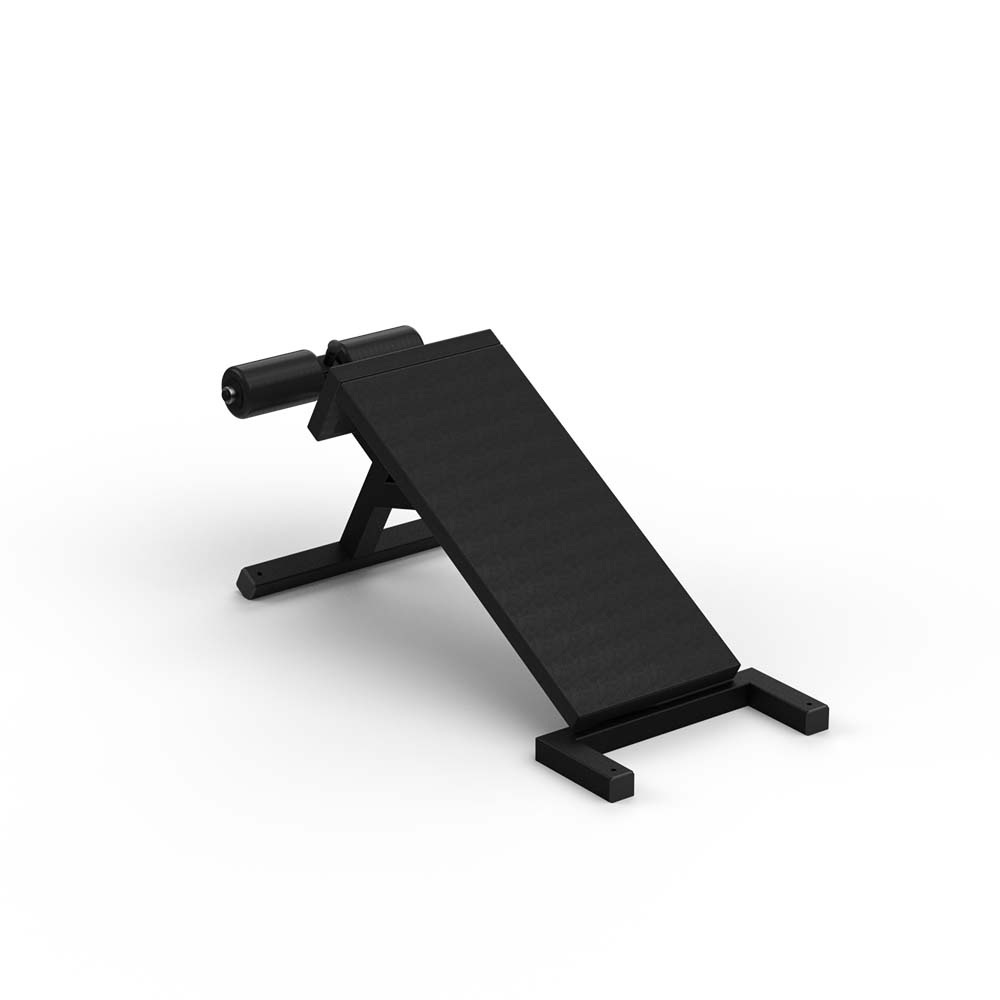
Roman Chair: Posterior Chain and Trunk Strength for Athletic Programs
Strong athletes are built through consistent, high-quality training that develops the entire system: legs, hips, trunk, and upper body. While squats and hinges often get most of the attention, trunk and posterior chain accessory work is a major driver of long-term durability and performance, especially for field sports, court sports, and tactical populations.
The Samson Roman chair supports targeted training for the posterior chain and trunk, commonly used for back extension and related movements. In team facilities, this type of station fits well into accessory lanes, warm-up circuits, and durability-focused blocks.
Why posterior chain and trunk strength matter
The trunk is not just “abs.” It is the connection between upper and lower body that helps athletes transfer force, maintain posture under load, and control movement during sprinting, jumping, cutting, and contact. Posterior chain strength (glutes, hamstrings, spinal erectors) supports powerful movement and helps athletes tolerate high training and sport volume.
Common training goals supported by a Roman chair
- Trunk endurance: sustain posture and control during long practices and games.
- Hip extension strength: support sprinting and jumping mechanics.
- Balanced development: complement squats and hinge patterns with controlled accessory work.
- Durability training: build tolerance for repeated sport demands.
Where the Roman chair fits in a team training layout
In a well-designed facility, accessory tools are placed intentionally so they support flow rather than disrupt it. The Roman chair typically lives in a bench/accessory lane where coaches can run circuits and athletes can rotate quickly. This keeps primary rack stations available for the biggest training blocks.
Explore related bench and accessory equipment here: Weight Benches.
Programming ideas coaches actually use
Because the Roman chair supports movements that can be scaled by tempo, range of motion, and loading, it works well across many training ages. Coaches commonly program it as:
- Accessory work after main lifts: controlled sets to build trunk and hip endurance.
- Durability circuits: paired with hamstring, groin, and upper-back work.
- Warm-up activation: light sets to prepare hips and trunk for training days.
- Return-to-play progressions: gradual rebuilding with strict technique.
In busy rooms, the value of an accessory station is how reliably it gets used. A layout that supports athlete flow makes consistency easier.
Movement options beyond basic back extensions
Many coaches use a Roman chair for more than one “standard” movement. Depending on your coaching preferences and athlete needs, this station can support different intents while still keeping execution simple.
Common variations and intents
- Strict back extension: controlled hip hinge focus with trunk stability.
- Isometric holds: build trunk endurance and position control.
- Tempo reps: slow eccentrics to emphasize quality and durability.
- Low-load volume work: consistent weekly “durability” sets for teams.
Coaching cues and execution focus
To get the most out of posterior chain accessory work, coaches often emphasize:
- Controlled reps: avoid bouncing and keep the movement intentional.
- Neutral alignment: maintain posture and control through the range.
- Appropriate range: use a range that supports the athlete’s current capacity.
- Consistent progressions: increase volume/tempo/load over time as needed.
Common mistakes (and how to keep reps productive)
- Bouncing at the bottom: reduces training effect and can irritate the low back.
- Overextending at the top: “cranking” into extension can shift stress away from the intended muscles.
- Rushing the eccentric: losing control on the way down often creates poor positions.
- Too much load too soon: this station is often most valuable with strict quality and controlled volume.
Pairing posterior chain work with the rest of the program
Coaches often place Roman chair work alongside hamstring and trunk work so athletes build a balanced posterior chain. In a circuit format, it pairs well with upper-back pulling movements and simple trunk variations.
This makes it a great fit for the accessory lane: athletes can rotate through stations quickly without interfering with the main rack and platform zones.
Facility planning: build the accessory lane correctly
Accessory lanes are where many facilities win or lose daily efficiency. If the lane is cramped, far from storage, or mixed into primary lift traffic, sessions become chaotic. Samson supports facility design so accessory tools are placed logically and athletes can move station-to-station safely.
Start your facility plan here: Start Your Free 3D Layout Design.
Maintenance and daily operations
Like any high-use station, a Roman chair stays in better condition when the facility has simple reset standards and routine upkeep.
- Wipe-downs: clean upholstery and touch points daily.
- Hardware checks: confirm bolts remain tight under repeated use.
- Clear storage nearby: keep small implements organized so the station isn’t cluttered.
When accessory lanes stay clean and consistent, coaches can rely on these stations week after week instead of treating them as “optional” tools.
Ordering guidance and support
If you’re selecting equipment for a new build or upgrading an existing room, Samson can help you choose a complete bench and accessory mix that matches your teams and your training schedule.
For recommendations and pricing: Contact Samson Equipment.
FAQs: Roman chairs
Is this station appropriate for beginners?
Yes, coaches can scale the movement by reducing range of motion, using slower tempo, and focusing on control.
Does a Roman chair replace deadlifts or hinges?
No. It typically complements primary hinge patterns by providing targeted accessory work for the trunk and posterior chain.
Can Samson help plan a full bench lane?
Yes, Samson can help design the room so accessory equipment supports throughput and daily use.
How many accessory stations should we plan?
That depends on roster size and rotation design. Many programs plan enough accessory capacity so durability work is consistent and doesn’t create bottlenecks after the main lift.
Is this station only for “low back” training?
No. Coaches typically use it to train a broader posterior chain and trunk pattern with controlled execution and appropriate loading.
Request Pricing and Layout Support
Build stronger, more resilient athletes with a dedicated posterior chain station that fits into high-throughput team training. For help planning your facility layout, contact Samson.
Ordering, support, and facility planning
In a high-volume facility, the right equipment is only part of the solution. Planning station counts, storage, and traffic flow helps teams train efficiently and keeps equipment in better condition long-term. If you’re building a new room or upgrading an existing space, Samson can help you choose the right mix of stations and accessories so the room works under real training volume.
For help selecting options, confirming fit, and building a complete equipment list, reach out here: Contact Samson Equipment. If you’re planning a full room layout, you can also start a free design conversation here: Start Your Free 3D Layout Design.
Quick FAQ
- How should a large equipment project begin? Use the contact form so the sales team can help with scope, layout, and next steps.
- Can Samson ship outside the United States? Yes, Samson has shipped products around the world and can review shipping needs by request.
- What purchasing options are available? Schools can use purchase orders, and private sales typically use a deposit with the balance due before shipment.