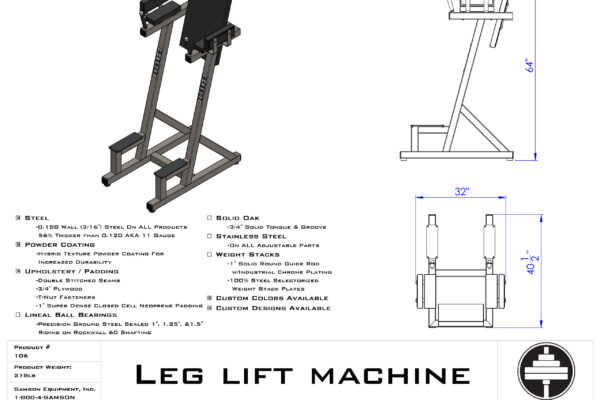
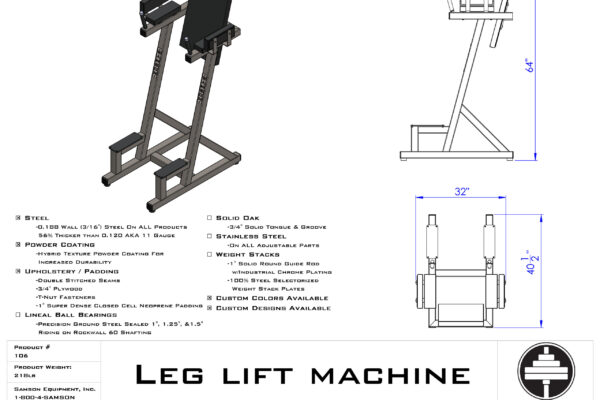
Product Specifications
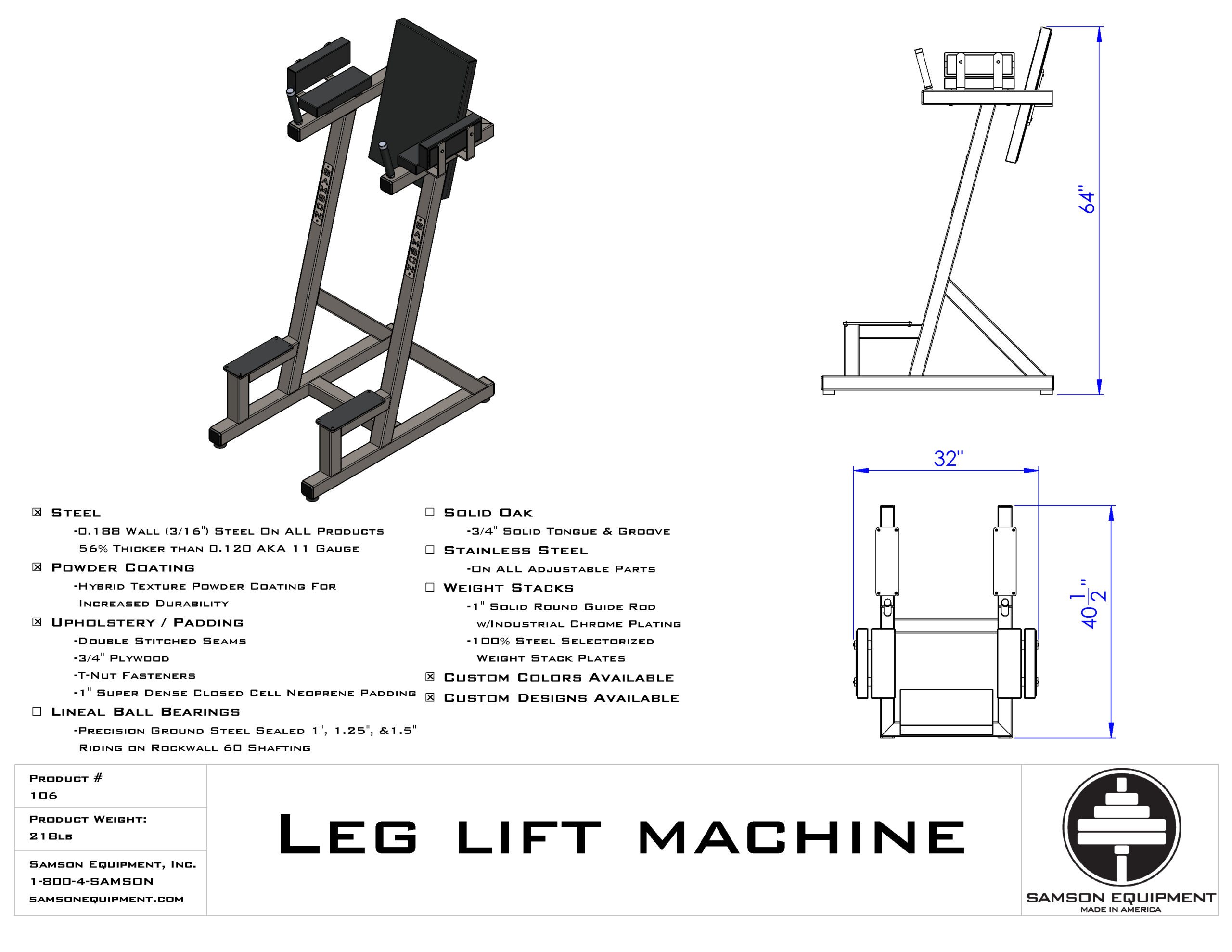
| Product # | 106 |
|---|---|
| Product Weight | 218 lbs |
| Dimensions | 32 x 40.5 x 64 in |
| Construction | 0.188 wall (3/16 in) steel |
| Finish | Hybrid texture powder coating |
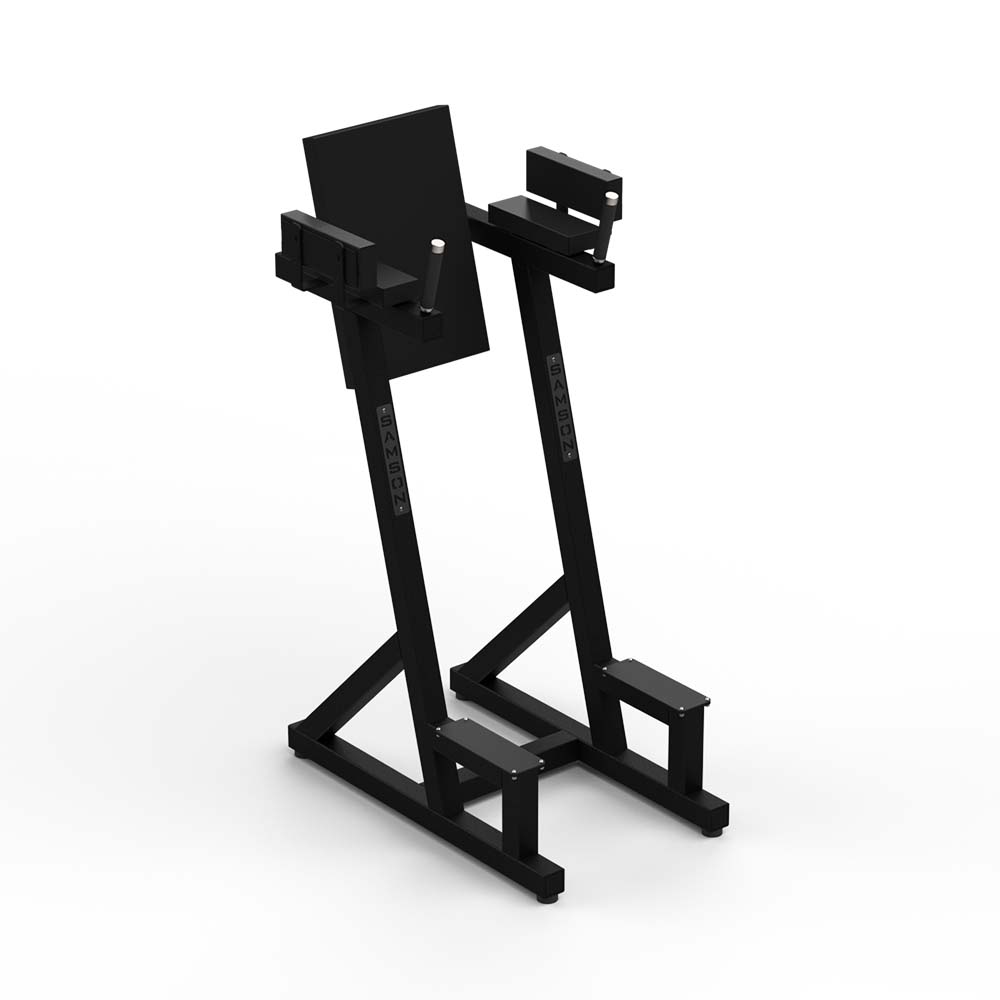
Hanging Leg Lift Machine: A Dedicated Station for Core, Hip Flexors, and Grip
In a busy institutional weight room, the best accessory equipment is the equipment that matches the training flow you already run. A hanging leg lift machine adds a dedicated station for knee raise and leg raise work, so athletes can build core strength, hip flexor capacity, and trunk control without tying up primary rack or platform stations. For schools, colleges, and tactical facilities, dedicated stations like this are a smart way to expand training options while keeping the room efficient and easy to supervise.
Why accessories matter in institutional programming
Main lifts build the foundation, but accessory work is where many programs support durability, address imbalances, and build “extra volume” without wrecking recovery. A hanging leg lift machine helps coaches add lower-body accessories in a controlled, repeatable way, especially useful for athletes who need more targeted work around the knee and hip.
- Program variety: expand your training menu without expanding your floor plan.
- Station efficiency: keep accessory work organized during circuits and group training.
- Durability support: build supplemental volume in a controlled pattern.
- Budget-aware upgrades: add capability without buying a full standalone machine.
Where a hanging leg lift machine fits in your training flow
A hanging leg lift machine is often most effective when it’s treated as a dedicated accessory lane. That might mean placing it near other bench-based accessories or within a “small footprint” zone where athletes rotate through trunk and supplemental work.
Common facility use cases
- In-season accessory work: controlled volume that supports strength without high fatigue costs.
- Rehab-adjacent training: when athletes need a consistent pattern and controlled progression.
- Large group stations: one more lower-body station to keep athletes moving and reduce bottlenecks.
- Multi-sport facilities: a flexible accessory option that works across many programs.
Programming examples (keep it simple)
Most facilities get the best results when a station has a clear purpose. Coaches often implement a hanging leg lift machine in a predictable weekly slot so athletes learn the setup quickly.
- Lower accessory day: add controlled sets after primary squats or hinge work.
- Unilateral + trunk lane: pair the station with lunges/step-ups and trunk work in a rotation.
- In-season maintenance blocks: moderate volume that supports durability and consistency.
- Warm-up or prep circuits: when coached for control and quality, not fatigue.
Planning considerations before you order
stations are simple, but compatibility and room planning still matter. Before adding a hanging leg lift machine, consider these practical questions:
- Footprint and clearance: confirm the station fits your layout, including walkways and coaching lanes.
- Placement: locate the station near accessory and trunk work so it supports circuits and rotations.
- Traffic flow: place bench accessories out of the main rack lane to avoid congestion.
- Coaching and supervision: accessory zones should still be visible for cueing and safety.
Bench lane planning: keep accessories from becoming clutter
Bench lanes often become the busiest part of a room: athletes use them for pressing, dumbbell work, and accessory circuits. That’s why bench accessories should be planned around flow and organization.
- Assign stations: designate which benches are “primary press” benches and which are “accessory lane” benches.
- Plan storage nearby: accessories need a home so they don’t live on the floor.
- Keep walkways open: ensure athletes can move between stations without stepping over stations.
- Standardize setup rules: reduce time lost to reconfiguring benches between groups.
Why Samson benches and accessories are planned as a system
In institutional rooms, “mix and match” equipment can create headaches, stations don’t fit, setups get improvised, and staff spend more time troubleshooting than coaching. Planning benches and accessories as a unified system improves reliability and helps the room run smoothly. If you’re evaluating bench options and want to build a complete bench lane that supports your training goals, explore the bench category and consider a facility-wide plan: Weight Benches.
Design support: build the room around how you coach
Accessories are most valuable when they’re placed intentionally. A great room is designed around coaching reality: where athletes line up, where spotters stand, how groups rotate, and how you store plates and smaller pieces. Samson can help you visualize the room before you buy equipment so you don’t have to “fix it later.” Start a layout conversation and get a free 3D plan here: Start Your Free 3D Layout Design.
Ordering guidance and next steps
If you already know what you need, the next step is confirming compatibility and understanding how the station fits into your facility plan. If you’re building a larger project, Samson can help you choose an equipment mix that supports your teams and your space. Reach out to the Samson team for pricing, options, and planning support: Contact Samson Equipment.
Tip: plan who sets up and resets accessory stations
In team rooms, the difference between “great accessory options” and “constant clutter” is often ownership. Decide whether staff installs accessories for blocks, or whether athletes are responsible for reset. A simple station rule keeps the room cleaner and sessions smoother.
FAQs: Hanging leg lift machines
Is a station a substitute for a full machine?
It depends on your goals and group size. stations can add useful accessory capability with minimal space, but larger rooms may still plan dedicated machines for higher throughput.
How do I know if it fits my bench?
Confirm the bench model and intended configuration with the Samson team. Matching accessories to the correct bench setup is the key to smooth operation.
Can Samson help me plan a complete bench lane?
Yes. Bench lanes, storage, and accessory zones are often one of the highest-traffic parts of a room. A layout-first plan improves flow and reduces daily friction.
Request Pricing and Layout Support
Want more training options without adding a large machine footprint? Add the right bench accessories and plan the room for efficient station flow. For help selecting the right setup, contact Samson or start your design.
Ordering, support, and facility planning
In a high-volume facility, the right equipment is only part of the solution. Planning station counts, storage, and traffic flow helps teams train efficiently and keeps equipment in better condition long-term. If you’re building a new room or upgrading an existing space, Samson can help you choose the right mix of stations and accessories so the room works under real training volume. For help selecting options, confirming fit, and building a complete equipment list, reach out here: Contact Samson Equipment. If you’re planning a full room layout, you can also start a free design conversation here: Start Your Free 3D Layout Design.
Quick FAQ
- Who is Samson equipment built for? Samson serves institutional facilities such as schools, colleges, teams, municipalities, and tactical organizations.
- What is the typical manufacturing lead time? Orders typically take about 10 weeks to manufacture, depending on design complexity.
- Does Samson provide layout and 3-D design support? Yes, Samson uses two- and three-dimensional layouts to help plan station counts and room flow.