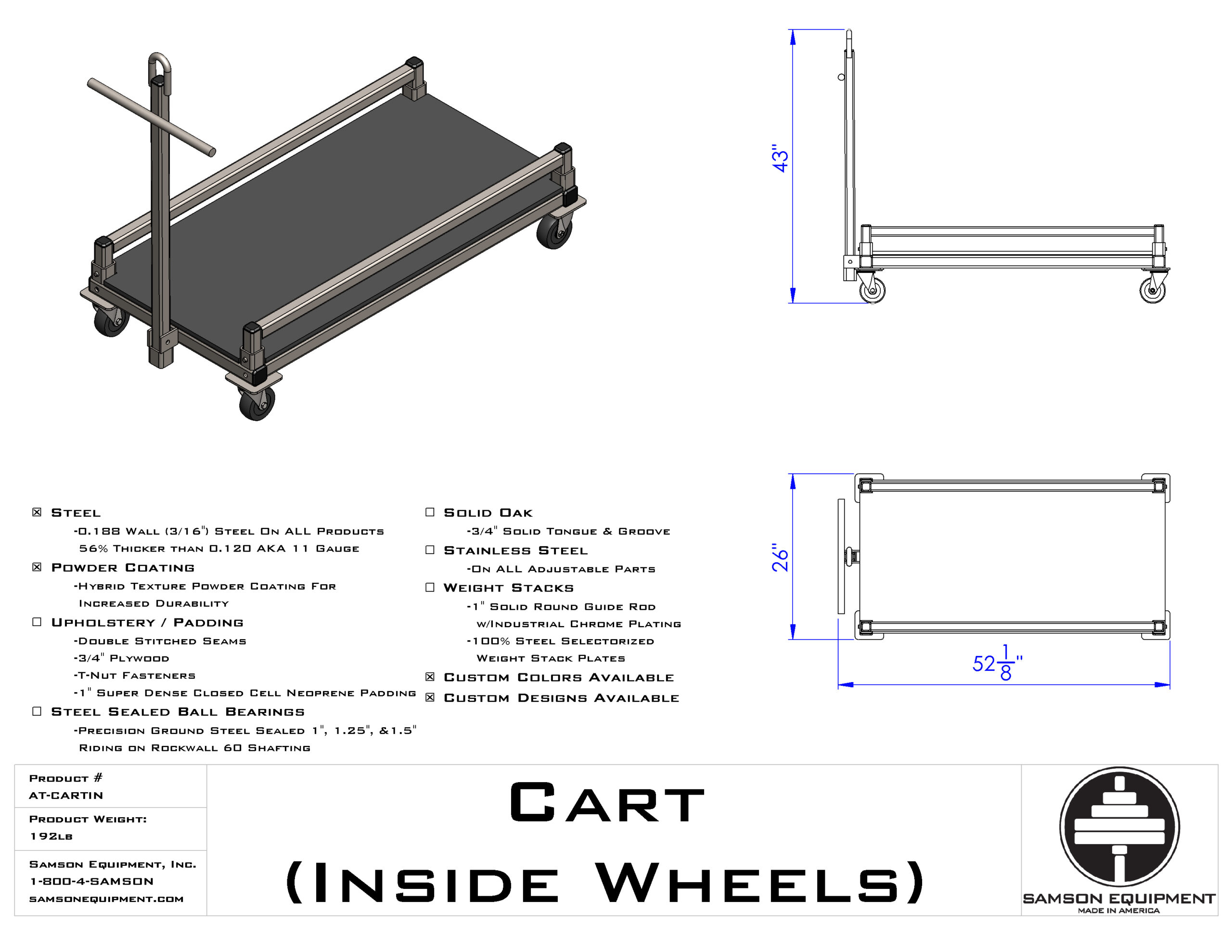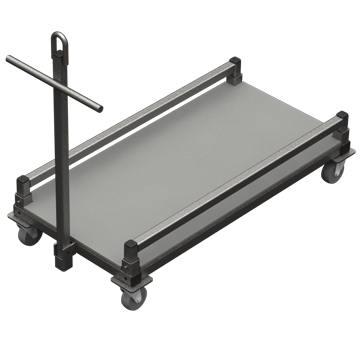
Cart with Inside Wheels and 1160 lb Capacity
The Cart with inside wheels and 1160 lb capacity is aimed at facilities that need serious transport capability without losing control of how the cart moves through the room. In athletic training settings, carts are often asked to do more than one job. They may carry supplies, coolers, towels, equipment, or bulk support items, and they may do it several times in the same day. That is why layout details matter. The inside-wheel configuration keeps the wheel footprint tucked closer to the body of the cart, which can be useful in tighter spaces where staff wants a cleaner overall profile while still keeping the benefit of mobility and higher carrying capacity.
The listed 1160 lb capacity tells buyers this is not a light-duty convenience piece. It is a serious support cart for programs that move weight, volume, or a combination of both through their sports medicine or facility workflow. Capacity alone is not the whole story, but it does matter when staff wants confidence that the cart belongs in a demanding environment rather than a decorative one. Schools, colleges, and larger performance spaces often look for that combination of durability and practical movement when they are outfitting support areas around the training room.
Why the Inside-Wheel Layout Matters
Inside wheels can be attractive when buyers want the mobility of a cart without pushing the wheelbase farther outside the body of the unit. That can help the cart feel tidier in lanes where people are already moving around taping tables, treatment tables, door openings, and storage zones. The point is not simply that one wheel style is always better than another. The point is that the configuration should match the room. If your staff is working in tighter circulation areas, the geometry of the cart may matter just as much as the load rating.
That is also why many buyers compare this model directly against the Cart with outside wheels and 1160 lb capacity rather than assuming the difference is minor. The right answer depends on how the cart will be used, where it will be parked, and what kind of travel path it will see each day. Reviewing both styles within the broader Athletic Training Tables category helps teams choose a piece that actually supports daily work instead of buying on capacity alone.
What this cart can help a program accomplish
- Support heavier transport needs with a stated 1160 lb capacity.
- Keep the wheel footprint closer to the body of the cart in rooms where circulation space matters.
- Move supplies, support gear, or bulk items where staff needs them instead of leaving everything at one fixed station.
- Coordinate transport needs with nearby taping, treatment, and storage pieces.
- Create a more intentional support workflow for high-volume athletic training rooms.
How This Cart Fits Into a Complete Sports Medicine Space
Mobile support pieces matter because athletic training does not happen in a single fixed spot. Supplies move from taping area to treatment area, from hallway to practice court, and from pre-practice setup to post-practice cleanup. A cart that belongs in that workflow should help staff stage what they need before the rush begins and keep items close once athletes start rotating through the room. That is why many buyers compare cart configurations alongside their core Athletic Training Tables, because the best support piece is the one that shortens steps, protects usable floor space, and helps the room stay organized when several athletes need attention at once.
Programs that are planning the room holistically often compare mobile pieces with a Beverage Cart for hydration support, a Single Taping Table W/ Shelf and Drawer for taping and immediate storage, and tables like the 6′ treatment table split leg or 5 Treatment Table with 6 extension when extended treatment surfaces are part of the workflow. By linking these decisions together, buyers can decide where bulk items should travel, where frequently used supplies should stay fixed, and how to keep athletes moving efficiently through the room. A good cart supports that system. It should make the room easier to run under pressure, not just give the facility one more object to store.
Plan for Traffic, Storage, and Daily Use
When you evaluate carts for a new build or retrofit, think about the routes your staff actually travels every day. Measure doorway clearances, think through where the cart will be parked when not in motion, and consider whether the unit will mostly support hydration, bulk storage, or general transport. Capacity, footprint, and top-surface usability all matter, but so does how naturally the cart fits into the room without forcing trainers to work around it. Buyers who sketch those traffic patterns early usually make better decisions than buyers who only compare equipment one SKU at a time.
Samson buyers are often building a room that has to perform for years, not just for opening day photos. That is why it helps to compare carts, tables, and accessories across the broader Athletic Training Tables line and then talk through the layout with contact Samson Equipment. A short planning conversation can help identify complementary pieces, clarify how much storage belongs at point of use, and make sure the cart supports the pace of your staff rather than creating one more obstacle to work around.
Compare Cart Options with Samson
If your facility is choosing between cart styles or trying to decide how much mobile support the room really needs, review the Athletic Training Tables line and then contact Samson Equipment for guidance. Samson can help you compare the inside-wheel and outside-wheel cart options, identify complementary treatment-room pieces, and build a sports medicine setup that feels organized from first athlete in to last cleanup of the day.
Compare Cart Layout to the Routes in Your Room
One of the easiest ways to choose between cart styles is to walk the routes your staff actually uses and imagine the cart moving through them several times each day. Think about doorway approaches, turning points, where athletes typically queue, and where the cart needs to sit when it is parked. In rooms where circulation is tighter, those route details can make the inside-wheel configuration especially worth considering because the overall cart profile stays visually cleaner around active work zones.
That kind of route-based planning is more useful than shopping by capacity alone. The cart has to fit the load, but it also has to fit the room. When teams compare the inside-wheel model with the broader athletic training table lineup and then discuss the room with Samson, they usually make a better long-term decision because the cart is being selected as part of a traffic pattern and support workflow, not just as a standalone item.
Product Specifications
| Dimensions | N/A |
|---|