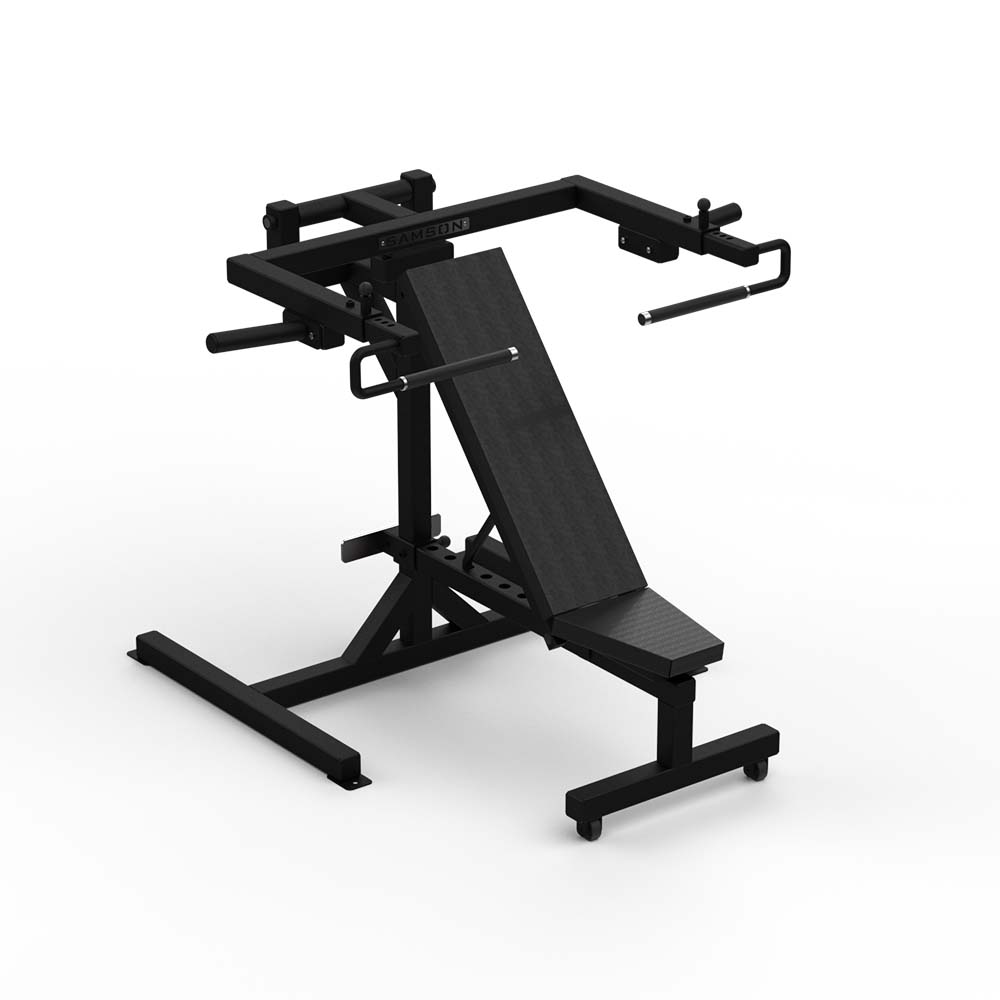
Bilateral Incline Shoulder Bench: Strong, Repeatable Pressing for Teams
Upper-body strength is a core part of most athletic development programs, and pressing variations are a staple movement pattern. In team training environments, the key is delivering that training reliably: safe setup, consistent execution, and efficient station flow for large groups.
The Samson bilateral incline shoulder bench is designed for institutional facilities that need durable equipment and predictable training stations. “Bilateral” work supports symmetrical development and provides a clear, repeatable setup for athletes across a wide range of training ages.
Why incline/shoulder pressing is a common program staple
Pressing work supports sport performance by building strength and stability through the shoulders, chest, and trunk. In many programs, incline or shoulder-focused pressing is used to build upper-body strength while supporting balanced development across movement patterns.
Common reasons coaches program incline/shoulder pressing
- Upper-body strength development: supports contact, blocking, and general athletic capacity.
- Shoulder stability and control: complements pulling and scapular work.
- Program variety: provides a pressing variation beyond flat bench work.
- Team training efficiency: dedicated stations keep athletes moving.
What coaches look for in a pressing station
In an institutional environment, equipment needs to support consistent execution, not just “work for one lifter.” Coaches commonly prefer stations that are easy to set up, easy to supervise, and repeatable across an entire roster.
Practical station considerations
- Repeatable setup: athletes can quickly find a consistent position each session.
- Clear coaching sight lines: coaches can see torso position and control without hovering.
- Efficient rotations: minimal downtime between athletes during a block.
- Durability under volume: built for daily use across seasons.
Bilateral stations and team throughput
In a busy room, station design influences both safety and speed. A bilateral pressing station creates a clear “home base” for the movement. Athletes learn the setup quickly, coaches can check technique at a glance, and the station becomes a reliable part of the weekly plan.
Dedicated bench stations also help you balance the room: while groups use racks for primary lower-body work, other groups can rotate through upper-body stations without congestion.
How to build a complete upper-body plan
Pressing work is most effective when it’s paired with enough pulling volume and trunk training to support healthy shoulders and strong positions. Many team programs use simple templates so the room runs smoothly and athletes progress consistently.
Easy pairing ideas
- Press + row: alternate sets with a row variation to balance volume.
- Press + vertical pull: pair with pull-ups, pulldowns, or band-assisted pulls.
- Press + trunk: include anti-extension/anti-rotation work to reinforce posture.
These pairings are coach-friendly and work well for large groups because they reduce idle time and keep athletes moving.
Build the bench lane the right way
Most facilities benefit from a defined bench/accessory lane that includes multiple station types: incline, flat, specialty benches, and accessory tools. When that lane is planned intentionally, coaches can run circuits and keep sessions moving even with large groups.
Explore additional bench options: Weight Benches.
Programming ideas for school and team facilities
Coaches often implement incline/shoulder pressing using moderate loads and strict execution standards. This is especially true in-season when the goal is maintaining strength and durability without excessive fatigue.
Team-friendly programming formats
- Upper-body accessory block: press + row + trunk work in a circuit.
- Strength day rotation: pressing station paired with a rack station rotation.
- In-season maintenance: moderate volume with high rep quality.
- Off-season development: progressive overload with clear technique standards.
Coaching cues that scale across a roster
With large groups, cues need to be simple. Many coaches emphasize consistent torso position, controlled range of motion, and balanced weekly volume so athletes build strength without turning every session into a max-out.
- Control the torso: avoid excessive arching that changes the intent of the movement.
- Own the range: use a range of motion the athlete can control without bouncing.
- Stay stacked: keep ribs and pelvis positioned for efficient force transfer.
- Balance the week: match pressing with pulling work to support shoulders.
Facility planning: layout, storage, and safety lanes
Bench stations are most effective when athletes can approach them safely and coaches have good visibility. That means clear walkways, nearby storage for plates/dumbbells if relevant, and enough spacing between stations for spotters and coaches to move.
If you’re designing a new space, Samson can help you map the station mix and traffic flow so the room operates smoothly under real use.
Start your plan here: Start Your Free 3D Layout Design.
Maintenance and longevity in high-use rooms
In institutional facilities, small upkeep habits keep equipment professional and reduce long-term costs. A simple routine (cleaning, hardware checks, and clear reset rules) helps benches and stations last under heavy volume.
Simple upkeep habits
- Daily wipe-downs: keep upholstery and touch points clean.
- Weekly hardware checks: confirm bolts and attachments stay tight.
- Plan nearby storage: reduce the temptation to set plates on benches.
- Standardize resets: athletes return the station to baseline after the block.
Ordering guidance and support
Not sure how many bench stations you need? Samson can help you plan station counts based on group size, scheduling, and training flow.
For pricing and recommendations: Contact Samson Equipment.
FAQs: bilateral incline shoulder benches
Is this bench appropriate for large groups?
Yes, dedicated stations are often used to improve throughput and make coaching simpler for team sessions.
How should we plan station counts?
Station counts depend on group size and rotation plan. A layout-first approach helps avoid bottlenecks.
Can Samson help design a full room layout?
Yes, Samson supports complete facility design, equipment selection, and layout planning.
Should overhead athletes press?
Programs vary by sport and season. Many coaches include pressing with smart loading and adequate pulling volume, choosing variations that match the athlete’s needs and training phase.
What equipment pairs well nearby?
Many facilities place pulling stations and dumbbell storage near the bench lane so athletes can complete upper-body circuits without crossing primary rack traffic.
Request Pricing and Layout Support
Create reliable upper-body training capacity with durable bench stations designed for institutional use. To plan your facility layout and station mix, contact Samson.