Product Specifications
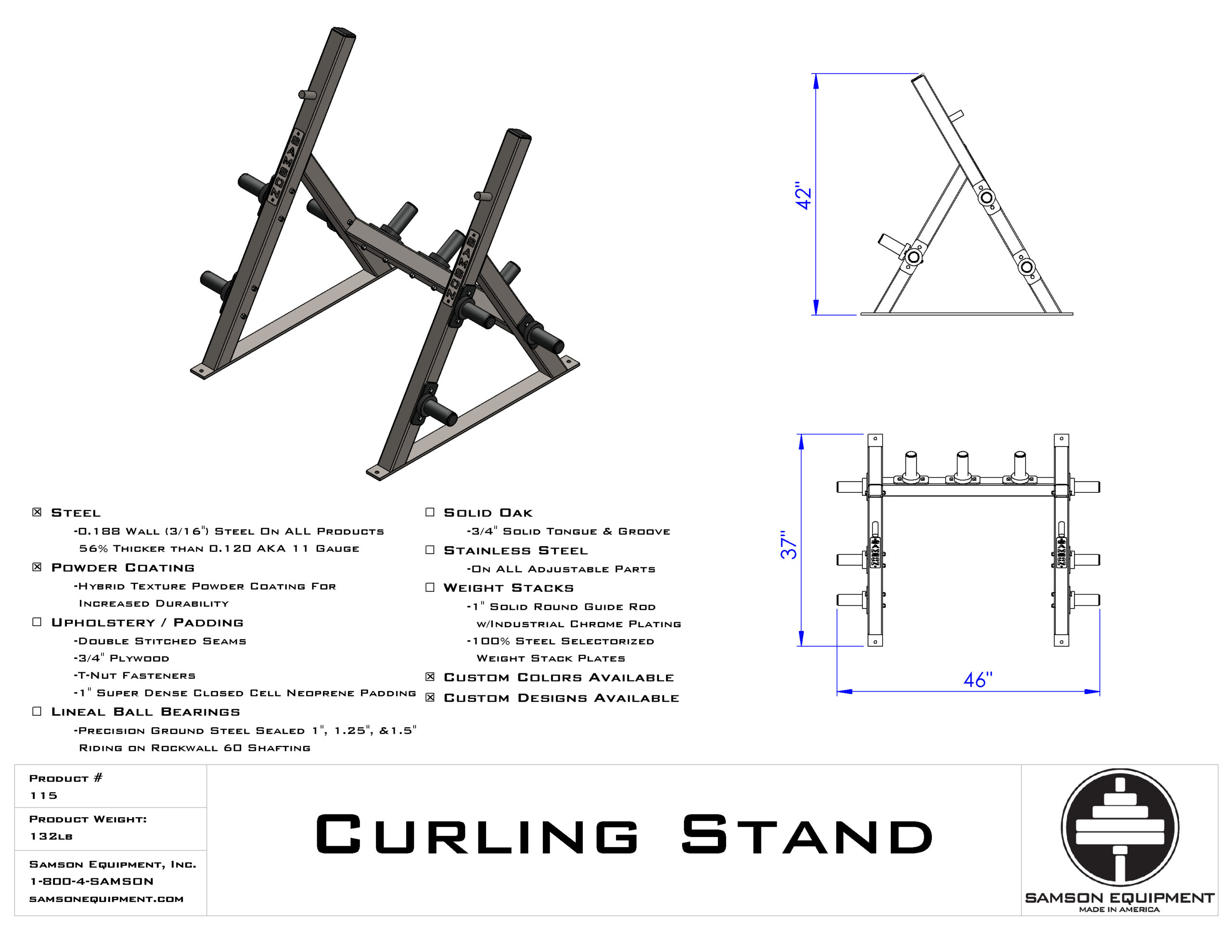
| Dimensions | N/A |
|---|
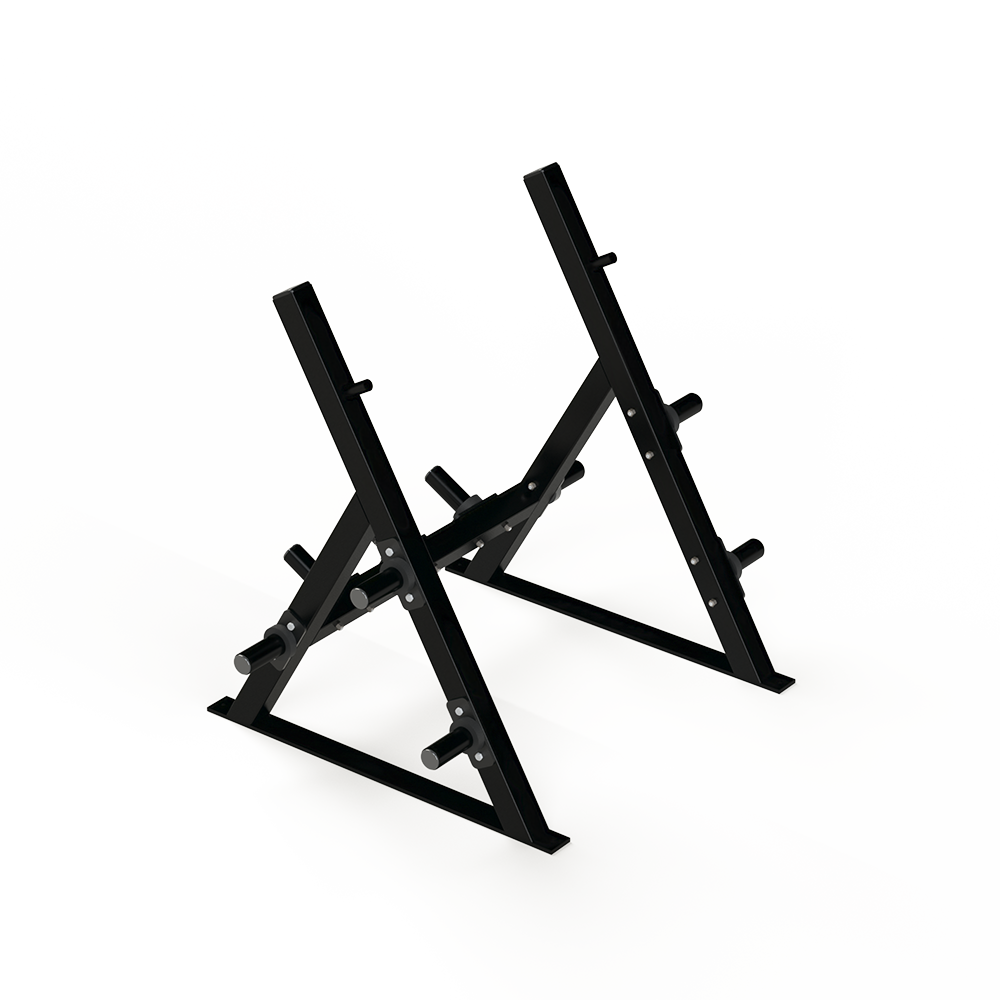
Curling Stand: Targeted Arm Training for Institutional Weight Rooms
Arm strength and upper-body durability aren’t just “bodybuilding extras” in serious programs. Strong arms support performance and resilience in pulling movements, grappling, contact sports, and the day-to-day demands of training. A dedicated curling stand creates a consistent, repeatable station for elbow-flexion work (biceps-focused training), especially in facilities that run athletes through stations and need equipment that holds up under heavy use.
The Samson Curling Stand is designed for institutional environments where multiple athletes train every day. Instead of improvising curls on benches or fighting for space on a single station, a dedicated stand keeps the movement organized and reduces equipment shuffle during busy sessions.
Why a dedicated curling station matters
In a crowded weight room, accessory work often gets pushed to the margins. Athletes end up using whatever bench is open, crowding dumbbell areas, or skipping arm work entirely because the room is moving fast. A curling stand solves that by giving accessory work a home.
- Consistent setup: athletes know where to go and how to set up the movement.
- Less congestion: reduces traffic in the dumbbell lane and keeps benches available for primary training.
- Better coaching: a standardized station makes it easier to cue elbow position, tempo, and control.
- Safer execution: athletes don’t have to “make it work” on unstable setups.
Where a curling stand fits in your program
A curling station is most useful when it supports the overall flow of training. It works well as an accessory lane that athletes hit after main lifts, or as a station inside a circuit that includes pulling, pressing, and trunk work.
Common programming uses
- Post-pull accessory: pair curls after rows and pull-ups to build arm strength and tissue tolerance.
- In-season durability: controlled, strict work to maintain arm strength without excessive fatigue.
- Station-based training: one station in a rotation that keeps athletes moving efficiently.
- Reinforcement work: targeted arm training to support athletes who struggle with pulling volume.
Programming examples (station-friendly)
In group training, the most important factor is repeatability. Coaches often implement the curling stand with simple, standardized rules so athletes can rotate smoothly and execute high-quality reps.
- Accessory lane: 2–4 sets of controlled reps after primary pulling.
- Rotation station: curls as part of a 3–5 station circuit with trunk and posterior chain work.
- In-season maintenance: moderate volume with strict tempo for durability.
- Beginner consistency: coached setup and range of motion to reduce “swinging” and sloppy reps.
Coaching notes: keep it strict and productive
Accessory work is valuable when it’s executed well. In team environments, coaches often emphasize strict reps and controlled tempo so the station builds strength without turning into a “momentum contest.” A dedicated stand helps standardize setup, which makes coaching easier during busy sessions.
Planning guidance: space and layout
Even small footprint equipment can become a problem if it’s placed in the wrong spot. The best location is typically near other accessory stations but out of the highest-traffic lanes. A curling stand is often placed near dumbbells, cable stations, or a machine lane where athletes can complete accessory work without crossing through rack lines.
If you’re planning a full room, Samson can help you map out machine lanes and accessory zones as part of a complete facility layout. Start your planning here: Start Your Free 3D Layout Design.
Build an accessory zone that reduces dumbbell congestion
One of the most common challenges in busy rooms is congestion around dumbbells and adjustable benches. Dedicated accessory stations can relieve pressure on that area by giving coaches more “planned stations” for targeted work. If your program runs large groups, adding small footprint stations can improve throughput without adding major equipment.
Why institutional build quality matters
School and team facilities are different from boutique gyms. Equipment is used by many athletes, with varying experience levels, multiple times per day. That’s why durability, stability, and consistent movement setup matter.
When you choose equipment for an institution, you’re not buying for one careful user—you’re buying for hundreds of sessions. A dedicated stand helps the movement stay consistent and reduces wear on equipment that wasn’t intended for the role.
How to choose the right accessory equipment mix
Most rooms don’t need every machine under the sun. The goal is to choose stations that support your training goals while keeping the room easy to operate. When evaluating a curling stand as part of your plan, consider:
- Group size and flow: do you run stations where multiple athletes need a dedicated arm slot?
- Accessory time allocation: how much time is realistically available after main lifts?
- Space tradeoffs: could this station reduce congestion elsewhere (benches/dumbbells)?
- Training priorities: does your sport demand extra pulling volume and arm resilience?
If you’re building a machine lane, review the broader machine options and plan a balanced mix that supports your athletes and your space: Machines.
Ordering and facility support
Samson projects are typically planned as part of a complete solution. If you’re upgrading a room, building new, or trying to solve flow problems with your current layout, Samson can help you evaluate the right combination of racks, benches, free weights, and machine stations.
To talk through your needs and get guidance on the right equipment mix, reach out here: Contact Samson Equipment.
FAQs: Curling stands
Is a curling stand only for advanced lifters?
No. A dedicated station can actually help beginners execute strict, controlled reps without compensating. It also standardizes the setup, which is helpful in a coached environment.
How many athletes can use it in a session?
In station-based training, one curling stand can serve many athletes across rotations. If your room runs large groups with limited time, adding accessory stations can reduce backups at dumbbells and benches.
Can Samson help me plan where it goes?
Yes. The best accessory stations are the ones placed intentionally. Start with a layout conversation and build a plan that supports flow: Start Your Free 3D Layout Design.
Request Pricing and Layout Support
Want a weight room that runs smoothly during high-volume training blocks? Add dedicated accessory stations that keep athletes moving. For pricing, planning support, and a full equipment recommendation, contact the Samson team.