In this episode of the Samson Strength Coach Collective, we sit down with Nico Scharinger, Coaching Assistant at Florida State University. Nico shares his unique journey from playing soccer in Europe to pursuing a career in strength and conditioning in the United States.
Throughout the conversation, Nico discusses the major cultural differences between European and American strength and conditioning systems, and why the collegiate sports model in the U.S. offers opportunities that don’t always exist overseas. He explains how discovering the American college sports environment sparked his interest in pursuing strength coaching abroad.
Nico also breaks down the realities of the visa and immigration process for international coaches and students, offering insights into how preparation and persistence are key for navigating those challenges. The conversation highlights how embracing change, moving between environments, and continuously learning can shape a successful career in strength and conditioning.
Key Takeaways
- Nico transitioned from playing soccer in Europe to pursuing strength coaching in the United States.
- The U.S. collegiate athletics model provides unique opportunities for strength coaches.
- International coaches must be proactive when navigating visa and immigration processes.
- Cultural differences between Europe and the U.S. influence training philosophies and opportunities.
- Adaptability and openness to change are essential traits for long-term coaching success.
Quote
“First of all, other sports are growing now. But it wasn’t like in the US. I was like, that’s just a college—how are there 10,000 people watching this game? A strength coach posted a video about the college experience and I thought, that’s really cool. So I searched a little more about it and just got interested in it.” — Nico Scharinger
Nico Scharinger (00:00)
First of all, other sports are growing now. ⁓ But it wasn’t like in the US, I was like, that’s just a college. Like how there are like 10,000 people watching this game. And it was a strength coach that worked for Axis at the time that posted a video about this college experience. was like, that’s really cool. So I searched a little bit more about it. ⁓ And
Just got interested in it, right?
Samson (00:43)
Samson strength coach, collective listeners on today’s episode. We have a very good friend of mine. He was a GA with us at AppState. ⁓ and then has obviously had a lot of different experiences, which we’ll dive into. ⁓ but now he’s working with one of my best friends, the absolute man, ⁓ John Fabrizio, his groom’s been at my wedding. ⁓
Only a groomsman because my dad was my best man. It’s kind of tough to beat my dad, ⁓ but ⁓ he is absolutely an amazing guy. And so he called me and asked if they needed a tennis train coach. And I said, well, you’ve got to hire this guy specifically. And this is Nico Scherringer. He’s a coaching assistant for Florida state university. Nico, how are we doing today?
Nico Scharinger (01:20)
I’m great, very happy to be here. Thanks for the invite and the great introduction.
Samson (01:26)
Of course. Well, we’re very excited to have you on. You’re a very funny guy. You know, I’m not saying you have to be funny on the podcast, but I’m excited to speak with you again, because we haven’t spoken in a couple of months. So it’ll be fun to touch base with you and for the listeners to get to know you. Can you just start off with kind of your background in straight thinking conditioning and then what’s led you to Florida State?
Nico Scharinger (01:46)
Yeah, I mean, my background in strength and conditioning is really tied to me. I used to be a soccer player. So growing up in Germany, playing soccer all throughout the end of high school, which is club soccer back home in Europe. So we don’t have like high school and college soccer. It’s only club soccer. And when I was 16, I already knew I want to go into strength and conditioning. That was the first time I got kind of exposed to it.
still back home. So I knew, ⁓ let’s go to the US. So I told my parents, I make them move. They weren’t amused right away, but we made it work. So went to the US, played college soccer for about four or five years due to COVID. So during COVID had to go home for a few months, came back. And then in my last year, I was supposed to still being a player, but my
head coach, he came to me and he said, Hey, I want you to be our new strength coach. And I was like, what? So because the old strength coach left ⁓ my division two college where I played for. So that was the first day being back on campus. And I went to my room and I just thought about it. And I was like, all right, let’s, let’s just do this. So I texted them, Hey, I’m gonna do it, but I only want to do strength and conditioning. I don’t want to play anymore. So ⁓
Yeah. And then I ended up basically working as an intern for my school as a strength and conditioning coach, but I was still with the soccer team ⁓ that I played for. But that was also my last year. So we had a lot of new people. They only knew me as a strength coach. They didn’t really know me as a player. So I would travel with the team, doing the warmups, still being fairly new. Don’t have any experience in terms of on the floor, just a few hours with other teams.
just because I used my time as an athlete fully as like, I’m a soccer player. This is my main thing now. And the year before, or in the summer before, ⁓ I was in Germany in Munich with another strength coach. He also has some background in the US and I did a workshop, a two-day workshop. And this is kind of what led me into it even more. was like, ⁓ that’s very exciting what he’s talking about, what they are doing. ⁓ How can I apply it? So this kind of helped me making this decision.
So I was at Catawba College, Division 2 school, played for them, did my internship there. And then I went to my advisors at Catawba College and we talked about, what’s next? What’s the next move? And they said, yeah, go for a big Division 1 internship basically. So I applied in the entire country. And at this time I was like, I don’t have any experience. I probably like, I wouldn’t go in like everywhere. I was like, ⁓ hopefully I get something. And…
But I really applied at West Coast, East Coast, didn’t matter because I mean, my family’s home, so it doesn’t really matter where to go for me. So, and then I applied at Northwestern. It was one of the first ones. Got a great call, a few great calls with them, great interviews. And I was like, okay, Chicago. ⁓ They accepted me. So I went to Chicago for my senior year ⁓ last semester. And that was my main first big strength and conditioning internship.
And it was amazing. I worked with a lot of teams, men’s soccer, women’s soccer, men’s women’s tennis, a little bit of fencing, not volleyball, swimming, diving, cross country, softball, lacrosse, amazing experience. I went there, did my internship from January 23 to May 25. During this process already looking for a grad assistantship that was kind of the next step.
that my mentors there told me to do. So same thing here. I applied kind of in the entire country, found some places and had North Carolina in the back of my head since my Division II school where I played soccer was also in North Carolina. ⁓ And then I found AppState and funny enough, AppState didn’t really have a position open. So I kind of emailed the director and I was…
Hey, is there chance of a great assistantship or something? And he said, well, you need to be accepted for school first. So I did the school process, got accepted and then had like a phone call with him, went really well. And then I was at App State, did my masters there for two years ⁓ as a grad assistant working with women’s tennis and track and field, as you know. ⁓
And then in the summer in between these two years, I also did an internship at Exos in Arizona, the headquarters. So had some experience with NFL players, NBA players, general population, high school, which I haven’t had before, and college athletes. So great experience as well. I loved it out there. Came back to App State to finish my year. And then I applied for things. And then what you have to know is as an international student or
The visa situation is always a little bit different. I’m currently in contact with some other students that are kind of in the same boat. ⁓ They are reaching out to me now how to do things, is so I hopefully can help them out a little bit. had to get my visa figured out for afterwards. ⁓ It’s a one to three year work visa that you get. I got a three year work visa. So after AppState, I applied for full-time positions and fellowships and had really good interviews with the University of Pittsburgh.
ended up at the University of Pittsburgh for a fellowship, which was supposed to be a 11 month program and was there working with six Olympic sports, assisting them and then also G &Dance with the other fellow. So we had two fellows there, worked with volleyball, lacrosse, gymnastics, men’s soccer, track and field and softball. Great time. I really loved it. but then
Obviously you texted me and you mentioned this position here at FSU. ⁓ And it was tennis, a sport I just loved working with before. So I got really excited about this, had some really good conversations with Johnny Fabricius ⁓ and then made the decision to move in November. So that was end of November, moved down here and…
went home for this winter break for just two weeks, came back. So I’ve been here now since the end of November, about three, four months, I would say, considering the break. yeah, right now working with women’s tennis here and I absolutely love it. So great, great place to be.
Samson (08:40)
So you just went to Florida State to miss out on the Pittsburgh winner. Is that what it is?
Nico Scharinger (08:45)
I wouldn’t say, yeah, probably. I mean, I think I adapt really well. I like the warm weather for sure. I haven’t even experienced Florida summer yet. So I’ve heard it’s really humid and it’s different, but I like it. So I like Pittsburgh a lot though. And I have to say while I was there until the end of October, it was pretty warm. I didn’t really experience the winter yet. Like we had one, two days where it got really cold, but.
Yeah, I definitely missed out on the heavy snowfall, which I’m not super upset about.
Samson (09:21)
Boone got a lot of snow this year too, so you certainly missed out on a lot. I’m proud of you. That’s good. You’re a smart forward thinker. Can you walk me through the visa process a little bit? Because I remember we had conversations about this when you were finishing up your GA. And I think a lot of people just aren’t really aware of what that looks like for international students, especially those who graduate and then want to continue working in the United States. So can you just take me from…
Nico Scharinger (09:23)
Okay? I guess.
Samson (09:45)
Okay, I’m going to go work as a GA and get my master’s degree. What does that visa process look like to then, okay, I want to continue working in the United States. What does it look like if I get a part-time job versus a full-time job? Like, please break it down completely.
Nico Scharinger (09:58)
Yeah, ⁓ I kind of the first step is so you have a student visa, which is a F1 visa, which I had as an athlete, or you can have it without being an athlete, college athlete. And you have this for about five years for your undergrad. So now I want to do my post grad, my masters, I would get another student visa. So ⁓ you reapply and there’s not too much of an issue with that as long as you are ⁓
enrolled in a university on campus full time. That means though you can only work 20 hours a week on campus. So I couldn’t work at a gym at a local gym that’s not on campus. That’s while you’re on the student visa. So you’re a little bit limited in this case, but ⁓ if you did do your paperwork right, you should be good to go. ⁓ For me then after this
my masters, the question was, okay, what’s next? I could technically, you could do probably a PhD right away, but you’re again, obviously a heavy academic workload. So for me, was, okay, I need a practical, I need a position. So I need to apply for OPT, Optional Practical Training. That means if you are a STEM major, which my exercise.
science or kinesiology program was considered STEM, that means I get three years. If you are not a STEM major, sometimes ⁓ your major, it depends from school to school. Some are listed at STEM, some are not, even within exercise science. So I was fortunate I get three years. So you apply, you have like an application fee, you submit all your things and I still run.
do this through AppState. So even right now, because I did my master’s AppState, it still runs through their international office. So you get the first year, you get your employment authorization document. And then after this first year, I need to reapply for the other two years. So you cannot get the first three years right away. So you need to get the first year, you reapply. Now the good thing is I can work as many hours as I want on campus or off campus. It doesn’t matter.
I can have several jobs. There is no real limitation except for obviously the time, three years. ⁓ And I need to work at least 20 hours. So everything 20 hours or more is considered full time in this case. So as long as you work more than 20 hours, you’re fine. And I hope I’m not missing anything on this point. So what would be next is obviously for me, I’m right now in the process of doing the extension.
which as long as you do your things, I cannot do it until 90 days before. just right now, end of February, the process started. So I reached out to AppState to the international office. They sent me all the steps I need to do some paperwork, doing some things with Johnny. He has to fill out some things, but as long as I’m on this visa, there is no sponsorship required. So whenever I apply for a full-time position, often what you see is we don’t sponsor these visas.
at several schools or even private institutions. So I think for international applicants, what I would recommend, just get your paperwork done early and be proactive. That has helped me. sometimes things take time with the offices. So you want to be in a good spot. It went fairly well last year for me. I applied again, probably in March, 90 days before graduation. then paperwork went through within
three or four weeks, so really good. And then you’re ready to go. You let them know whenever you apply, always make sure, no visa sponsorship required because I have my visa employment authorization document. So just have these things ready. After these three years for me, ⁓ I don’t know yet to be fully honest. ⁓ I mean, I always plan like two years ahead. after this year, after I get this next visa, I’m reaching out to AppState again, okay, what?
is next. There are several opportunities. You can get a work visa. ⁓ So someone would sponsor you. It’s every school is a little different. Some schools do it, some don’t. I think the biggest thing is focus on what you can control. So for me, it’s like doing a good job, being respectful, ⁓ putting in the work and having my paperwork as much ready as possible. I can go back to a PhD, so get another student visa.
and work towards a PhD, but this would probably ⁓ require a lot of academic input. So my strength and conditioning practical experience, I could still probably do it. You see now more sports science things, but this kind of gets tied together. So a lot of schools wanna have a sports scientist for PhD and there’s a possibility. So several things.
You could obtain the green card if you are marrying a US citizen. That’s one option. So you will see this a lot. I think these are the main things right now that I can think of. I hope that answered your question.
Samson (15:27)
No, it’s fantastic.
appreciate it. so what you said, ⁓ shoot, I just totally kicked my desk. Sorry about that. And so, I mean, ultimately what you’re saying is that we’re going to have to find you a wife here so that you can continue to work here. Is that right?
Nico Scharinger (15:39)
That is why I’m on this podcast, Connor, you know it.
Samson (15:41)
Yeah, okay.
Nico, he’s available. Anybody please reach out to him. Yeah, so ⁓ I must be pretty stressful though, right? Because I think about my process of trying to find a job. think about, ⁓ you know, one, just moving in general, but then two, figuring out new places and everything. And then three is, you know, on top of that, you’re going to have to worry about, okay, visa extensions, you know, worrying about.
What does this process actually look like? Constantly trying to stay on top of this just to make sure that you have everything in line so that you can continue to work in the United States. mean, I’ve got to imagine that can add a layer of stress.
Nico Scharinger (16:17)
Yes, 100%. But like last summer was especially stressful because while you’re a student, really like, you have to great support from the international office. These people have helped me tremendously and are still helping me enormously. It’s, it’s just been great. But at the same time, I feel like it’s a good process to go through, to be proactive. I think it has helped me probably as well with, with some jobs. Some, sometimes people say, ah, he’s international, too much things to do.
But I think it also helped me sometimes people would say, he’s going through all of this. Like you learn by doing all of this. Like you grow a lot. Like you’re being proactive. You need to do all of these things. ⁓ Yes, 100%. Some stress, absolutely. But it’s, think if you go through it, like you, you’re well prepared for things. If you can handle these things, it’s, it’s, helps you enormously as well in the long run, I would say.
Samson (17:12)
Yeah, like you said, your main piece of advice is jumping on it as early as you can, making sure that you stay on top of it. And that’s a good life lesson to know just in general with everything.
Nico Scharinger (17:20)
Yeah, 100%. And it’s, it’s even like right now, like going through like my residency status changes for tax purposes, for example. So after five years, like you have to, while you’re in college, they take care of most of these things. And now once you’re no longer enrolled, even in the masters or bachelors, you, they cannot do this for you. So you kind of have to do it yourself. So, then tax residency from Germany to USA is different. The the connection for like,
I don’t know, let’s say England, USA, that might be a little different. ⁓ yeah, you learn by doing these processes. It’s exciting. It’s sometimes a little bit obviously annoying and stressful 100%, but you grow, as you just said. It’s a ⁓ great opportunity to just grow in life, I guess. Yeah.
Samson (18:09)
Yeah, now
you get to help other students who are going through the same thing.
Nico Scharinger (18:11)
Yeah, like I have people now reaching out to me because they might have seen things through our FSU strength ⁓ Instagram. They saw, he’s international. So now people have texted me and they are kind of in the same process. And I try to help as much as I can. think again, each situation is a little bit different. So I cannot ⁓ say, this is definitely how it works for me. I was fortunate that I get the three year STEM visa.
It’s super fortunate that the paperwork went through, ⁓ that I had these mentors and stuff. So, but like, yeah, I can definitely help out ⁓ just from this experience over the last few years and going through this process. And you see more and more people coming from Europe in strength and conditioning now. It’s it’s a growing field. it’s, it’s, great.
Samson (19:02)
That could be a good side business for you. Neko’s Visa School and helping people out with that.
Nico Scharinger (19:06)
⁓ It’s
actually funny because one of my former teammates, college soccer player, he just texted me as well recently. opened a… So he’s in the US still. He’s from England. And two of his friends who are also my former teammates, they are based in England now. So they’re starting a recruiting company ⁓ just for general athletes, high school athletes in Europe. So… ⁓
All sports and they want to help out bringing people over. I’m on a call with him. I think it’s going to be today. I’m talking about these things. So yeah, it’s everything is connected nowadays. So it’s, it’s interesting. It’s great. It’s, it’s a side business. Yeah.
Samson (19:46)
You’re
making a lot of moves. I like it, Niko. I’m glad to see that. You just mentioned, obviously, that a lot of people are coming to the United States, but I’m curious first to hear about your experiences in Germany. You said when you were 16, you first were kind of exposed to strain and conditioning and decided that you wanted it to be your career. What were those experiences? What was your exposure to strain and conditioning at the time with Germany specifically?
Nico Scharinger (19:49)
Yep.
Yeah, so I was about 16 fully into soccer, living the soccer lifestyle, playing club soccer. And I was kind of okay. How do I get better? I don’t even know what it was the first point, but I was like probably searching the internet for some things. then Exos, the company came up, they worked with the German national team since 2006, I want to say. So
the head coach for the German national team brought his staff over kind of from the U S and they worked with the German national team. So you saw some articles online. ⁓ Some, I saw some in, I think it was Facebook at that time. I saw some videos about college athletics and I was like, Whoa, like it was a college basketball game and we don’t have that back home. So back home, you have the professional side.
especially in Germany, professional soccer. And that’s the main sport that attracts people. First of all, other sports are growing now. ⁓ But it wasn’t like in the US, I was like, that’s just a college. Like how there are like 10,000 people watching this game. And it was a strength coach that worked for Axis at the time that posted a video about this college experience. was like, that’s really cool. So I searched a little bit more about it. ⁓ And
Just got interested in it, right? So ⁓ we didn’t have any like organized strength training. I did my own things a little bit based on what I read. I went to my local gym here and then, but strength and conditioning in Europe or in Germany, especially it’s a lot different than how it is here just because no high school sports, no college sports. So people do a lot on their own. I would say
In Germany, soccer is obviously the main sport. So you go to a soccer academy and you might be exposed. If you play at the highest level, you might be exposed to some kind of strength training. would still say it’s a lot different from the US. In the US, think the weight room is a big thing. Back home, especially in soccer, still kind of like,
coaches say, I don’t want my players to lift weights. It’s still like this bodybuilding mindset. They think, we get too big, we get too slow. So that was my experience at that time. So ⁓ I lifted a little bit. I wasn’t really exposed in my high school years. Once I came to the US, I was way more exposed to this. One of the coaches that I mentioned before, his name is Chris Gumpel. He’s based in Munich. He worked actually in the US as well about
I want to say right now 20 years ago probably. No, sorry, that’s a little bit too long. Sorry. It’s probably 15 years ago, let’s say. He worked, for Florida Atlantic University basketball ⁓ when he was still in his early 20s, I would say. So he kind of brought a little bit over as well in his facility in Munich. So he works now with a lot of like players coming individually to him, professional players from Bayern Munich, other.
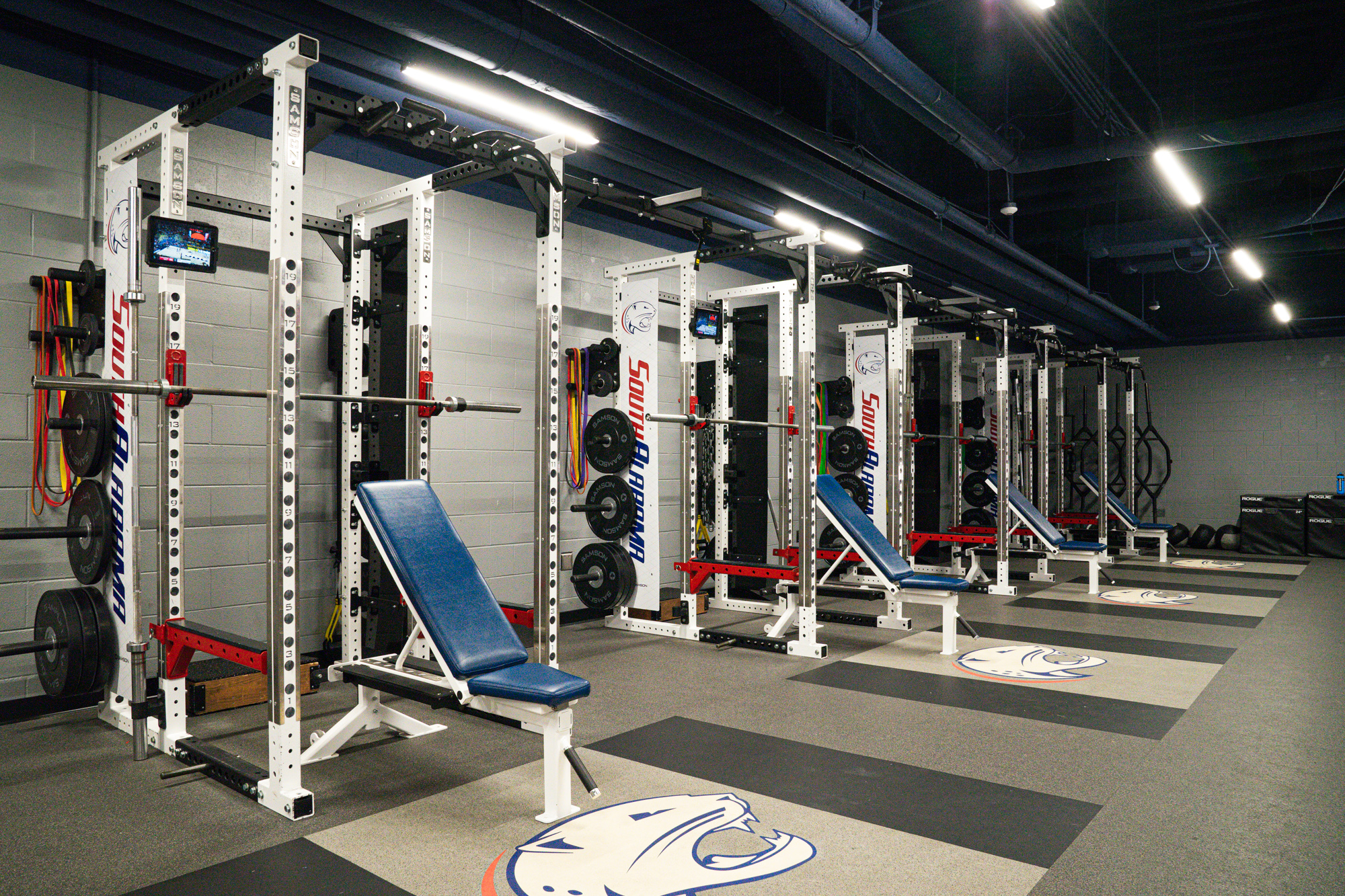
First division soccer players in Europe come to him and they come to his facility. But usually you don’t see like the team like Bayern Munich, the best soccer club in Germany, they wouldn’t like have like a weight room with like 20 racks or like 16 racks that we have here at FSU and have the player to organize strength and conditioning training. You see a lot more on-field stuff, ⁓ the warmups, speed work is a little bit of a thing.
maybe a little bit of conditioning, but it’s really not so much ⁓ the proactive strength and conditioning. see rehab. So let’s say people get injured. You see a lot more on the rehab side. ⁓ But it’s catching up now. You see more and more things, but it’s still probably not as organized as here. And one main reason as well as the funding. obviously here at Florida State University puts a couple million dollars into a new weight room or staff and
That’s not a thing yet ⁓ in Europe, at least not ⁓ consistently throughout ⁓ organizations here. then you see it, but not as much. And this is just my soccer background. see now more on the basketball side, you see more like former college athletes from the US, even American players coming to the European leagues. So I think this is growing. Whenever I see some things there, I see like basketball is doing a pretty good job with strength and conditioning.
Football is growing a little bit, our American football is just not, obviously not comparable to the NFL or even college football. But ⁓ I think there’s a movement. We see a movement. It’s a little slower. But yeah, I hope that kind of answered your question.
Samson (25:11)
Yeah, that’s great. Seriously. Do you think there you mentioned a little bit about the cultural aspect, right? Of the fear of the kind of bodybuilding of strength and conditioning and worrying about getting too big. ⁓ Do you think there might be a cultural barrier there as well about bringing kind of an American or United States philosophy back to Germany? So let’s say if you were to come ⁓ back from the United States and move to Germany and try to open up a gym or, you know, train specific teams, do you feel like?
that cultural aspect would be tough because I think to my time in Ireland, I went over and visited just for 10 days, but it was funny because I loved it there. I thought it was fantastic. And I told my wife, I was like, I would move here. The problem is that nobody lifts. Like I remember walking around and you know, was, everybody was relatively fit. You know, there weren’t a lot of, ⁓ there was not a lot of obese people in Ireland, right?
But there also, what I noticed was there was not lot of, ⁓ you know, muscularly developed people either. It was kind of just a, you know, a medium of what you see in the extremes of America. And I remember when I passed one gym in Kilkenny and I looked into it and there was a couple of machines and, you know, maybe a couple of dumbbells and they were like, yeah, this is the best gym we’ve got.
You know, and I was like, OK, so I would struggle. would love to open up a gym here, but I think it would be tough to convince people to really come in and train the same way that we do in the United States. Do you think that would be a struggle trying to bring that back to Germany?
Nico Scharinger (26:39)
⁓ Yes, to a certain degree, for sure. ⁓ I think I just actually talked to one of my former college teammates. He’s now in Italy. I still coach him online. He’s a soccer player goalie and he’s now in Italy. He just came from the US and he’s also working with a local team and the team is…
working with a local gym and so he talked to the gym owners and they said, yeah, like the coaches don’t want the players to be here. So they are never there. It’s a little bit, it’s definitely a little bit of a cultural thing. I think Ireland is a good example, like with the rugby island in England, I think there’s a little more, I would say they are a little more advanced or maybe a little bit ahead in terms of strength and conditioning. So you see a lot of research, I think from rugby actually.
And Paul Comfort, when he was here two years, three years ago at AppState, I don’t know if you remember, he talked a little bit about English ⁓ from England and how it is there and rugby he mentioned here and then. So ⁓ yeah, and you mentioned it, I think, especially also in Germany or in Europe, like the cardiovascular part, that’s a big part. So when I remember when we did some strength and conditioning, it was more conditioning than strength. like,
runs, often ⁓ longer runs. We didn’t do as much like intervals. It was often like longer runs, ⁓ long distance, slow ⁓ lifting. It’s yeah, it’s the culture thing. I would say play a role. What helps though is especially now the American sports hub with this like basketball, and you have more ⁓ American college players coming over that make the basketball game better. They bring out bring
or what their experience is. a little bit, it would be tough to convince people. Like you see it more, very more on the personal side than organized side. So you get some players or athletes, but it’s probably not as consistent as here in the U.S.
Samson (28:48)
It’s funny you mentioned those who go and play overseas because we had one player here who hated the weight room and As soon as he went over to Belgium, I facetimed him on the first day and I was like, how’s it going? He’s like we don’t have to lift anymore. It’s awesome. We just have to run And I was like, alright, well, he’s not helping our case with that whatsoever. You know Obviously there’s a big difference and what your experience was in Germany versus the United States Is there anything that you feel like kind of the US culture of strength and conditioning is missing or may not be getting right?
Nico Scharinger (29:01)
Hahaha, yeah. No.
Samson (29:17)
compared to some more of the things that you see on the German side.
Nico Scharinger (29:22)
Well, I think in the US, especially if you’re heavy strength and conditioning background, ⁓ and especially on the Olympic side, if you work with lot of athletes that have never been exposed to strength and conditioning, if they come from overseas, any lifting. So I think it’s just important to keep this in mind, ⁓ because if like we have a lot of international athletes. So
I know their background or I would sometimes assume their background before coming in. I knew, okay, and then you talk to them and they give me their background and they haven’t really lifted that much. I think it’s just important to not come in with this, weight room mindset, that’s, we need to lift heavy all that. Like you need to be really adaptable. think that’s why leadership skills and emotional intelligence skills and like just personal human relationships. It’s so important.
Missing out, mean, the US, you guys, like the funding is insane. Like it’s like, I don’t think there’s anything that we don’t have available. So ⁓ in comparison to back home. So ⁓ I wouldn’t say there’s anything missing out. think the US is like, the funding helps just a lot with developing. Like if you have this budget available for even continuing education courses, I mean,
at Pitt when I was at Pitt, like we did a lot with sports myth ⁓ from the UK. So I think like just being super open to ⁓ these different aspects is helpful. wouldn’t say like, ⁓ there’s one completely right way to do it. I think the funding, I mentioned it over and over again, but it just helps a lot. ⁓ That doesn’t mean we need everything. Like sometimes probably in the US you have way more than you need.
but it allows you to work with things and explore things ⁓ a lot. ⁓ So yeah, I mean, in Europe, again, the rehab side, ⁓ think Return to Play, like England, I’m hearing ⁓ has some good stuff. It’s not just the lifting side. I think it’s developing especially.
in college athletics, mean, you know, it’s not just the weight room, you’re also working with them on the court, you have return to play athletes, load management becomes a big thing. I think soccer is doing a, there’s big research on soccer out there about load management, how do we train on match day plus two, or like match day minus two, minus three, minus four, ⁓ all these things, like just being open to it ⁓ is super important. I wouldn’t say.
There’s one thing in particular, someone is missing out, but I say one last time, the funding that we have here in the US, it sets up the universities and the professional sports really well. Now it’s just about, how can we be efficient? Can we not waste money? Can we ⁓ invest it in long-term progress, if that makes sense?
Samson (32:27)
Yeah, absolutely. And I really like you mentioning working with international students when they first come here too, because I remember we had a red shirt player from Switzerland.
and he came in and lifted with me. And this is the first time I worked with a red shirt from overseas. So obviously I’ve worked with players that were overseas players for a long time. But this is the first time I had somebody who was, okay, we’re not going to play basketball at all. We’re just going to do development lifts and we’re going ⁓ to basically spend all our time. And he was nervous about that, right? Was now, okay, I’m going to come to America and I’m going spend a full year of just lifting. So understanding that conversation with him. And then the thing that really blew my mind was
He was a red shirt, so he wasn’t going to play and he wanted to go back home to Switzerland for two weeks. And so we, said, no, please go right ahead. Go spend time with your family. said, we keep your training can’t drop off. You know, you, need to make sure that you are continuing to do the things that we’ve developed and worked on here. And I said, so what’s the closest gym that you have in Switzerland? And he’s like, it’s an hour away. And I was like, okay, so body weight only. And then he was like, yeah, like that’s like the kind of like the main gym for everybody, you know? And so.
Nico Scharinger (33:26)
Thank
Samson (33:33)
Like you said, the funding and the resources are obviously a lot different in Europe and overseas. so it was, it was really that moment kind of dawned on me. Okay. This really is somebody who has no experience with lifting, you know, like sometimes guys come in and they’ll say, well, I’d lift it a little bit. I really know, but he really never lifted before in his life. He’s just a naturally very talented player. So I think they can also be exciting too, because okay, you have somebody who’s good enough to play at the level that the rest of our players are.
And then they’ve also never lifted. So now we can spend time developing and getting them, ⁓ you know, to the level that they need to be physically. And then all of a you see these players take off and play even better, which is pretty fun.
Nico Scharinger (34:11)
Yeah, no, mean, that’s a good, I think that’s a good point. Kind of what you mentioned, like some of them are really good players. And at the end of the day, like our job is to support ⁓ them as athletes to be better, better at their sport. Right. So obviously our job is to make them physically ⁓ capable of do these things, capacity, resilience. But we should never forget. think we should always like they come here because of the sport. I came to the US because of soccer.
someone comes to play basketball, football, whatever it is. Strength and conditioning plays a really important role, but we shouldn’t, we should give them the feeling, hey, we hear you, ⁓ that’s your background, we help you out. don’t, you cannot compare a player from the US who has lifted four years in high school, has all this experience to someone who might have never lifted before and, ⁓ but played a long time. So.
One more thing, think the funding in Europe, it’s more towards the sport. it’s like tactics and advancements and this kind of stuff gets more attention, especially on the, I mentioned it again, the soccer side, just because it’s the biggest industry in sports, I would say over there. ⁓ So it’s not that they ignore things. It’s just like the prioritization is kind of more right now towards ⁓ tactic.
The problem I think long term is you see more density in games and training volume. so now I think that’s why strength and conditioning becomes more important. It gets more attention because it helps. mean, that’s why we do things is also to prepare them to be able to handle those loads and this volume over time. So, but that does not mean we always have to live the heaviest way possible.
Obviously we know that there different ways to do things.
Samson (36:07)
Absolutely. And I appreciate that mindset. I think it will certainly help and help develop these international students. One of the things that I’ve noticed with your trend of your career is that you’re comfortable with moving. Obviously, you moved from Germany to the United States, but then within the US, you lived in North Carolina, Chicago, back to North Carolina, Pittsburgh, Tallahassee.
what has made you comfortable with ⁓ moving and basically changing positions because it could be something that’s a little bit scary and uncomfortable. And the main piece of advice that I give to interns or younger strength coaches is if you want to raise through the levels quickly, if you want to kind of get to where you want to be faster, you have to be comfortable with moving and you have to be comfortable with going to places that are completely unknown. What do you think about you makes you okay with doing that?
Nico Scharinger (36:56)
great question. think, I mean, the first big step was obviously going overseas. I think this already puts you kind of like, okay, this is the biggest step. Now I’m so far away from my family when I was in North Carolina. So for these internships, I think it’s a lot different for me than someone who is local here to move to Chicago because it’s, I mean, the only difference is I don’t fly.
From Munich to Charlotte after my winter break, I fly from Munich to Chicago. You know, that’s kind of the only difference at this point. I was just super excited about learning strength and conditioning. I have to say though, in the recent years, I kind of learned ⁓ to appreciate what you have where you are. Like when I was a college athlete, had my people around, I had my teammates around, I had everyone around. Once you go into coaching, like the first year, you’re kind of fine with it. It was like, hey, I’m so excited to learn things. I’m just.
happy to be where I am. People in Chicago were great. ⁓ But then over time you learn, dang, where are my teammates? They’re not there. They’re like, you know, like, so you need to kind of take care of yourself, of your life around strength and conditioning. ⁓ So, yeah, I think the biggest thing is just like throwing yourself kind of in this water, like, and then learn how to swim. ⁓ Because I think it’s a great life experience, life development, if you’ve moved to a different city or far away.
I talked to a lot of my friends back home that are more like in the finance industry and some of them told me, so they were doing an internship just like an hour, one and a half hour away from the home. And they, what they regretted, they said, I always went home on the weekend. So they didn’t fully use the experience and I couldn’t just go home. was obviously was stuck. And so you have to learn to adapt no matter what. Like, but yeah, you, you find people you.
you, if you’re exposed to that, you’re just, there’s always, especially in strength and vision, you have people around ⁓ on a college university setting, like there’s lots of things to do. So, and, but you’ll learn over time, like, ⁓ it’s not like right away that everything works out. Like there’s phases where I miss my friends 100 % and ⁓ you’re kind of alone. So you need to ⁓ learn to, to enjoy these things and like,
adapt to things. ⁓ I hope that kind of answered the question.
Samson (39:22)
Yeah, absolutely. And I can agree with that 100%. You know, obviously I didn’t move from Germany. My grandma did many years ago. ⁓ But, ⁓ you know, one of the main things was living in New York and then Pennsylvania, then Tennessee, then Texas, then coming to North Carolina. Like, ultimately I’ve learned a lot at each place. But one thing that I’ve noticed in being in North Carolina, this will be my fourth year here coming up on my fifth year. ⁓
is I’ve gotten complacent in certain things. And so it’s taken a lot of self-evaluation and realizing, okay, I need to not, you know, I know the school, I know the system, you know, am I pushing myself as much as I would be if I, let’s say, moved to a different school and started working there this year? Probably not. So trying to set up safeguards and understand that, like, I’m not saying it’s bad to stay at a place for four or five years. I don’t think that’s, I think that’s eventually what everybody wants to get to, right? But at the same time,
the experience of moving to new places and experiencing new departments and seeing the ways that other Olympics training conditioning departments do things has made me better as a coach and has made me develop a lot more. So I appreciate what you’re saying a lot about that is, you you just have to understand that there’s ways to learn. You throw yourself in and you’ll figure it out, you know, and you’ll continue to figure it out. And it’s probably the fastest way to learn as well too.
Nico Scharinger (40:39)
Yeah, no, absolutely. Great point. mean, will I be moving the next eight years like I’ve been moved the last four five years? Hopefully not, as you said, but yeah, it helps me. It helps me to, it always has helped me. And ⁓ obviously once you’re at a certain position for long, like different ways to expose you, workshops at different locations, seminars, being connected, traveling.
⁓ super helpful, especially nowadays with like the internet, social media, everything like there’s lots of opportunities. So I think it, I’m grateful for this and like, I don’t take that for granted. Like I kind of have to shout out to my parents at this point that they allowed me to do these things and me being a little bit stubborn and like when I put something in my head, hey, I’m moving there. like, there’s no way I’m not moving there. But like without them, I couldn’t have done this. So. ⁓
Yeah, I mean, I have to say though, to defend a little bit. was like, if you don’t have family here, like it makes things also a little easier, right? Like it’s ⁓ because as I said before, if I’m here or there, west coast, east coast, north, south, it doesn’t matter as much as if you have other responsibilities that I just didn’t have. So obviously you have to always evaluate your whole situation, family and friends, whatever it is.
If I can, I recommend it to high school or college students, ⁓ undergrad, grad. If you have the opportunity to make these moves ⁓ for internship for just a few months, it’s very valuable and it helps you a lot in the long run, for sure.
Samson (42:27)
Absolutely. You also mentioned when you were a soccer player, ⁓ you were offered the job as the strength and conditioning coach in your final year. ⁓ But one of the things that you said, which I thought was really interesting, was that I was just focused on being a soccer player. And so I wanted to end up basically stop playing soccer so I can just focus on being a strength and conditioning coach. The being where your feet are, the mentality of, OK, let me focus on the main thing and keep the main thing the main thing, right?
Is that a mentality you try to bring everywhere that you go? Is that something that you feel like has helped you be successful in this field?
Nico Scharinger (43:02)
Yeah, I mean, 100 % even as a soccer player, like being a student athlete or being an athlete soccer player, my opinion, or in my case was, I think it’s, I should put this into consideration as a part of my strength and conditioning career, right? Because like now I can see through the lens of some of my athletes a little bit, like I go through the same things. It might be a different sport. Sure. like,
This is something that has helped me personally. Being a student athlete, this is part of the whole experience. While in this time, mean, was, for example, never as an athlete, never exposed to, let’s say, Olympic lifts. Someone who wasn’t an athlete, but early on when did Olympic lifting, this person might have more experience on this side. So it’s like that different ways. But for me, as being an athlete, 100 % has helped me.
Like when I was an athlete, this was my main thing. So keep it the main thing, focus on this. helps me. Now as a strength coach, was kind of for me, doing focusing on two things at the same time, that were such big things, just didn’t really work out in my mind. So I was like, okay, now I focus on strength and conditioning. So really focus on, on what you’re doing. There’s only so much you can do or put your focus on. So 100 % that has always been kind of a thing sometimes to the too extreme.
Like my mom said, all you have is soccer in your life. Yeah, that was kind of how it was as a high school kid. ⁓ yeah, I think that just helps you like being really, really digging in to whatever you do. So in different aspects of life, for sure.
Samson (44:49)
Do you ever see yourself going back and working with soccer again?
Nico Scharinger (44:55)
back home going back home
Samson (44:59)
or in the United States.
Nico Scharinger (45:00)
And yeah, mean, soccer is a sport. I want to be a little unbiased ⁓ when I go into a sport. Like sometimes it’s soccer people want to have soccer people, but I think it’s good to have outside people sometimes. So ⁓ it is kind of in the back of my head ⁓ and you never know what the future holds. Right now I don’t see myself in the near future with a full team. ⁓
But I mean, it’s always been my sport that I played. I love watching it still. So I would say, yes, it’s probably a thing that might happen at some point.
Samson (45:39)
I can’t wait to call Johnny after this and tell him you said you never ever want to work with soccer again. No, I won’t, obviously not. ⁓ Well, Nico, thank you for everything. I have one final question for you, and this stems from our time together at App State. Do you think that Americans should walk and take the stairs more?
Nico Scharinger (45:44)
Don’t tell them.
Yes. ⁓ I think so it’s funny, like sometimes like they offer me like, let’s say you go to restaurant and you go out and they offer me to pick me up outside. Well, I can’t just walk with you to the car, you know, like, but they are super nice. They are super nice about it. It’s just, it’s yeah, it’s funny. Yeah, like walk more. That’s what I do. I don’t have a car here. So you already get a lot of steps in during the day. You don’t have to do too much additional conditioning. So take, take it as
Because one day you might not be able to walk the stairs. So you might as well like enjoy it now. Like, yeah, go walk more.
Samson (46:41)
I only ask because I remember us having a distinct conversation about taking the stairs because that’s our team motto. And you said you loved my shirt and it was take the stairs on the shirt. And then we had a couple other GAs who ⁓ Nick and James who obviously did not like taking the stairs and said elevator only. So I just wanted to touch base on that briefly. Well, Nico, thank you so much for everything. Seriously, it was fantastic to catch up with you. And I’m glad that our listeners get to get exposed to you and learn about your story.
Nico Scharinger (46:55)
Yeah.
Great.
Samson (47:09)
If you want to share your Instagram or any other ways that people can contact you and reach out to follow up with any questions, possibly some visa questions, who knows, coming from this episode, what would be the best way for people to reach out?
Nico Scharinger (47:21)
Instagram it’s Nico Scharinger, N I C O S C H A R I N G E R. ⁓ yeah, reach out, text me. ⁓ always happy to help with whatever it is, sharing experiences, experiences, connecting, and hopefully I can help. I cannot promise anything, but I try my best. So, ⁓ and thank you for having me, Connor. It was a big pleasure. Hopefully I’ll be up in Boone again.
at some point after the season. So to see you and Tess and the whole AppState family. So thank you.
Samson (47:57)
We would love
that and we’ll go back to the Cardinal. Yeah. Well, thank you, Nico. I appreciate it.
Nico Scharinger (48:00)
yeah, we have to. Absolutely. Absolutely.
Thank you. Bye bye.