In this conversation, Peter Kenn, Director of Olympic Sports at SMU, traces his path from student-athlete to strength coach, emphasizing how early internships shaped his foundation and understanding of the profession. He outlines his coaching principles, the evolution of SMU’s Olympic sports department, and the essential role of communication, shared ownership, and culture in program development. Peter stresses that coaches must embrace being wrong—remaining open to new ideas, honest feedback, and continuous learning—to evolve in the ever-changing landscape of strength and conditioning.
Key Takeaways
- Early internships provide critical real-world experience.
- Understanding the realities of coaching helps prevent burnout and early exits.
- Creating a positive environment is essential for both athletes and staff.
- Maximal strength and power remain foundational performance pillars.
- Shared ownership improves cohesion across athletes and staffs.
- Being willing to be wrong accelerates personal and professional growth.
- Networking and relationship-building open career opportunities.
- Continuous learning strengthens coaching longevity and adaptability.
- Coaches should adopt a service-driven mindset centered on athlete success.
- Developing a unique coaching philosophy is a key step in personal growth.
Quote
“You have to create shared ownership.” — Peter Kenn
Spotify • YouTube • Apple Podcast
Never Miss An Episode Join Our Newsletter
Connor (00:02)
What’s going on Samson Strength Coach collective listeners on today’s episode. We have Peter Ken, Director of Olympic Sports Performance at SMU Southern Methodist University. Peter, thank you so much for coming on.
Peter Kenn (00:15)
Yeah, I appreciate it. Thanks for the opportunity.
Connor (00:17)
Well, I’m stoked about this, man. got to, I’ve gotten to meet you just a couple of times, obviously through your connection to AppState and then helping out with some things that you’re doing. So I was very excited to have you on the podcast now. So thank you so much for being here. Can you just give us a background of your career and what’s led you to SMU?
Peter Kenn (00:23)
Yeah.
Yeah, I’ll try and make it as quick as possible. Was fortunate enough to be a student athlete at Appalachian State during my time there. Obviously had, you know, if you don’t know a lot of connections based on my familial tree and what I was able to accomplish. so from the very beginning, you know, I had internships as soon as we started. at 17, I told my dad I wanted to be a strength coach. Appalachian State happened to be
kind of the best opportunity for me from both an athletic standpoint and also from an academic standpoint. So we knew that if I wanted to be an exercise science and a strength coach, I had to go here in a sense of what that program offers. And Travis Triplett, who was really my mentor there in the academic side of the house, being such an amazing person. So that that’s the drive to go to Appalachian state and then intern at the Carolina Panthers, intern at Wake Forest, intern with Appalachian state. And then actually
wind up in my junior and senior year going to up the road from me now, Allen, Texas, and working with a company called Performance Course, which does high level high school training. And so I was fortunate enough to be kind of a lead assistant my first year and then semi ran Allen High School my second year outside of the big group of juniors and seniors in the high school football program and beyond. So.
was able to coach 700 kids a day for six weeks straight for two summers. And that was really ⁓ probably the most integral part in developing myself as a coach and understanding what I wanted to do. And then from there, I graduate early for my masters. I go to Iowa State to finish my athletic career, wind up interning there as well. And so I had accumulated significant time of not only paid,
but unpaid internship experience in valuable ways beyond just the cleaning of the weight room and actually being able to coach certain individuals, especially at Iowa State. I was given a lot of leeway because of the trust that I had developed. And then obviously at my time in performance course at Texas, I had done a significant amount of coaching. So from there, I go to Army. I’m there for a year, ⁓ was continually progressively given more and more opportunities to show who I was as a leader, as a practitioner.
and as a coworker and then shortly after a year, I got the opportunity to come to SMU and we’ve been here for four years. So it’s been an awesome journey, a lot of work along the way. Sometimes I wonder how we made it through with all the school and athletics and internships and I had a part-time job at one, so done a lot of things in a short amount of time, but there’s an endless possibility of what’s left. So very excited.
Connor (03:16)
And you’re still not done with school, right?
Peter Kenn (03:18)
No, yeah, still in school. It’s been 11 years ready for it to be done. It’s been an awesome. It’s been an awesome experience for me, something that I’m incredibly proud of, something I knew I wanted to do from the moment that I stepped foot at Appalachians Day as an undergrad and just never got off the train because I knew if I left, I wasn’t going to come back. so, yeah, getting my doctorate right now in higher education policy and leadership here at SMU, we have a fantastic department in that as well. So all of my educational experiences have been
quite tremendous and lucky to have those opportunities.
Connor (03:51)
Yeah, absolutely. Well, think, you know, honestly, school is one of those things when I was in it when I was younger, I kind of didn’t really see the value of it. And then now that I’ve had a little bit more experience, I can see how the things that they teach us really do help us as coaches. It’s not just something to help fill time.
Peter Kenn (04:06)
Oh yeah, yeah, no, I think the best part about how this worked out for me is I get my undergrad in exercise science, I get my master’s in exercise science from arguably what I think is a top three program in the nation from what they’re able to offer, the internship route that’s built into the athletic department there, at least when I was there, and just the, you know, the professors were really, really fantastic. And so to go from that to jumping to a higher edship at Iowa State, just to be a little bit more versatile in what I wanted to do and accomplish in my career.
has been awesome and to be able to translate a lot of that knowledge to the actual workspace for me has been the biggest part of why I continue to go back. I’ve been told by my fiance, I’m done after this. I’m not allowed to go back. Well, I’m hoping to keep true to that. We’ll see. I just enjoy learning.
Connor (04:55)
Yeah, I’m taking one anatomy course right now and my wife is not handling it the best. She’s kind of sick of the fact that I’m in season, that I come home and I’m reading about first and second and third degree burns. She’s not very stoked about it.
Peter Kenn (05:00)
You
yeah. Yeah.
No, I get the same thing. Sometimes we’re writing papers all night and it’s like not the best.
Connor (05:14)
Yeah, but at some point it’ll be done and very soon for you. So when did you start your first internship? Was that freshman year, sophomore year of undergrad?
Peter Kenn (05:18)
Yeah.
It
would have been the summer after my freshman year, I did a dual. So I did the Carolina Panthers for a month in the June timeframe. And then I believe it was Wake Forest right after that in the July timeframe. So was able to go work in the pro route and then go to the college route after and Brandon Horgan, ⁓ who was the head straight coach for football at Wake Forest during that time was there was under
Joe Ken, my dad at the Carolina Panthers at the time during that June internship, but really under his his ⁓ head assistant at the time, Ben Gucci. And so we were we were fortunate enough to, you know, I’m never going to let me just put this out there already off the bat. My career path is different than everyone else’s because of obviously who who my dad is. ⁓ And I’m incredibly grateful for that. It’s something that I’ve been able to take advantage of.
And so my opportunities and pathways were different than other people because I had an inside knowledge of the game that a lot of people don’t have until later on. And so it’s something that I’m proud of. Obviously, I’m proud to be the son of what I consider one of the greatest coaches of all time. And I think he’s proven that through what he’s been able to do. So it’s not something I’m sorry about. And I know some people might not like that, but that’s okay.
Connor (06:38)
Yeah, you know, and I guess one of the things that I find interesting about it is I think if you were to not have the awareness of, there’s a little bit of a difference in how my career started versus how everybody else started, like, I think then it would be a different situation. But, you know, when I talk to you, I see you as Peter Ken, not Joe Ken’s son, you know, right? ⁓ And so I think it’s a little bit more understandable. And at the same time, too, right, like you say, your first internship is freshman year.
Peter Kenn (06:57)
Right, yeah.
Connor (07:07)
⁓ and, the freshman year, and then you continue on and obviously it’s about getting your foot in the door, but if you weren’t worth anything, nobody would continue to have you working around as a strength coach. Yeah.
Peter Kenn (07:15)
Yeah, absolutely. That’s
what I say. If I was bad, I wouldn’t be in year four. They would have got rid of me a long time ago. So it must be doing something right.
Connor (07:20)
Yeah,
exactly. You know, so what’s the value to you of starting your internship process that early? Because a lot of people end up, you know, starting my first internship was second semester senior year. And I still had a little bit more experience going in than other people who got GA opportunities, right? So what’s the value for you in starting that early? And why do you think that could be applicable for more undergrad students now?
Peter Kenn (07:33)
Yeah.
Yeah, I think the number one value is you get to really understand what the job entails and understand the profession from an insider aspect, especially the more you develop those relationships. So one of the key things that we, you know, that I see a lot within internship programs is the individuals participating in those internships have an interest in strength condition for whatever reason, but they don’t understand the structure of the job and sense of how much it pays. What are the hours?
What does that actually entail? And so you go in, you’ve been studying for four years and now you’re in your second semester of your senior year and you’re committed to something that you really don’t know that much about because I don’t think the academic side of the house from most programs, and there are some out there that do a nice job, but they don’t do a good job of detailing what that actually looks like because they don’t know. Most of those professors aren’t previous coaches. And so you don’t really have an understanding of what the job is. And I think that allows you to at least say,
You know what, regardless of what the situational circumstances are of this profession, I’m still in and I’m ready to go. And so that’s the main benefit of going early. Obviously there’s the connections and the network and all that piece, but ultimately I would say most people would agree to be a good coach. have to coach. And so being in there in an earlier timeframe allows you to develop the confidence and the, and the social awareness of when it is appropriate for you to coach, especially if you go on to different internships down the line. And so getting the, the,
practical experience of development of your own coaching toolbox and also becoming your own coach and not just regurgitating what you heard from someone else, but actually being able to piece together multiple scenarios and saying, hey, this coach does something this way, this coach does something this way, I’m more of an in the middle kind of person. That experience doesn’t happen until you get comfortable in a space and it’s hard to get comfortable in a space without repetitions and time just like anything else. And so the earlier you can get in, I think the better.
because if it’s not made for you, you’ll find out before you’ve committed four years of your life to that experience. But if it is for you, you now have a jump on most people who potentially wait or they don’t know that they’re supposed to be doing internships until they have to do it for a class credit in their senior year to graduate. And so the faster you can do it, the better it is from a lot of different perspectives. But ultimately, I think the coaching aspect and then understanding the profession are what’s going to guide your pathway forward.
Connor (10:10)
I really appreciate you bringing up the understanding of the profession piece because ultimately to me, that’s why we see a lot of young strength coaches end up leaving, right? And unfortunately the way that it’s set up is, okay, well you get a senior year internship and then you apply for a GA. And then after your GA, you’re committed for one or two years, whatever your contract is, right? And then you already have your master’s degree and you kind of feel like, okay, well I’ve got to continue down this path. Cause it’s what I’ve chosen based off of.
one internship for one semester and then I locked myself in to get into the masters in strength and conditioning and then I kind of continue on from there. So I think that’s why we see a lot of coaches leave because they just get a little bit discouraged about what strength and conditioning actually is and I think you bring up a great point too. Like a lot of people don’t really know what it entails until you actually participate in strength and conditioning then you can really find out because everybody knows it’s long hours. Everybody knows the pay is not going to be as great when you start out but like
Peter Kenn (11:01)
Right.
Connor (11:08)
That’s kind of the way it’s described, Well, it’s long hours and the pay is not going to be so great, but there’s a lot of different things that pop up just like any other job that you won’t really be able to experience until you fully immerse yourself in the job. So I really appreciate that because I think that’s a big problem that we see within young strength and conditioning coaches now is they didn’t really know what they were signing up for.
Peter Kenn (11:27)
Yeah, I think that’s probably been a large lead to not only just strength conditioning, but also the athletic training aspect of we’re seeing an exodus right now, right? Like there isn’t a lot of, to me, middle-aged coaches or athletic trainers as there used to be because you’re either been in it since forever and you got nothing else to do or you’re just starting out and you got a two to three year lifespan before you go to medical sales or H2F or whatever it is. And so we have a, ⁓ you know, I wouldn’t say a problem.
I think we’re trying to move things in the right direction. think the leading organizations are somewhat doing what they can. I think they can do more. And I’ve been pretty outspoken about that from both sides of the carousel, whether it’s the CSCCA or the NSCA that we can’t lose our way in trying to move this profession forward. anyone who tells you they’re not in it for the money is, I don’t know. I don’t know if I can believe that. I love my job. I love coaching.
I’m not in it for the money, but I need money to pay for my family and my house and all those things. So I’m trying to make as much money as possible. I just don’t know if I could ever believe someone who says that. And if you are that kind of person and you really mean it, more power to you. But I need to get paid as much as possible because I got things to take care of just like any other job. And if you think you’re the best, you hopefully think that you deserve to be compensated for that. And so for young coaches who hear that, you know,
For me, it’s really important to not dispel that because there is truth to that. It’s hard to get past that 40 to $55,000 window the deeper you are into a career, especially with our current landscape. But there are opportunities. There are plenty of coaches who have found ways to leverage outside ⁓ sources of income as well as internal sources of income within their own department to go well beyond those numbers. And there’s big money out there. You can see it. Obviously, most of that stems on the football side. But there are programs that are willing to pay you.
⁓ And to get there, you have to be the best at your craft. Some people may disagree with that too and say, you know, it’s about who you know, but they’re all important. Everything is important in this aspect of, you have to know people, you have to be incredibly great at your craft, and you also have to have a little bit of luck. And that’ll really set you apart from everyone else if you’re able to do all those things, which the luck part isn’t up to you, but it does help.
Connor (13:41)
It certainly does help. mean, I’ve gotten a lot of luck myself. My first job, got offered, I think it was 70,000. I’ve talked about this on the podcast a couple of times just because it was luckily enough within women’s basketball at a Power Four school. And so getting offered that was like, OK, great. Now this really helps me in future positions because this is the first job I ever got. So I can take advantage of it. But I think you bring up a great point too. Like a lot of coaches kind of
Peter Kenn (13:50)
Yeah.
Yeah.
Connor (14:09)
say this, well, you you got to do it for the love of strength and conditioning, which is no doubt you have to love strength and conditioning to be in it. But I mean, I’m really lazy at heart. Like I want to retire by 50. Like I don’t want to continue to coach. don’t, you know, I would love to set my own hours, you know, and I would love to be okay. Great. Once I am financially stable enough, I would ⁓ love to coach at a high school or do something to allow me to continue to coach. But I really want to start taking advantage of my time early on in my life earlier than a lot of people shoot for it. So
Peter Kenn (14:14)
Absolutely.
Yeah, yeah.
Connor (14:39)
The money aspect is obviously a big piece too because I don’t want to be coaching when I’m 65, you know, traveling with the team full time and worrying about NIL budgets and all this different stuff that is kind of a pain in the ass.
Peter Kenn (14:43)
sure.
yeah.
Yeah, no, I mean, this something I put a lot of thought into. I do think if you’re in the profession for. I’m not going to say you can’t be in it for the money, because some people are and I think they’re pretty successful, but you do have to have a love of being a service oriented person and a selfless person. Obviously we we put in a lot of time for student athletes and our coaches and our administration to often not see the. Affirmations of of winning right like.
Sometimes you’re not the name called on the bench or whatever it is, but that’s not everyone’s experience. And I think you can create that experience by creating great relationships. And I feel like my time here has been full of those affirmations and I’m incredibly grateful for that. at the end of the day, you have to want to do it for the right reasons, but it doesn’t mean you can’t make as much money as possible.
Connor (15:38)
Yeah, it’s just a nice bonus, right? Well, you know, I think we’re already kind of getting into the hard-hitting topic, so I want to continue on with it. So I’m just going to slap this broad question on you. What are your core principles as a coach?
Peter Kenn (15:40)
Yeah, yeah, exactly.
Yeah, let’s do it.
Yeah, I think, you know, I have, so we just sat down as a staff and went over what our program philosophy is, what our vision statement is and our mission statement. And ultimately I can sum it up. This is what I tell, you know, our staff and what’s important to me. And this has a lot of caveats to it. If you’re athletes, coaches and administration are happy, we don’t have to worry about a whole lot. And
that seems simple and it’s like, that’s easy. Well, there’s a lot of pieces that go into it. What makes your athletes happy? Well, do they feel like they’re being taken care of? Do they feel like the program is actually allowing them to perform at their best? Are they seeing improvements in performance? Are they healthy year round? Like there’s a lot of caveats to are your athletes happy? I think a lot of those are transitional to the head coach and the sport coaches as well of are they seeing performance increase? Are they seeing a better conditioning base? Are they seeing better power output? Are they seeing a more athletic? ⁓
moving athlete that they’re able to take that athleticism and transfer to the sports specific skills that they need. Do you have a great relationship with them? Are you able to accommodate their needs? Right? Like there’s a lot of pieces that go into this and I could go into the admin piece as well. But those are really the three, the three things that you have to do to ensure that you’re getting the most out of your position and you’re also providing the most. And so while there’s a lot of pieces that go along with it, that’s the number one program philosophy really that I have is ensure that you are
as close to unfiable as possible. I think everyone is replaceable and it’s your job to make that replacing incredibly difficult. And if everyone loves you when you leave, it’s gonna be really hard to do that. And so if you can make everyone happy and stay true to your values, then I think it’s a really important process. But in terms of like the nitty gritty, know, we’ll, run an athletic based training model here where we really believe in movement competency and creating.
adaptable movers and foundational pieces. And so we don’t really use the term sport specific movements, but I do believe in sport specific mechanics. And I think there’s a pretty significant difference there depending on how you define those things. But for us, sports specific mechanics are just the the the in-depth knowledge of the needs analysis and the approach to how you’re going to train an athlete outside of a movement that could be, you know, the classic Instagram reel of someone putting a band on a limb.
and having them do whatever that sport specific movement is. Like, don’t know if we necessarily believe in that type of deal, but we do believe in various sport specific mechanics for all the different teams that we train. And so we’re glued to this athletic based training model around creating functional movers with incredible competency while trying to develop from the ground up in a maximal strength and power type of capacity. We believe that maximal strength and power lead to ultimately the best adaptations for us to transfer.
obvious various skills, the stronger you are, the easier it is to move certain weights. And if we’re doing auxiliary movements at a below, obviously, submaximal intent in some scenarios, then we’re going to have the opportunity for our athletes to move better because it’s going to feel lighter. So those are kind of our main, main principles on the nitty gritty side. But we do a lot of different unique things here that, you know, I think our approach has been really fantastic in the sense that we sit down at the beginning of every semester
review our Olympic strength conditioning guidelines and our entire overview of our department, which is about a 30 page booklet and say what happened last year that we need to change going into this year, aware of our philosophy’s change and we allow for the entire department to have a round table discussion regarding what do we need to change and implement to help us move forward.
Connor (19:32)
You know, can you talk to me a little bit about the development of your Olympic sports department? Because I’ve heard, you know, from you a couple anecdotes, but it’s pretty impressive to me what you’ve been able to do there.
Peter Kenn (19:37)
Yeah.
Yeah, I mean, this obviously comes from we have fantastic administration. We’ve had fantastic leadership from our president to our athletic director to my direct admin to even Sean Griswold, who’s our assistant AD and is technically my direct overseer and has been a fantastic colleague and mentor for me through my time here is when we first got here, obviously we’re in the American Conference. had two weight rooms, one really for basketball and volleyball and then one for everyone else, including football. And so
When I got here, it was me and a part-time assistant. They had two teams, I had nine teams. And so we did that system for really two full years. And obviously our jump to the ACC allowed us to cultivate some really good financial assets that allowed us to move the needle in a lot of different ways. But obviously that came from, you know, I think a lot of the push for us to adjust what the Olympic department looked like was the relationships we were able to develop with our head coaches.
I know for certain we’ve had a number of head coaches approach our admin and ask to invest in our department because of what they saw we were trying to do and what we were trying to cultivate from not just giving them all a blanket program, but trying to give them the most adaptable program for their success. And a lot of that came from us telling the coaches, ⁓ I’m pretty straightforward with them in the sense that I’ll tell them, hey, if you win, it makes me look better. I have no reason.
to want to sabotage your program selfishly. Now unselfishly, I want you to do great because that’s what I see my job. I like to be a service oriented person and also I want our athletes to be successful because I could care less. It’s about them, it’s not about me, but at the end of the day, don’t get it twisted. I’m gonna look good if we win. And so if I create a program that we have an issue with, let’s talk about it and figure out where that discrepancy is. And when you lay down that foundational base of I’m here to help you win, you need to understand that.
there’s often a lot less conflict because they think you’re not trying to sabotage what they’re trying to do. And so that was incredibly effective for us in those first two years. And in our move, we, you know, our football team was able to, to build their own weight room ⁓ below our all-athlete dining hall and a new Weber end zone complex for us has been fantastic for our student athletes and what we’ve been able to provide for them. But then the old football weight room ⁓ became the Olympic weight room. were given a renovation budget to, really reassess what that room looked like and how we can change it to.
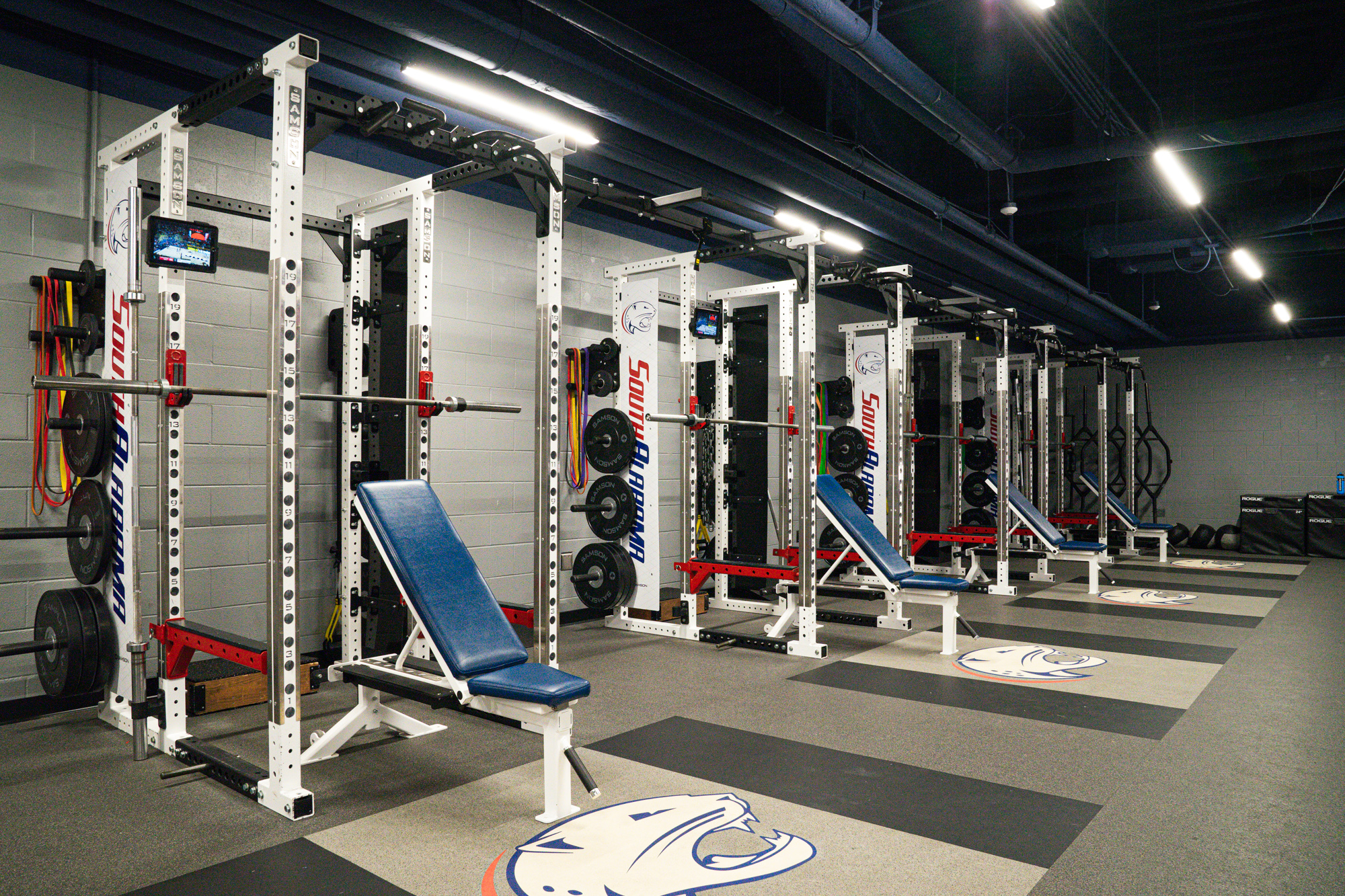
best create accommodations for our Olympic athletes. And I have no doubt we’ll continue to do that investment, but we have 10,000 square feet, if not more. And we have 21 racks, 14 Olympic platforms, an entire turf area. So we were lucky to inherit a really, really strong room. And then we also were fortunate enough that our admin saw enough in what we were trying to build at that time between me and our part-time assistants that we wound up adding to full times on top of that. So we go from.
one and a half to really three and a half. And it’s been obviously a large jump for us and how we’ve been able to develop. And obviously I was able to drop some teams or offshoot some teams to who I thought were better coaches for those programs. And so we’ve seen a lot of development and a lot of growth in a way that’s been exciting because it’s kind of confirmation that what you’re doing is on the right path. And we continue to see coaches be happy. And obviously there’s opportunities and times when
we do something that may not align with them, but then we’re easy to fix and adjust those modalities or whatever it is to, again, hopefully accommodate them. And that constant communication with them on what our role is and what we’re trying to do to help them has certainly alleviated some of the pressure for them.
Connor (23:22)
Well, it’s it’s not lost in me in the connection between your philosophy, right, and the ability to develop the program. So obviously, you say make coaches happy, right, and make sure that your athletes are happy and make sure that everybody can see that the program you’re putting forth is designed for the most optimal success possible. And then that obviously leads to a continuation of what you’re trying to develop from an Olympic strength and conditioning department, allowing you to get more coaches, ⁓ and basically using the code the sport coaches as mechanisms to do that, right, because
at the end of the day, every department’s always going to say that they need more. What really helps them out the most is when other departments come in and say, no, that department really does need more. We need to expand that more. ⁓ It’s similar to a conversation I had with our volleyball ⁓ head coach recently, because I’ve taken over training them as we’re down to strength coach right now. And, ⁓ you know, he said, well, I’ve talked with our AD and he asked our strength condition needs being met. And I always say, yes, absolutely. Because I know
you’re traveling with basketball and you’ve got a lot of different things going on. I think I’m really happy with what you can provide for us right now, but we really would love our own full-time strength coach. I was like, that’s awesome. And I promise you, you’re not going behind my back. If you go up to our AD and say, we need a full-time volleyball strength coach, that’s really going to help me in the long run. So please echo those things. And ⁓ those two things are very connected. I guess my question is, because I’ve seen Olympic departments run very differently at a lot of different institutions.
What’s the importance to you of not having just like a general manual of, here’s our standards and here’s what we want to accept. ⁓ Like from a cleaning standpoint, from a coach’s communication standpoint, you know, what’s the importance behind having a full kind of philosophical approach to it about ⁓ these are the standards that we need to see. How has that affected your program? What’s the belief in doing that?
Peter Kenn (24:59)
Yeah.
Yeah, so this stems from trying to understand how departments have been run historically and also in the modern era. I’m of the belief that there is a traditional model, there’s a modern model, and then there’s what I have coined the neo-traditional model, which is what we try and run. And so if you look at it historically, the traditional model, ⁓ oftentimes is one person dictating the roles, the program philosophy and the program methodology to all staff members.
And that was very common, think really up until the last 10 years until we switched to this modern model of which there are significantly more coaches in the room. There are significantly more strength coaches, especially at the power four level that are able to aid in the development of the athletes. so, you know, my dad will say this, it’s a carte blanche model in which.
You know, everyone’s getting or really an a la carte model where everyone’s getting to do whatever they want. There’s not a lot of oversight. You may have some administrative oversight in terms of what your role is and what you’re supposed to do, but everyone’s programming however they feel like they should program without there being any consistency from a terminology aspect or a goal aspect within the entire department. And so you have kind of two sides of that coin where there’s extreme, I wouldn’t say authoritarian, but in some ways authoritarian oversight. And then you just have not a figurehead because I do believe
most directors are doing more than just being the figurehead. think there’s a lot of back end pieces that, you know, maybe people aren’t aware of on what that job actually takes, but they’re doing so much on one side that they don’t have enough time to necessarily worry about how someone’s training one team versus another. If they’re, if they have two different coaches on staff working with various programs. And so what we decided to do, and really this was a me decision, but I have also talked with our staff about it see if it was the route that we wanted to go was to take this neo-traditional approach as I’ve again, as I’ve coined it where
We’re trying to do something in between of a hybrid model of there are decisions I’m going to have to make. There are decisions that I’m going to implement that are non-negotiable, but at the end of the day, we’re trying to have as much shared information and decision-making as possible and trying to create a methodology and philosophy that we can all get behind. And really all this stemmed from…
you know, having to work so closely with people and having to cover so many programs if someone’s traveling, which I’m fortunate that I don’t have to travel, but we have some staff that travels. And so when they’re out, I need to be able to take over that program as seamlessly as possible. And so that started from creating our entire exercise data bank.
And from that point, it was, okay, what do these movements actually mean? What do I need to add? What do we need to subtract? What are your thoughts on this movement? What do we need to call things so that when I look at your program, hopefully I don’t have to ask you any questions, because we’re all in the same alignment of what this actually means. And then we sat down after that and really said, what does the methodology look like? What are our percentage base increases gonna be week to week?
Are we an athletic based training model? Are we gonna go to a block model? How do we wanna really situate ourselves? And so while it’s not everyone has to program the exact same way, we have a clear vision and drive as to what that program goal should be. So like I’m a tier system individual, because, mean, yeah, I grew up in it, but also because of my research, that’s what I happen to believe is the best model.
you know, one of my assistants or our assistants doesn’t do that model. He does something similar, but it’s not quite what I would consider traditional tier system model. And they’re, and they’re utilizing their pieces of, how they want to adjust for that. But ultimately while they’re two different models of training, they have very similar beliefs backing those principles, the same terminology backing those principles with the same kind of guidelines and how we’re trying to progress our student athletes, regardless of training age.
to be the most successful they can possibly be. And so it’s not just do whatever you want, it’s not do it my way, but we’re trying to really figure out a scenario where we can create shared ownership of ideas. And that shared ownership not only allows us to create more buy-in internally, but it also allows our student athletes to know like, if that person’s out and I take over, there isn’t a major shift in the way that we’re approaching our coaching session. Obviously we have different cues and we have different.
maybe intent within certain movements that we find important, but they know that they’re getting the same standard of care because they understand we are all on the same page versus I don’t know what’s going on.
Connor (29:26)
Well, that autonomy piece is huge that you mentioned of allowing people to actually say, okay, well, I think these are really valuable points that I’m not willing to bend or break on. And then there are some that I’m not super concerned with. And then let’s have a conversation about how we can all meet in the middle and create a high level program.
To me, it also just mimics exactly what the internship experience is about. It’s about learning from other people and learning from ⁓ different systems and then ultimately pulling everything together and then saying, okay, this is the system that I, Connor Agnew or Peter Ken believe in and this is what I wanna implement. And so why not even go further and then have it as a department wide.
approach of, okay, let’s pull all these things together that we all know collectively, and then let’s create a base for what we need, not a blueprint of this is exactly what you need to do, but a base. so then that way it’s very consistent. And I think it also, you know, I mean, now that my brain is just working through it, right? They can help prevent other issues of where I’ve seen at other schools where it’s like, well, I really like what Peter’s doing. And so we want a strength coach like Peter, right? When we’ve got Connor as a strength coach and we don’t like what Connor’s doing, right? And that can be a big problem in the long run.
Peter Kenn (30:29)
Sure, sure. All
right. Yeah, I think there is a lot to say about that. What I mean, I call academic freedom in the sense that, you know, we allow for the individual to be the individual under a certain set of guidelines that was agreed upon by the group. And I think that’s the big key. It can’t be a set of principles agreed upon by one person. It has to be a shared ownership.
And if it’s not, you’ll find people that often will deviate from that program. So it’s not something that’s been stable for us. We continually try and adjust this process and figure out, know, there’s been times where I’ve made decisions where, you know, I might come back two months later and say, hey, was this a decision that you would have liked to have a say in? And if it is, let’s talk about maybe why I didn’t allow that opportunity to occur or why it’s an impossible.
because I have to make the decision based on what my role is. Or yeah, you were right. I probably should have asked Europeans. So there’s a lot of communication and honestly, it stems from trying to have the best relationships with my staff possible. we’re times where I’m gonna have to have hard conversations with you as a part of being a director. There are times when a coach may come to me with a problem that they don’t wanna bring to you because they think I can solve. But we’re gonna have to have those conversations. And when you know it’s coming from a point of genuine interest of how can I help improve your.
your craft and also how can I help you move forward in the profession is a lot different than how can I just keep you here? And that’s not something that we’ve ever tried to be about. ⁓ I’ve helped two of my former assistants move to positions that they thought were better for them because that’s what they needed. And I wasn’t going to house you here if this wasn’t your future and path. And so it stems from trying to create the best opportunities for not only my
myself, but also for the staff that we have here because we want to be the best program in the country. And if someone else is willing to pay you more, I want to be such a great leader for you that it’s a hard decision for you to take that position. And so that’s what we’re trying to really cultivate. And it’s been successful so far. So we’re happy.
Connor (32:39)
Absolutely. Always happy with success. And I very much look forward to ⁓ the new book coming out, Neo-Traditional Model by Peter Ken. Yeah, I’ll break from school for a little bit, but maybe in the long run, we’ll see something like that. ⁓ you know, you obviously have been on a couple of different podcasts. You’ve been given the opportunities to present, sorry, present before, you know, a lot of coaches have come to me and talked about, okay, well, how do I start a podcast? Right. Because they know that I host a podcast.
Peter Kenn (32:46)
Yeah, no, that won’t happen. ⁓
Yep.
Yeah.
Connor (33:08)
⁓ I’m sure coaches come to you and ask about presenting or doing things about getting your voice out publicly. What advice do you have for coaches looking to get into presenting?
Peter Kenn (33:20)
I think, you know, it’s interesting. I did not get asked to do my first clinic until this past summer and now I’m supposedly lined up for three next semester. So it’s one of those things. It’s kind of like getting your first job. hard to get your first job, but once you get your first job, you realize, okay, now it’s a little bit easier to get the next one and the next one. And I think the same thing goes with speaking engagements. Obviously it’s going to stem from what your connections are, but I’m not like an overly ⁓ big social media presence. I don’t…
post a super ton, but what has come from is genuine development of communication or sorry, interpersonal relationships with people that I find very, very valuable. Whether that’s, know, Justin Lima, who I consider a friend of mine, or, you know, my voluntary work with the NSCA that has allowed me to be on that podcast. But there’s also no doubt, obviously, that people want to potentially talk to me because of where I come from, too. I think that’s probably been a lot of it. But ultimately, if you put yourself out there and you put your interests out there, and I think
This goes to like anything else. If you want an internship, you have to apply for that internship. And so in a different sense, you have to apply to be in these speaking engagements by trying to figure out what’s out there. If there’s a clinic near you that you want to speak at that you weren’t invited to this year, reach out to whoever’s hosting the clinic and say, Hey, thought this was awesome. Would love to be a part of this next year. If it’s something that you can fit into your schedule or if it’s something that I align with and that you would like me to speak at, but you can’t get on something unless people know you want to be a part of those things. And so.
That’s obviously key number one is putting that out there, but also there’s tons of places looking for speakers all the time, whether it’s an NSCA regional or anything like that. So getting connected with your state directors from the NSCA standpoint. I’m not a member of the CSCCA, so I’m not sure if they do things similar to that. I would assume they do. And if they are having regional meetings or national meetings, don’t be afraid to reach out to the people that are in charge of putting those things together. And the more that you’re around the profession and the more that you’re around
key individuals, you’re obviously gonna be able to get those opportunities. And so it’s a hard answer because again, I think my trajectory has been different than other people’s. But I’ve also put myself out there and after my first podcast, I think I said some things that were intriguing and then that led to another and that led to another and another and another. And so it’s really just reaching out to someone and hey, maybe I’m interested in being on.
on this podcast or whoever is that’s hosting saying, there ever an opportunity for me to be on? And it’s just as simple as that. And if you don’t get an answer back, well, you don’t get an answer back. That’s part of the way things go sometimes, but don’t continue or don’t not continue to push forward and get yourself the opportunity. Obviously social media is an incredibly important platform right now for our profession. I think it’s brought a lot of light to our profession. And if you want to talk, go talk. If you’re saying something that resonates with people,
they’ll stop to watch your reel or your short or your TikTok or whatever it is. And so you have an abundance of opportunity to put yourself out there and say things that if they’re true to you could be intriguing to other people. But outside of that, that’s pretty much all you really need to do from how I’ve seen things.
Connor (36:32)
Yeah, I think straightening is this really weird career where it brings in a lot of people who don’t mind being in the background, right? Because that’s the nature of the career itself, right? Is you’re not gonna be the one who’s celebrated a lot. ⁓ You know, might be the one who gets blamed first for a lot of different reasons, right? But ultimately, ⁓ from a career standpoint, like it is kind of a B type career where you are gonna take a lot of time with the athletes, but you’re not gonna get a lot of credit for what you do, which is fine. And I think a lot of people kind of accept that as part of the job.
Peter Kenn (36:40)
Yeah.
Connor (37:01)
And so it accepts this group of people in who are okay with not getting a lot of credit. So then they’re okay with not necessarily voicing a lot of different things, right? And then all of a sudden it’s like, well, I want to present, I want to do these things. And it’s like, okay, well, you kind of have to flip that switch off when you want to be able to get your voice out publicly. You have to be comfortable with kind of taking stances on things and sharing what your opinion is and not really playing the middle or being worried about, you know, okay, am I taking credit for something? Right? I remember the first ever
real I posted it was actually on TikTok. It was about like sleep, right? And one of my friends was like, this is the super simple stuff that everybody knows. And I was like, well, everybody within strength and conditioning knows. So there’s probably like what 5,000 people who know this, right? And I was like, and then there’s, you know, 7 billion other people who are probably really familiar with it. And so
Peter Kenn (37:42)
Right.
Connor (37:49)
I found a lot of success in just posting general knowledge pieces, right? Whereas other people find a lot of success within straight conditioning circles where they can provide knowledge to people who already have that knowledge base, more of an advanced knowledge piece. So I think it is a lot about finding kind of what you are most comfortable with putting out as information. And then another huge piece that you bring up too is being comfortable with being told no, right? Like I remember.
Peter Kenn (37:56)
Sure.
Connor (38:12)
the first ever speaking engagement I applied for was the NSCA National Conference. And I was like, yeah, why not? I’ll apply for it, who cares? And then obviously it got rejected. And I was like, you know what? Probably it allowed me a good reflection point. was like, you know what? Probably a better idea to start with a regional conference first, right? Or something where I can prove that I can actually get up in front of a group and speak besides just immediately applying to the national conference, right? So that no was really good for me because it kind of gave me perspective about, well, here’s the steps I need to take if I actually want to present.
Peter Kenn (38:18)
Yeah, 100%.
Connor (38:41)
at the national level, you know, earlier on in my career than some might be able to do, right? And so I think putting yourself out there is huge. I mean, as a podcast host, I can guarantee you this, right? If somebody reaches out to me and wants to be on the podcast, I love that because honestly, from exactly from a selfish standpoint, I don’t have to do as much work. I can say, great, okay, awesome. I don’t really have to scout out guests as much or people that I want to come on the show. And I can say, awesome, let’s, what do you want to talk about? And then we’ll talk about whatever you want to talk about. So.
Peter Kenn (38:55)
Yeah, make your job easier. Yeah.
Yeah.
Connor (39:09)
If anybody is listening and wants to come on the show, please reach out to me. It helps me out big time, but it’s the same for all the other engagements that you mentioned too. It helps when people come forth and say, okay, well, I want to do this. You what’s the best way for me to get on the show, right? And sometimes you have to make, you know, decisions to say, well, I don’t think right now is really the best time, but it’s also a good time to receive feedback about what you can do to be able to present in the future.
Peter Kenn (39:31)
Yeah, yeah, absolutely. mean, thinking it hit the nail on the head.
Connor (39:34)
Yeah, thank I appreciate it. Always, always good to hit the nail on the head is very exciting. So, ⁓ you know, ultimately, you say that you’ve kind of experienced a different career trajectory, which is understandable with your background. But I do think that a lot of it is the work that you’ve put into your career by yourself. What is some advice you give to young coaches that are looking to get into the field?
Peter Kenn (39:38)
Yeah. ⁓
Yeah, I I think there’s a common misconception, at least there was a common misconception early on in my internship opportunities, where people, think, especially outside people who didn’t know me, expected me to just have this insane knowledge base because of, again, where I was coming from. me and my dad didn’t talk about strength conditioning almost the whole time I was at App State in a sense of like, if your dad was any other profession,
Do you think they’re talking about it when they come home from work with you? Probably not. Now, did we happen to have a common interest? Yeah, but we weren’t talking about things on a on on any basis, really. It was so I think and I have a point here that, you know, I came into a lot of situations where people thought I knew a lot and I didn’t. And I don’t know if I have any true mentors in that aspect of like, how how did you develop? How did you learn your process? And so for me, it was kind of one of those situations like.
Okay, if people expect a lot out of me, I better know what it’s going on. And so I think the more that you can study, the more that you can understand where we come from as an entire profession, as a history is incredibly important. So that’s understanding all the different training models that are out there, whether it’s Triphasic, Block, ⁓ know, starting strength, a tier system, understanding Verkoshansky, Bondarchuk, ⁓ you know, any other ⁓ American periodization.
whether it’s Hoff or Bampa or Triplet or any of these people that have been incredible disseminators of knowledge, have created new ideas. If you are not familiar with those, Boyd Epley obviously, if you don’t know who that is, we have a problem. Meg Stone, Mike Stone, all these people, you have to know who these people are and what they have tried to develop and the knowledge that they have disseminated. If you are stuck in, well this is what we learned in class, this is what’s going on.
It helps you take the test, but it doesn’t help you be a practitioner. And I think the more that you understand all the different key roles of how we’ve gotten to where we’ve gotten in the type of training programs that have worked in various situations only makes you a better practitioner. And that, that can only be solidified through coaching, which is why the coaching piece is very, very important. And if you’re not coaching, you’re probably never going to be a great practitioner because you never had the opportunity to actually show what you can do.
And so you have to know all these pieces is something that we’re really, really hard about in our internship program. I don’t need you to know what I know. I need you to know everything that everyone in this room knows, because we all have different ways of programming, whether it’s a upper lower split, whether it’s a total every day or, you know, we’re going to hit total or lower with auxiliary and upper with auxiliary or what is that percentage base look like on a week to week basis? Are we a three up one down model? Whether
You’re a two up one down super load model in terms of your meso cycles. What is your macros? Like all these pieces are really, really important and understanding. And so it is your job to educate yourself to the best of your ability. That can be through true academic texts. That can be through obviously listening to podcasts and understanding different methodologies and visions that people have and how you want to implement those things. But you can’t be a copycat of information. If you’re out there just saying what other people have said.
It doesn’t help you. have to really internalize all those different models of learning and knowledge and create your own vision of what those things look like. And that can’t happen unless you’ve really studied what the game is and who the important players in the game are. So that’s the biggest piece, I think, to developing overall.
Connor (43:35)
Yeah, absolutely. I mean, ultimately, I’ve never learned something or read something and then regretted it. Right. Even even if there was an no moment of ⁓ well, I really needed to fix what I was doing in this specific area because there’s a lot better system of doing it. It’s good to know these things. It’s good to learn more. ⁓
Peter Kenn (43:41)
Right.
Connor (43:53)
Probably the only time I was trying to get through super training. That was tough for me. I didn’t regret it. I learned a lot through the long run, but that was certainly a tough process. So I agree. think developing your knowledge base as much as possible is huge. ⁓ And especially for younger interns, one of the things that I’ve noticed is you don’t have to develop an elite level knowledge base in something, right? You don’t have to ⁓ understand the triphasic system and be able to go toe to toe with Cal Dietz and talk about everything that he develops, right?
Peter Kenn (43:56)
Yeah. ⁓
Connor (44:20)
What you need to do is just develop a basic understanding of it and then find coaches who are really good at it and then have further conversations with them. And then they will allow you to kind of help develop ⁓ what your system is gonna be and help you develop a stronger knowledge base of it. So it’s not this thing where you have to know every single piece about it. It’s just understanding a basic knowledge of it. And then to me seeking out other coaches who can help you learn further.
Peter Kenn (44:43)
Yeah, I think the other key component of this too, not to drag this answer on too long is you have to be really comfortable being wrong. And I think that’s something that a lot of individuals in our profession are not comfortable with. think there’s so much bravado across the entire landscape of what we do of like, what I say is the right way to do it.
or this has been the most successful way. It’s like, it’s the most successful way for you, but you have to be comfortable with being proven wrong or being exposed to evidence that can change your mindset. And if you’re not, I think that’s probably a detriment to you. I change my mind on things all the time. ⁓ Because again, it’s not my goal to be right. It’s my goal to provide the best possible training that I can for my athletes. And so if I’m so rooted in one…
type of philosophy or methodology that I’m not seeing the bigger picture on something. I think that’s a detriment to our student athletes. And so this comes down to what everyone says, where it’s like, you can’t say that this isn’t about you and it’s about the students. And then everything you do is to defend yourself. We should be doing things to provide the best opportunities for our students that when they graduate, they think that this is the best opportunity that they could have been at and that there’s no questions in their mind that the programs that you provided them were
the best opportunity for them to progress in their career, but that when they leave, they think, man, this was the right decision. man, what if I happened if I would have went here? That should never be the question. And so that’s what I think the mindset really needs to be, especially if you’re a young practitioner, even if you’ve been coaching for a long time, is being open to being wrong. I think that’s a very valuable piece that we’ve strayed away from because everyone’s trying to be the next big thing. And…
If you can’t do that, it’s going to be really hard to progress because you’re going to be dying on a hill that maybe you don’t need to die on.
Connor (46:31)
Yeah, well, I love being wrong and I’m wrong quite a lot, which is good. But, again, it’s something that I kind of preach to our interns or younger coaches here is like, I will give you advice on something. I am one of a thousand ways to do it. Right. And you could listen to what I say and say, well, that’s awesome. That’s a great solution. You could also listen to what I say and say, well, that’s horrible. I’d never do it that way. It doesn’t really matter to me that much. ⁓ But, you know, ultimately, I’m one piece of a
million different ways to do things. So, ⁓ you know, I’ll give you the advice I have. And then if you have other suggestions too, I’d love to hear them as well, because ultimately that’s how you end up getting better as a coach. So I love being wrong. And if you ask my wife, I’m wrong about a lot of different other things as well too. So it’s always good. Well, Peter, thank you so much, man, for coming on. I really appreciate everything. And it’s great to officially speak with you ⁓ for the second time. I think this is now our second official conversation.
Peter Kenn (47:06)
Yeah.
Ha ha ha.
Yeah.
Yeah. Yeah.
Connor (47:28)
Always very fun. I greatly appreciate it. If anybody wants to follow you on your modest social media, self-described, or follow along at some of your future speaking engagements, what would be the best way to do that?
Peter Kenn (47:35)
Yeah
Yeah, so the two that I have, I mean, it’s somewhat confirmed right now. I’ll be speaking at Coppell High School, I think is where it’s at on February 28th here in Texas. And then I’m also going to High Point University. It’s something I believe is confirmed ⁓ in early June. So I’ll be in North Carolina. I’ll also be here. I may have another one on the works. I have tons of other content out on various platforms.
that you can go look at. I’ve done some things for some pretty big networks here in terms of producing hopefully some knowledge dissemination. But again, if you need anything, you want to reach out to me. I’m happy to share anything. I share programs with individuals all the time. If you want to just get on a phone call and have a conversation, I’m open to that as well. Obviously you can find my email on the university website or you can find me on social media. Peter Kenwon on Instagram or LinkedIn. Whatever your preferred choice is, I’m happy to have a conversation about anything.
Connor (48:34)
That’s awesome. Well, I greatly appreciate it. I know the listeners appreciate it as well. And then a Neo traditional model coming out 2050. Is that the, is that the time? Yep. So please hold your breath while we wait for it. So excellent. Well, Peter, again, thank you so much. I really appreciate you, man.
Peter Kenn (48:42)
Sure, ⁓
Yeah.
Of course, thank you for the opportunity.
Connor (48:55)
Absolutely.