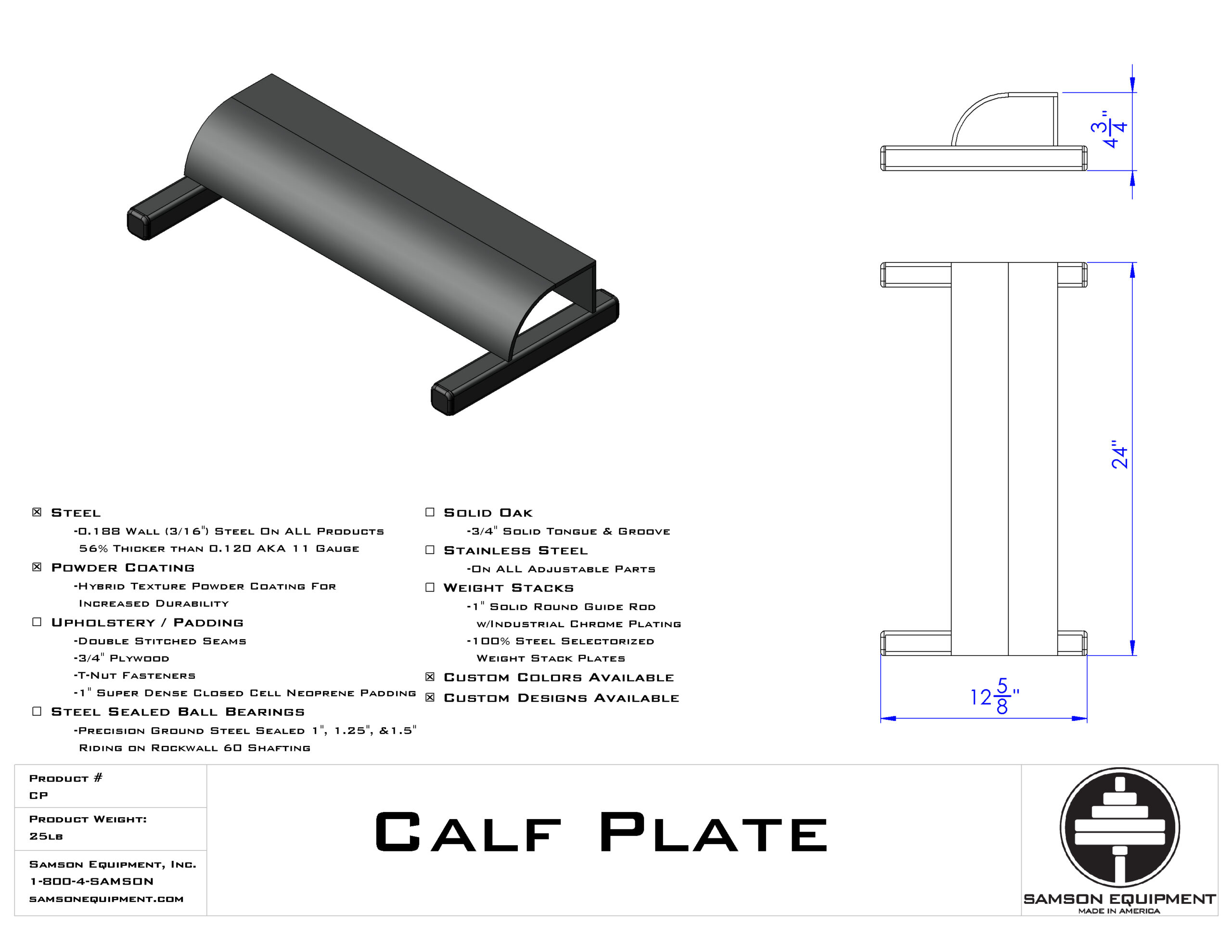
Product Specifications
| Dimensions | N/A |
|---|
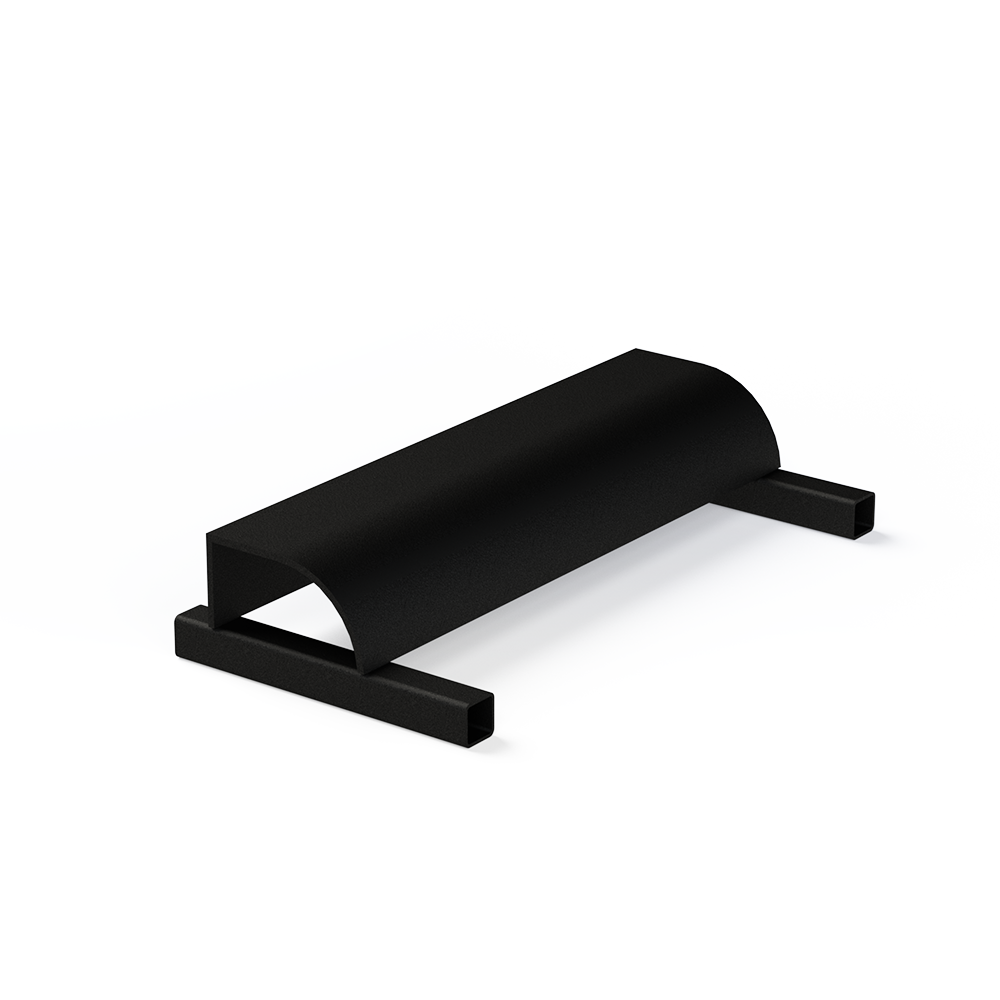
Calf Plate: A Simple Upgrade for Better Lower-Leg Training
In a high-use training facility, small accessories often create outsized value. A calf plate is one of those “simple” pieces, easy to add, easy to use, and highly effective for athletes who need strong lower legs for sprinting, jumping, cutting, and change-of-direction work.
The Samson calf plate is designed to support calf training by providing a stable surface that helps athletes achieve a useful range of motion. Whether you’re building a full strength program for teams or supporting return-to-play progressions, calf work is often part of the plan, because ankle and lower-leg strength plays a direct role in performance and durability.
Why calf training matters for athletes
Calves are involved in nearly every athletic movement: acceleration, deceleration, jumping, landing, and repeated foot strikes. In many sports, athletes accumulate a huge volume of lower-leg work without realizing it. That’s why a well-designed training program often includes direct calf work, not just for aesthetics, but for performance and resilience.
Common reasons coaches include calf work
- Jump and sprint support: stronger calves contribute to force transfer and stiffness at the ankle.
- Foot/ankle durability: direct training can help athletes tolerate high running and cutting volume.
- Balanced lower-leg development: complements squats, lunges, and hinge patterns.
- Rehab and return-to-play: calf capacity is often rebuilt after lower-body injuries.
What a calf plate does
A calf plate provides a stable edge or platform so athletes can achieve greater dorsiflexion and plantarflexion during calf raises. The goal is to train the calf through a controlled, full movement pattern while maintaining balance and consistent foot placement.
In a busy room, consistency matters. Accessories like a calf plate help standardize execution across athletes and reduce the “improvised” solutions that show up when teams don’t have the right tools (stacked plates, unstable blocks, or makeshift steps).
Programming ideas for team settings
For large groups, calf work is often best implemented as part of a circuit or as a short finisher. Because calf training can be low-skill and low-impact when coached correctly, it fits well into high-throughput sessions.
Team-friendly implementation
- Accessory lane circuit: pair calf raises with core work and upper-back work.
- Return-to-play progression: start with controlled tempo and gradually add load.
- Field sport emphasis: include single-leg variations to match sport demands.
- In-season maintenance: use moderate loads and higher quality reps to support durability.
Coaching cues for higher-quality calf work
In team settings, the “best” calf exercise is the one athletes execute consistently and correctly. Simple cues help athletes get productive reps without turning the movement into a bounce or partial range drill.
- Full controlled range: move through a comfortable range without rushing.
- Pause at the top: a brief pause improves control and reduces cheating.
- Slow the lower: a controlled eccentric builds capacity and durability.
- Stay balanced: keep pressure centered on the foot instead of rolling in/out.
For some athletes, single-leg variations can be a great way to address side-to-side differences without huge loads.
Return-to-play and lower-leg durability
Lower-leg capacity is often rebuilt after ankle, foot, or Achilles-related issues. Coaches and athletic trainers frequently progress athletes from controlled, low-impact calf work toward more dynamic movements over time. Having a stable, dedicated platform helps keep early-stage work consistent and safe.
For team settings, one simple approach is to keep calf work “quiet and controlled” most of the time (tempo reps, pauses, and strict positions), then reserve more dynamic plyometric progressions for targeted phases of the training year.
That consistency makes calf training easier to scale across an entire roster.
Facility planning: accessories that keep training organized
Accessories are often where facilities drift into clutter. When there is no designated storage and no plan for where small pieces “live,” teams waste time looking for parts, and equipment gets damaged. A layout-first approach helps you design accessory zones and storage locations so coaches can run efficient sessions without constant resets.
If you’re planning a new room, or upgrading a current one, Samson can help you organize stations, storage, and traffic flow so accessory tools like this are easy to find and easy to use.
Start a layout conversation here: Start Your Free 3D Layout Design.
How to choose the right accessories for your program
When selecting accessories, the best approach is to match them to your teams, your schedule, and your coaching priorities. The right accessories:
- Support a clear training goal (performance, durability, rehab, or movement quality).
- Scale to groups (easy to set up and coach with many athletes).
- Stay organized (simple storage and repeatable placement in the room).
Calf work is a consistent need across many sports, which is why a dedicated calf plate can be a smart, practical addition for schools, colleges, and tactical facilities.
Ordering and support
Want help selecting accessory add-ons and building a complete room list? Samson supports equipment planning so you get the right mix of stations, storage, and accessories for your training groups.
For recommendations and pricing: Contact Samson Equipment.
FAQs: calf plates
Do we need a calf plate if we already have step platforms?
Many teams can make step platforms work, but dedicated equipment improves stability and consistency. A calf plate can reduce setup time and help standardize technique.
Is calf training only for runners?
No. Any sport that involves jumping, sprinting, and change-of-direction benefits from strong, resilient lower legs.
Can Samson help plan accessory zones and storage?
Yes, layout planning is one of the best ways to keep accessories organized and reduce daily reset time.
Where should this accessory live in the room?
Most facilities place it in the accessory lane near other lower-body durability tools, with a clearly defined storage location so it doesn’t become clutter.
Request Pricing and Layout Support
Add a simple, high-value accessory to support lower-leg strength and durability. For help selecting the right add-ons for your facility, contact Samson.
Ordering, support, and facility planning
In a high-volume facility, the right equipment is only part of the solution. Planning station counts, storage, and traffic flow helps teams train efficiently and keeps equipment in better condition long-term. If you’re building a new room or upgrading an existing space, Samson can help you choose the right mix of stations and accessories so the room works under real training volume.
For help selecting options, confirming fit, and building a complete equipment list, reach out here: Contact Samson Equipment. If you’re planning a full room layout, you can also start a free design conversation here: Start Your Free 3D Layout Design.
Quick FAQ
- Does Samson offer accessories and attachments? Yes, Samson offers a wide range of accessories and attachments for training rooms.
- What should guide accessory selection? Training goals, group size, storage, and athlete rotation should guide the accessory plan.
- Can Samson help if an accessory need is not listed? Yes, contact Samson with the specific need so the team can review available options.